1. Cards and hand rankings
Which five-card hand wins, and why a flush beats a straight. Everything later assumes you can read a board without stopping to think.



Poker Skill takes you from there into your first real decisions with short lessons, puzzles and feedback. In Practice vs AI you play full hands against AI opponents.
Poker Skill is free. Forever.
Scan to get the app
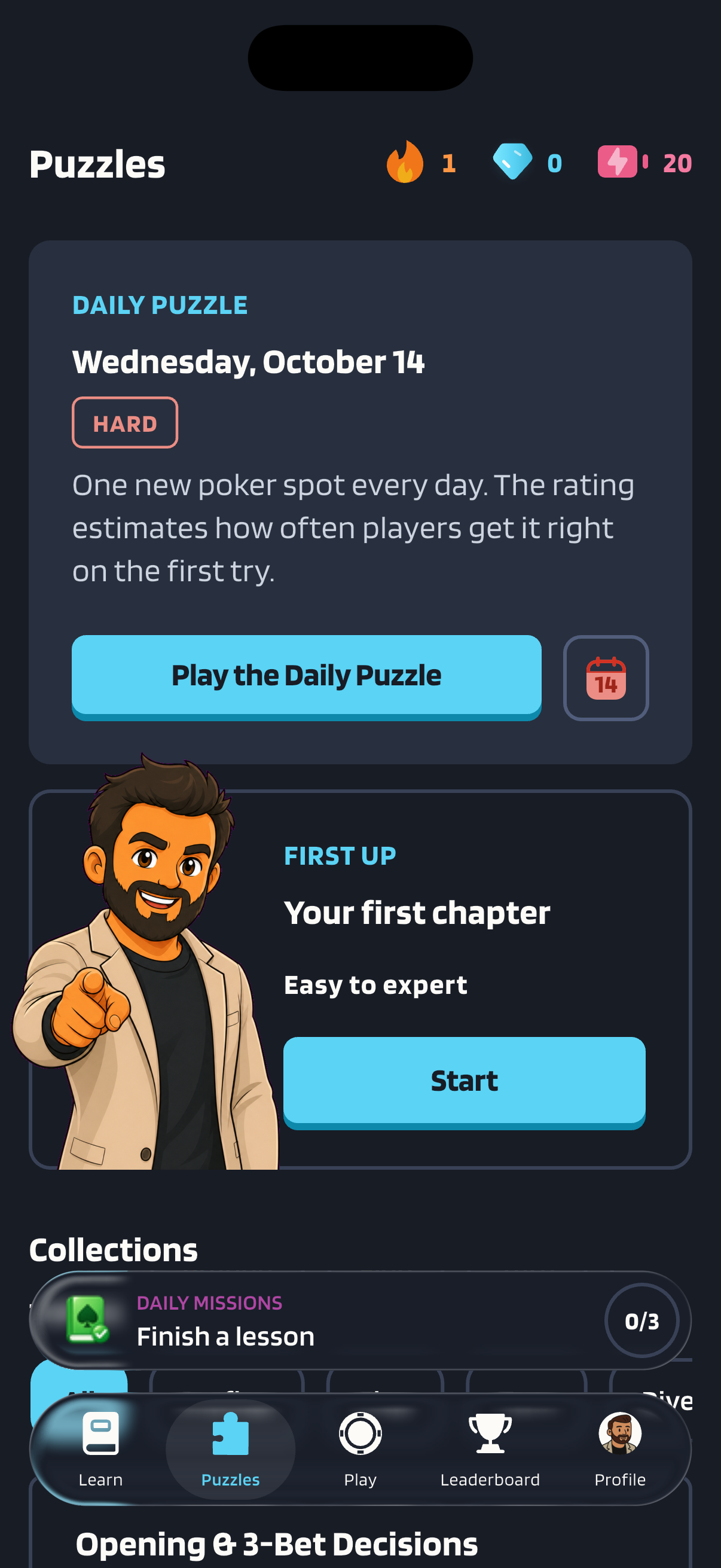
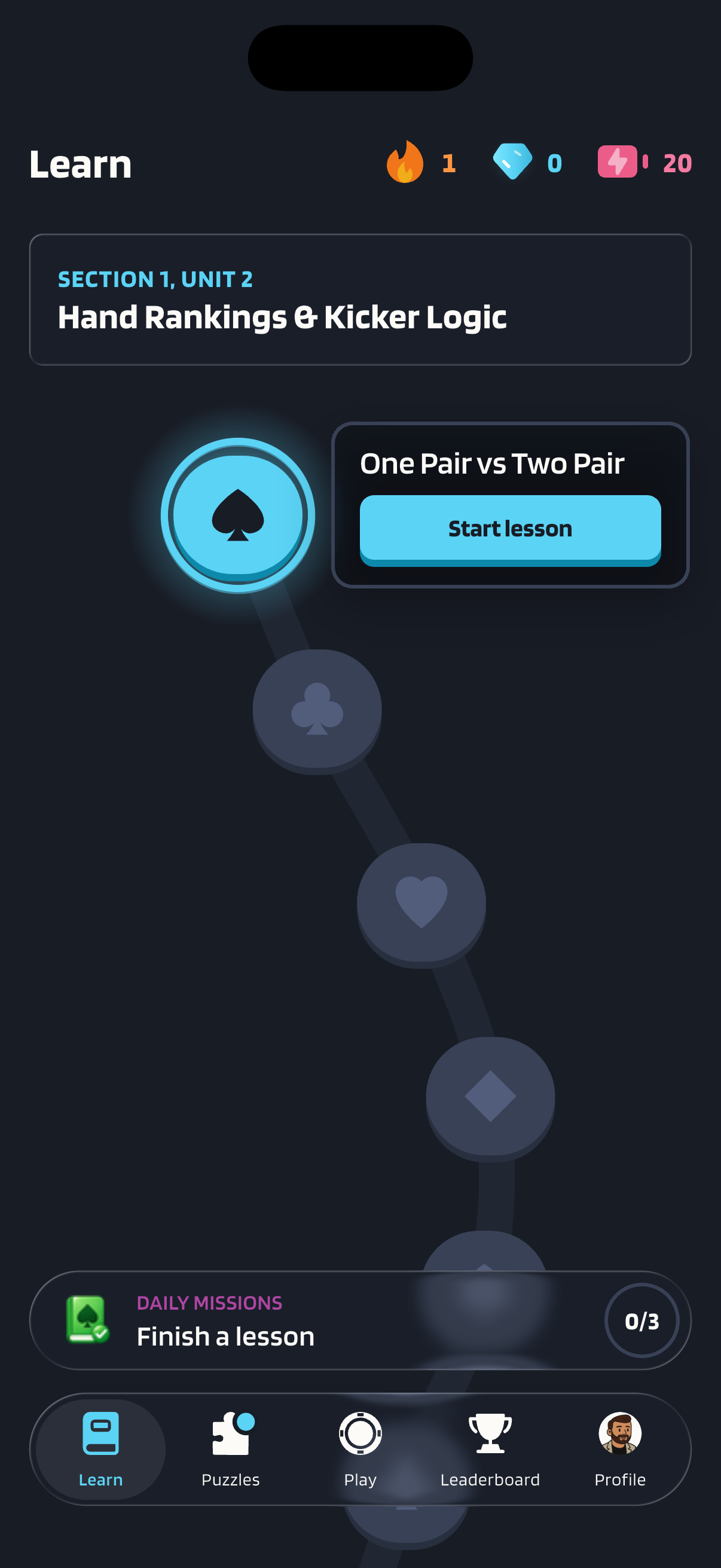
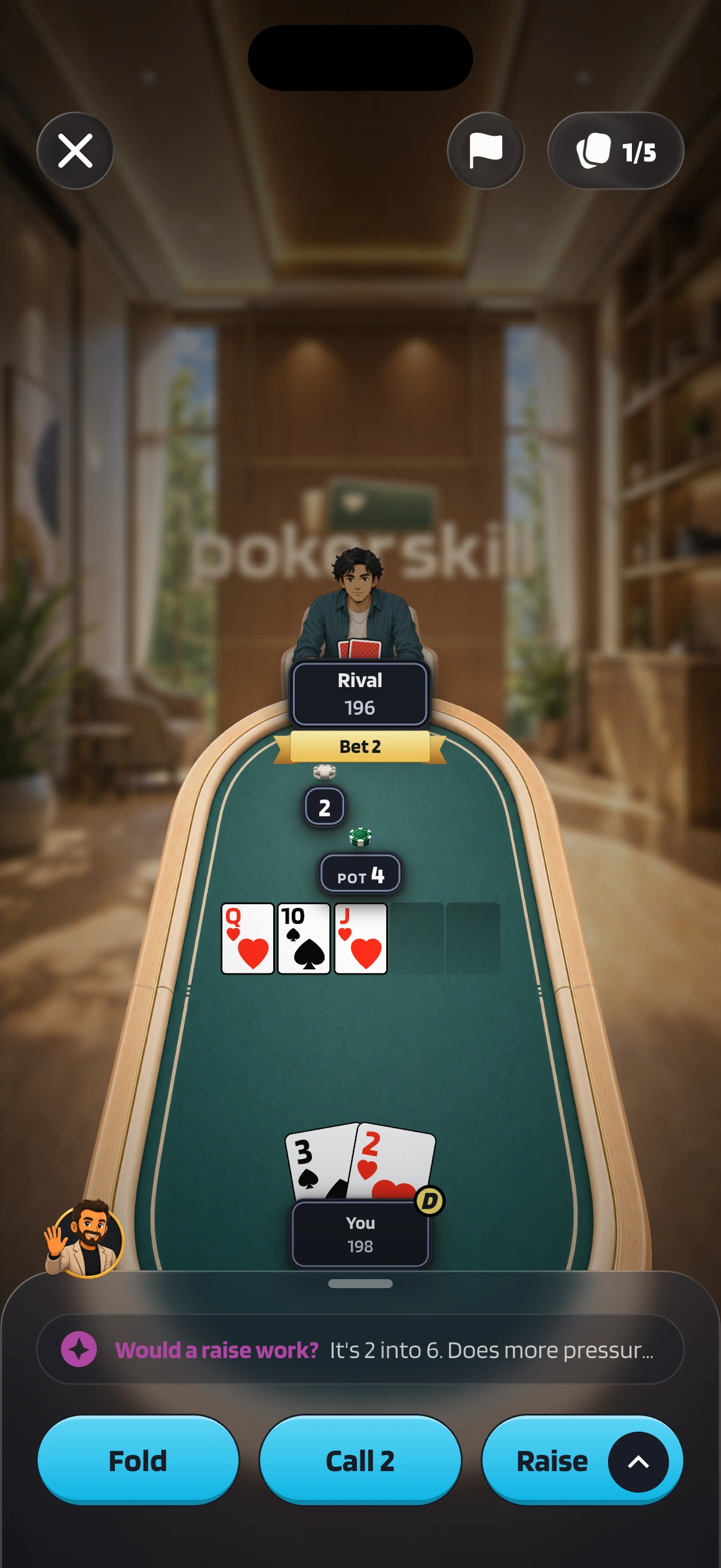
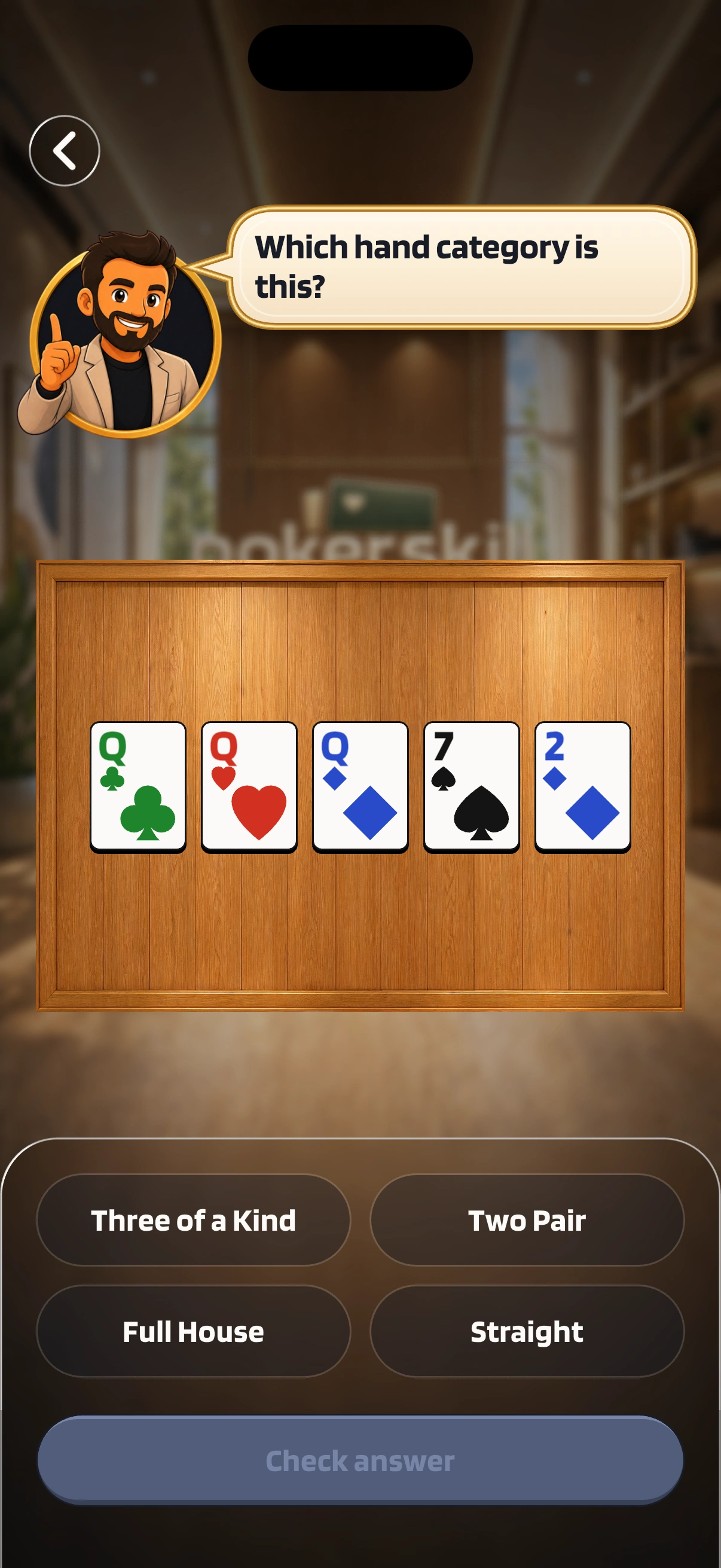
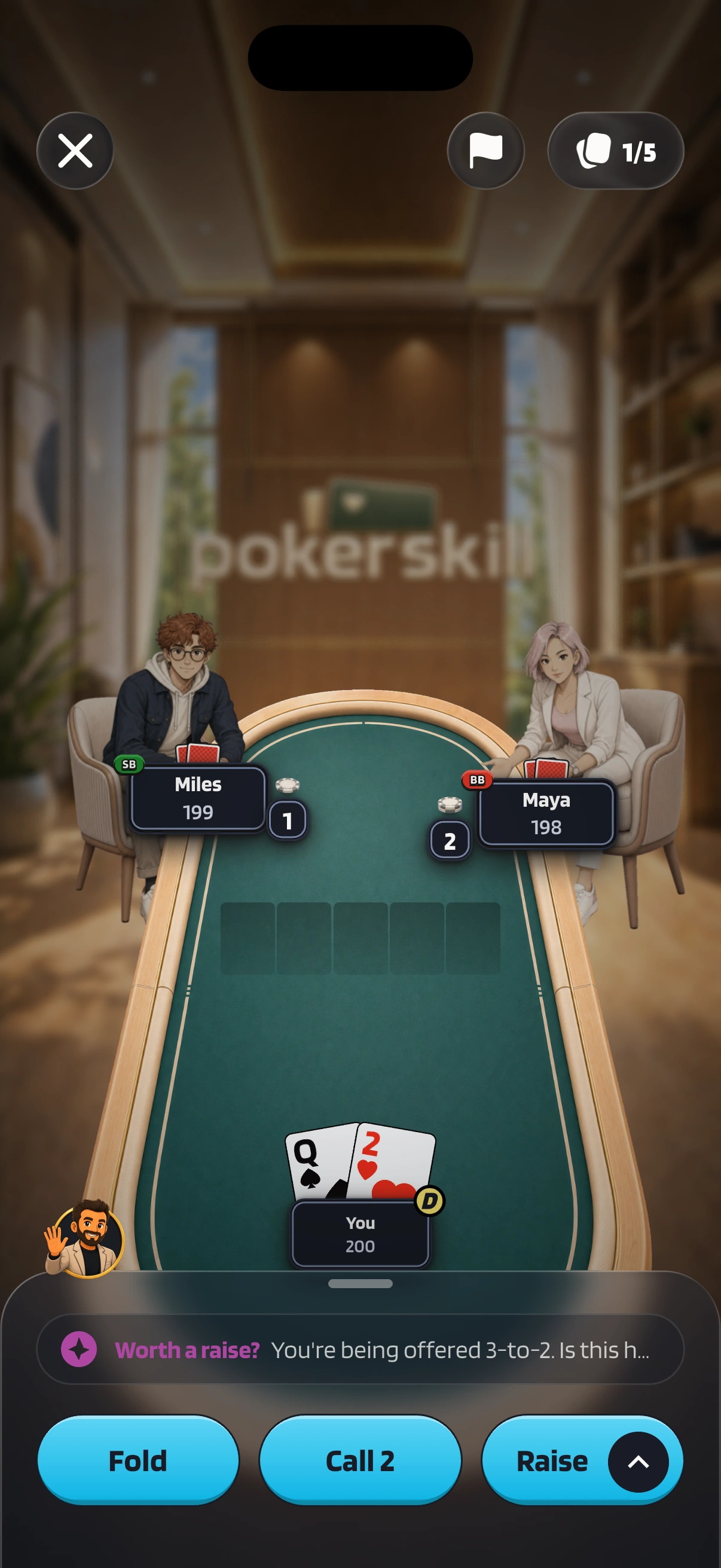
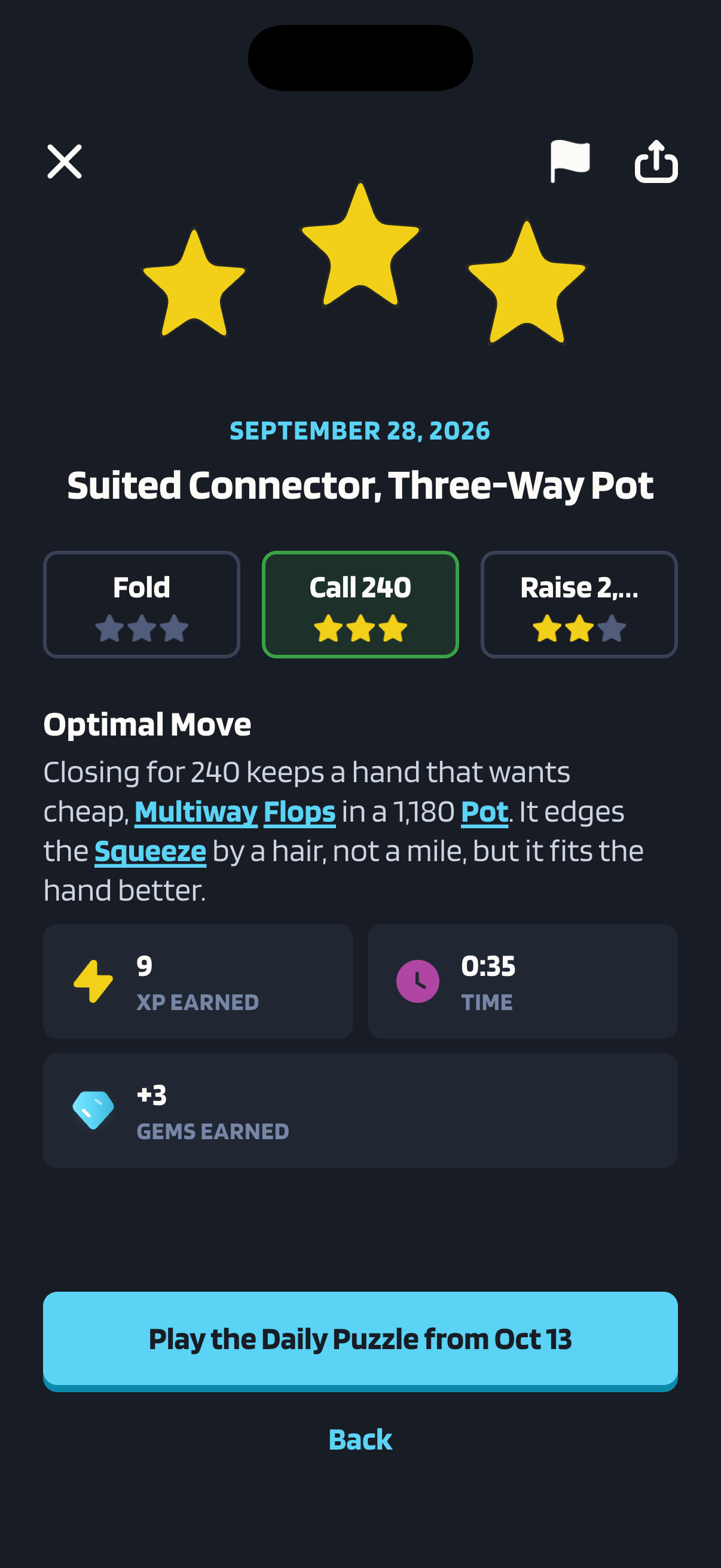
The app teaches these in sequence, because each one makes the next decision easier to see.
Which five-card hand wins, and why a flush beats a straight. Everything later assumes you can read a board without stopping to think.
Preflop, flop, turn and river, plus what checking, calling, raising and folding each commit you to.
Who acts last after the flop, and why that seat is worth more than the cards in a lot of spots.
How many cards still help and how often they arrive. The pot odds come from Coach Max, the coach in Practice vs AI, when you face a bet there.
Reading an opponent as a set of hands instead of guessing at one, which is where hand reading starts.
Daily puzzle hands that put those pieces together and ask for a fold, call, raise or check.
The first job is not memorizing every advanced term. It is learning enough structure to understand the choice in front of you.
Learn the deck, hand rankings, and how a five-card poker hand is made.
See what changes preflop, on the flop, on the turn, and on the river. Before any strategy, Poker Skill sorts out when you may check and how a bet differs from a raise.
Practice why acting early feels different from acting on the button.
Move from rules into fold, call, raise, and check choices with feedback. Poker Skill's first strategy lessons teach you to raise or fold before the flop and never limp.
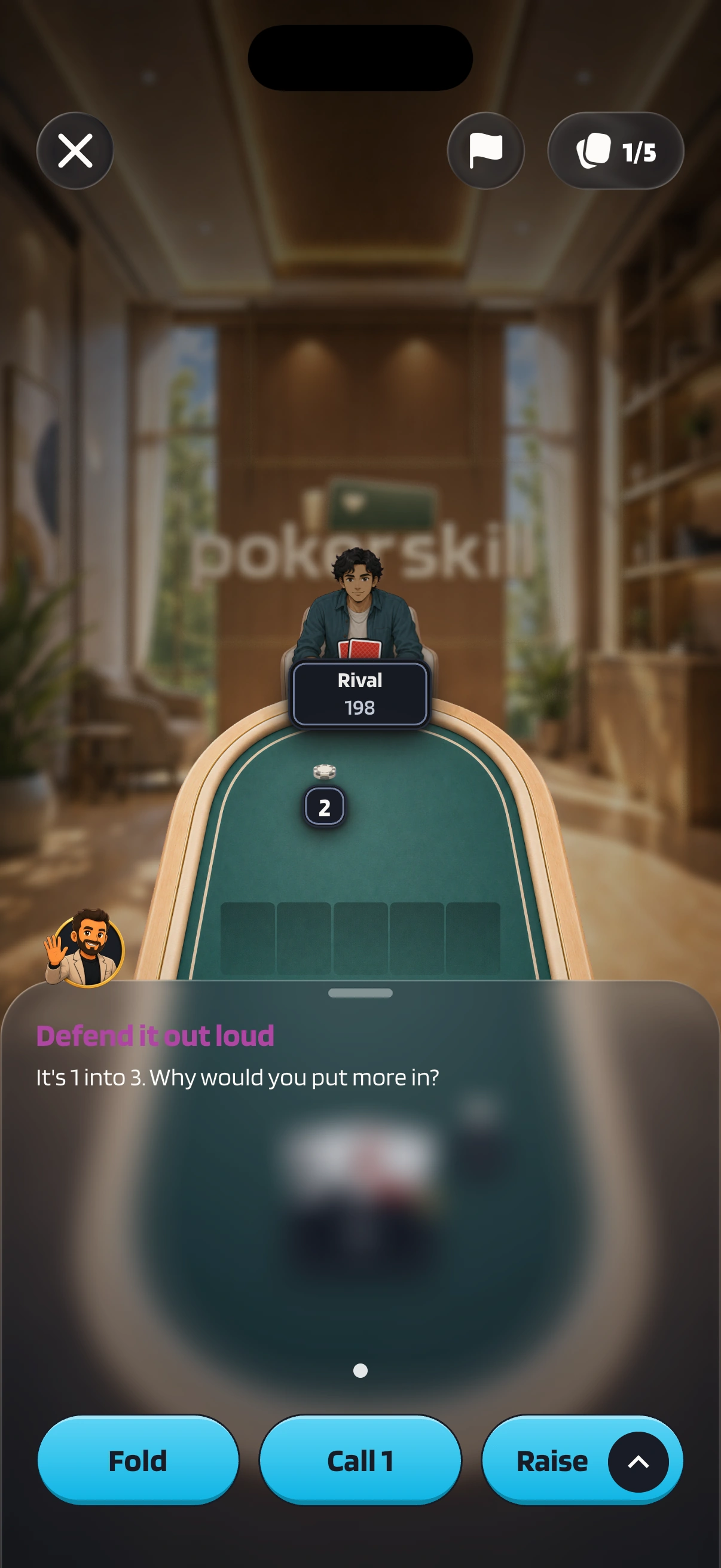
Beginners do not need shame or jargon. They need repeated spots that make the mistake visible, then a clean reason to choose better next time.
The app pushes you to ask what your position and hand actually support. From UTG, Poker Skill's raise-or-fold lesson has you fold most hands, because an early-position range is tight.
Beginners often treat every seat the same. The lessons make position visible.
Draws are easier when you learn which cards help and which cards can still lose. Poker Skill separates clean outs from dirty ones, the cards that complete your draw but can still leave you beaten.
Learning sticks better when you answer a real spot instead of only reading a chart.
Feedback shows how board texture and opponent action can change a hand's value. You meet top pair in Poker Skill's first postflop strategy lesson, which shows how the board changes what it is worth.
Short sessions make it easier to repeat the same concept until it feels normal.
Learning poker gets easier when each concept connects to a hand you can inspect, answer, and review.
Start with the deck, hand rankings, blinds, betting rounds, and showdown. Poker Skill's board section covers kickers, split pots and how the board can counterfeit your two pair.
Learn outs and simple equity checks with concrete examples.
Practice why UTG, the button, the small blind, and the big blind ask for different plans. In the big blind you have already posted a full bet, so your first big-blind lesson in Poker Skill is call or fold against an open.
Move past single-hand thinking and start reading what a player can have. A player who opens from UTG holds a tighter range than one who opens from the button, and Poker Skill's lessons on facing a raise start from that difference.
See the reason after you choose, while the spot is still easy to inspect.
One short lesson or puzzle is enough to keep the learning loop alive.
A chart can answer one question. A practice app helps you recognize why that question came up.
| Choice | Best use | Beginner gap | Better next step |
|---|---|---|---|
| Poker Skill | Rules, lessons, puzzles, and feedback | Beginner path into real decisions | Guided app path into real decisions |
| Hand-ranking charts | Fast reference | Does not teach betting decisions by itself | Useful next to active lessons |
| Long videos | Good for broad explanation | Easy to forget without reps | Better after a question exposes the gap |
| Unstructured poker rooms | Lots of hands | Little teaching signal | Can reward guessing instead of learning |
Poker Skill uses simulated hand contexts for teaching only. It does not offer or promote real money gambling, and it does not award prizes or rewards of real-world value.
The app can be serious about poker strategy while staying focused on the choice in front of you.
Beginner lessons can begin with cards, hands, and betting rounds before strategy gets dense.
The app explains the poker reason behind a choice without making every answer feel like a textbook.
The product is built for education and decision practice. It does not award prizes or rewards of real-world value.
Learning the game here is free. Nothing on this page sits behind a paywall.
Poker Skill is free. Forever. Every beginner lesson, the hand-ranking drills and the daily puzzle cost nothing. No trial clock, no card to enter.
Poker Skill Plus lifts the cap on play, for players who want more than the daily habit. Learning the rules stays free either way.
Poker Skill is an educational trainer. Nothing is played for money and nothing pays out anything of real-world value.
Beginner lessons start with cards, hand rankings, position, and simple decisions before moving into denser strategy. Poker Skill's first lesson compares one pair with two pair, and the next few climb through trips, straights and flushes.
Yes. Poker Skill teaches Texas Hold'em concepts through short lessons, examples, puzzles, and feedback. Start with the rules and move into decisions.
No. A beginner can start with cards, hand rankings, betting rounds, position, and first decisions before deeper strategy appears.
Poker Skill is an educational practice app for learning poker decisions. It does not award prizes or rewards of real-world value.
Charts are useful references. The app helps you practice the next step: reading the spot, choosing an action, and learning from the feedback. Poker Skill's Winner Blitz drill makes you pick the winner yourself, one pair of hands after another.
Move from beginner lessons into broader decision practice.
C-bet decision guideWalk through a real spot that mirrors the app's feedback.
How to play pokerReview the basics before you practice in the app.
Poker hands cheat sheetKeep hand rankings close while you learn your first decisions.
Showdown AIMeet the engine that deals your practice hands.
Open Poker Skill and take a short lesson before you study another chart. The app asks for a decision, then shows the reason.