


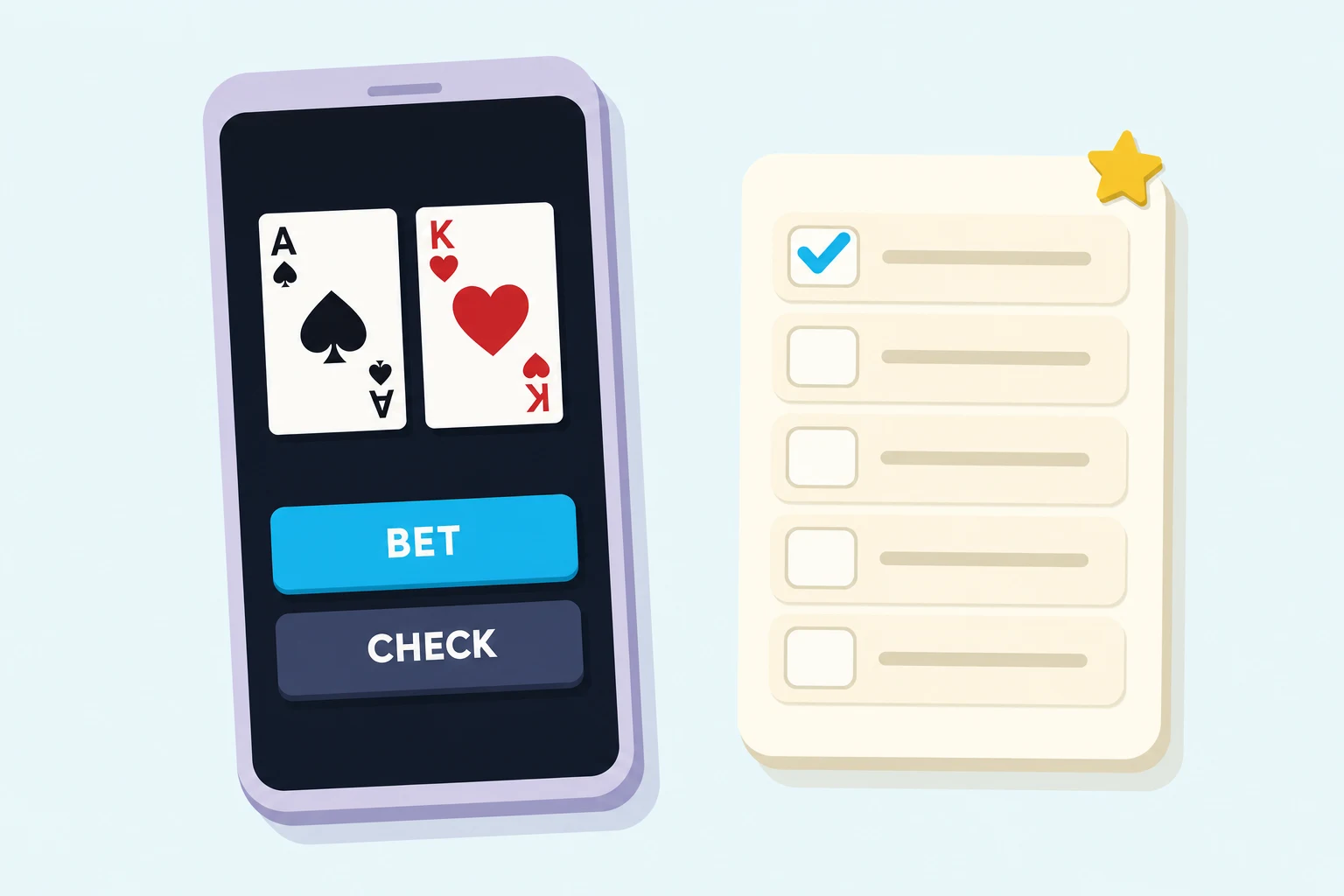
The best app to learn poker depends on where you start. If you are starting from zero and want a reason after every answer, it is Poker Skill, which we make. Poker Skill is free. Forever. PokerTrainer fits once you know the rules, River if you want a placement quiz and a coach, Ollin if you would rather play hands on Android and Stack Poker if you learn by competing on iPhone.
Because one of the five is ours, every card says who should skip it, ours included. The seven tests below let you check any of them yourself.
The five apps for beginners, in five lines
- Poker Skill. Free forever. Short lessons from the rules up, with a reason after every answer. Pick this if you are starting from zero.
Free forever.
- PokerTrainer. Drills, a hand simulator and short tutorials in a browser or an app, free under a daily limit. Pick this if you know the rules and want quick reps.
Free
- River. A placement quiz, then a guided path with a coach named Otto. Pick this if you know a little and want to start at your level.
Free
- Ollin. Coached hands with a one-sentence verdict on each decision, free on Android. Pick this if you would rather play than take lessons.
Free
- Stack Poker. Ranked duels with daily missions and short lessons, on iPhone. Pick this if you learn best by competing.
Free
Prices and features checked October 2026. If you are past the basics and want to train specific spots, the poker training app roundup compares four tools by what they train. If you already play and want to get better, the best app to get better at poker compares four apps by the mistake each one fixes.
The comparison at a glance
| App | How it teaches | Free version | Runs on |
|---|---|---|---|
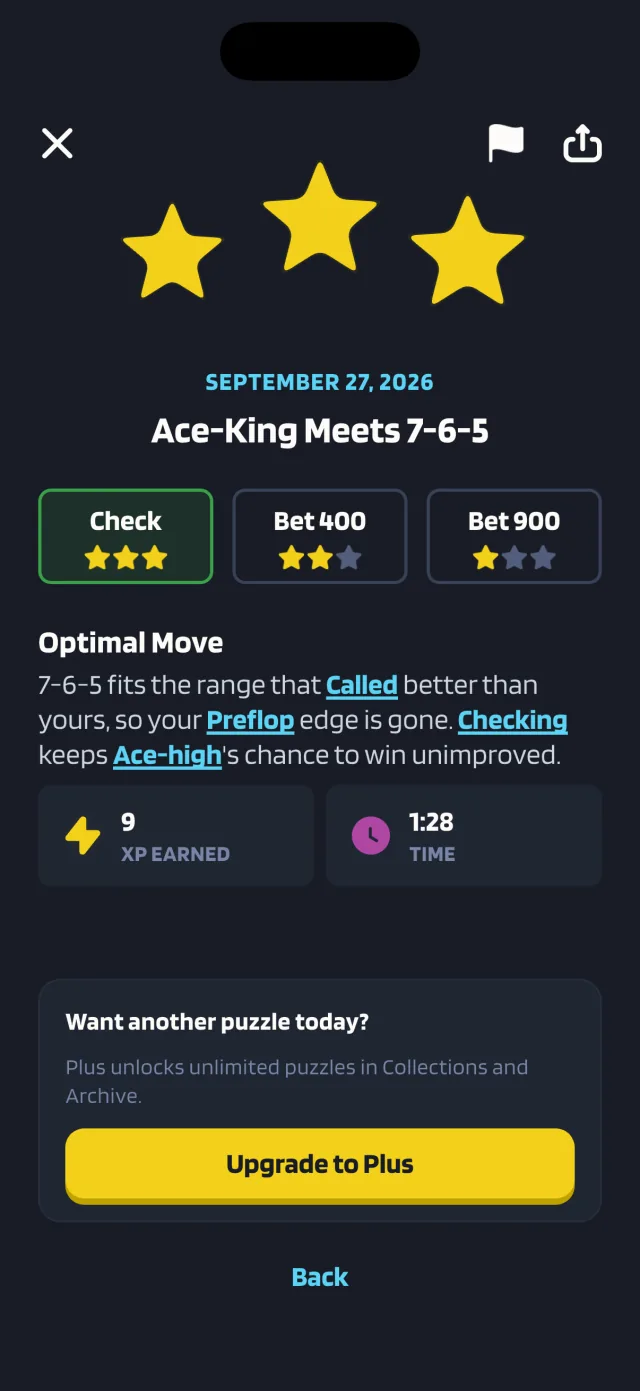 Poker Skill Poker SkillOurs | Short lessons from the rules up, a reason on every answer, a Daily Puzzle | Every lesson, the Daily Puzzle and one Practice vs AI game a day | iPhone, iPad, Android |
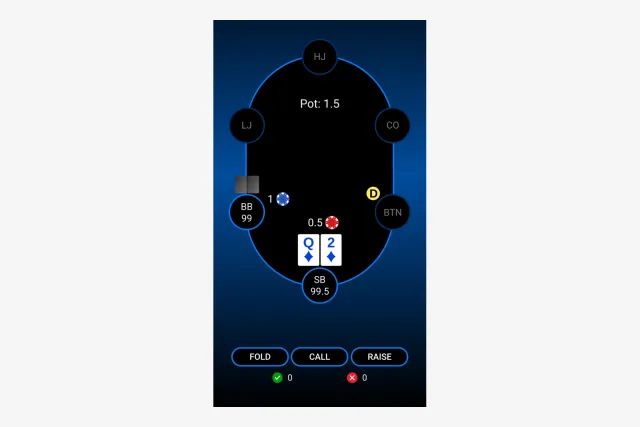 PokerTrainer PokerTrainer | Drills on preflop, postflop, odds, equity and rankings, a hand simulator, tutorials | Daily practice under a limit; some features need the paid plan | Web, iPhone, iPad, Android |
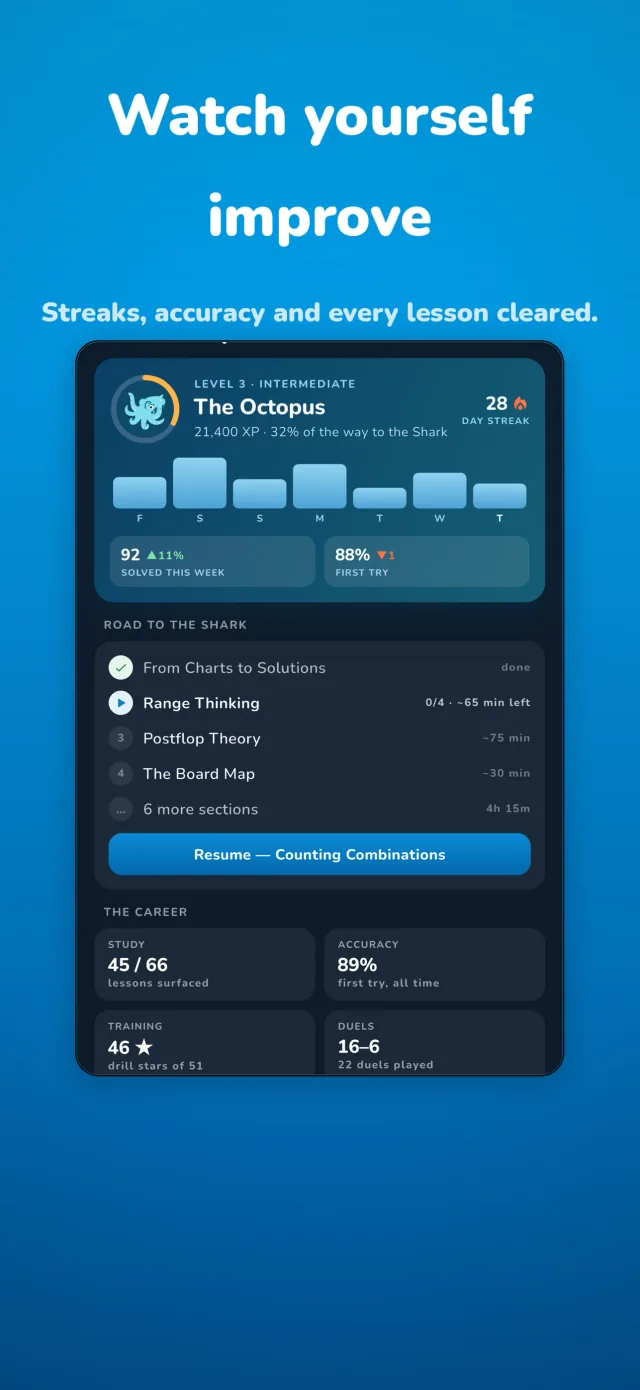 River River | A placement quiz, then a guided path and a coach you can ask | Part of the path | iPhone, iPad, Android |
 Ollin Ollin | Coached hands, short lessons and a daily puzzle | The whole app | Android; iPhone as a beta |
 Stack Poker Stack Poker | Ranked duels, with puzzles and short lessons around them | Ranked play against AI, missions and puzzles | iPhone |
The five apps in detail
Poker Skill
Lessons from zero, with a reason on every answer
Free forever. Plus optional
Best for Beginners who want to learn Texas Hold'em in order, from hand rankings up, with a reason after every answer.
Skip if You want Omaha or stud, because Poker Skill teaches Texas Hold'em only. Or you would rather learn from classes and courses with a teacher, which PokerCoaching offers.
Free version Every lesson paced by an energy meter, the Daily Puzzle and one Practice vs AI game a day. Plus is the only purchase.
Where it runs iPhone, iPad and Android
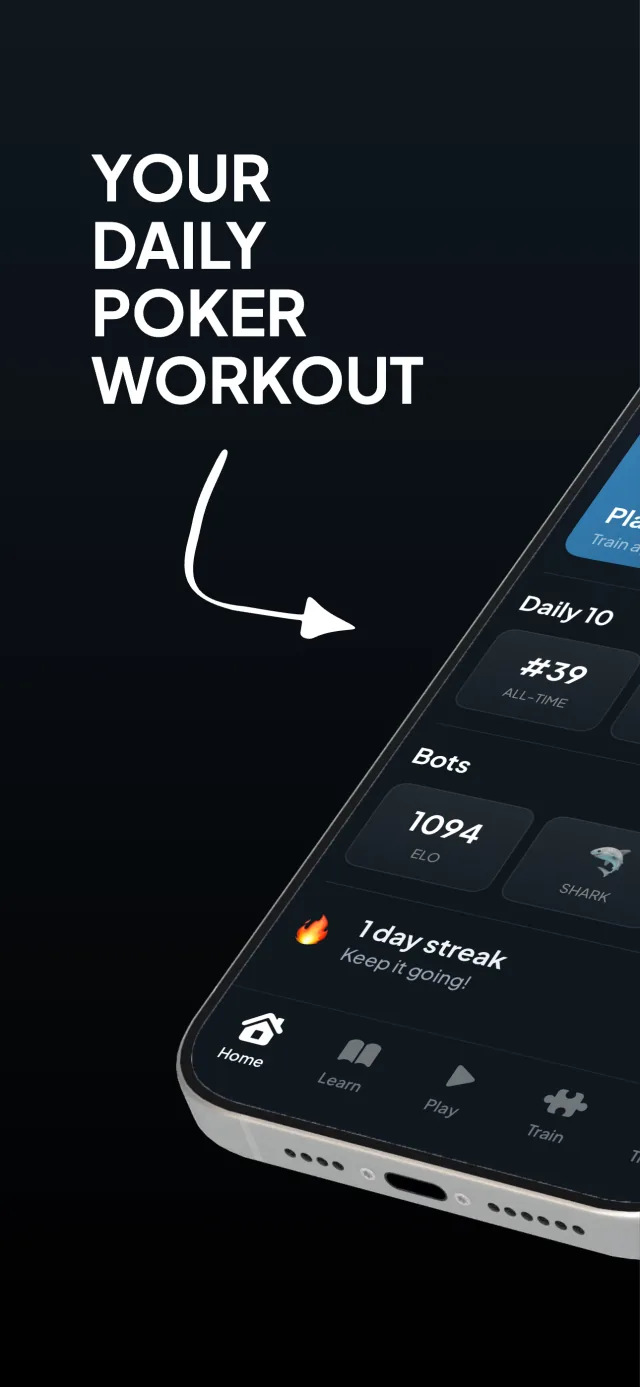
We make this one, so hold it to the same standard as the rest. Lessons start at hand rankings and take a few minutes each, one idea per lesson. Every answer comes back with why it is right or wrong. A new Daily Puzzle arrives each day. In Practice vs AI you play full hands against AI opponents, heads-up or three-player, and Coach Max grades your decisions. Nothing is played for real money, and there are no chips to buy.
PokerTrainer
Drills, a hand simulator and short tutorials
Free paid plan $14.99 a month
Best for Players who know the rules and want quick daily reps on preflop, odds and hand reading, with a training plan aimed at their weak spots.
Skip if You want lessons in order from the rules up. PokerTrainer is built around drills and a simulator, with short tutorials beside them.
Free version Free under a daily limit; the paid plan adds more volume and some training features.
Where it runs Web, iPhone, iPad and Android
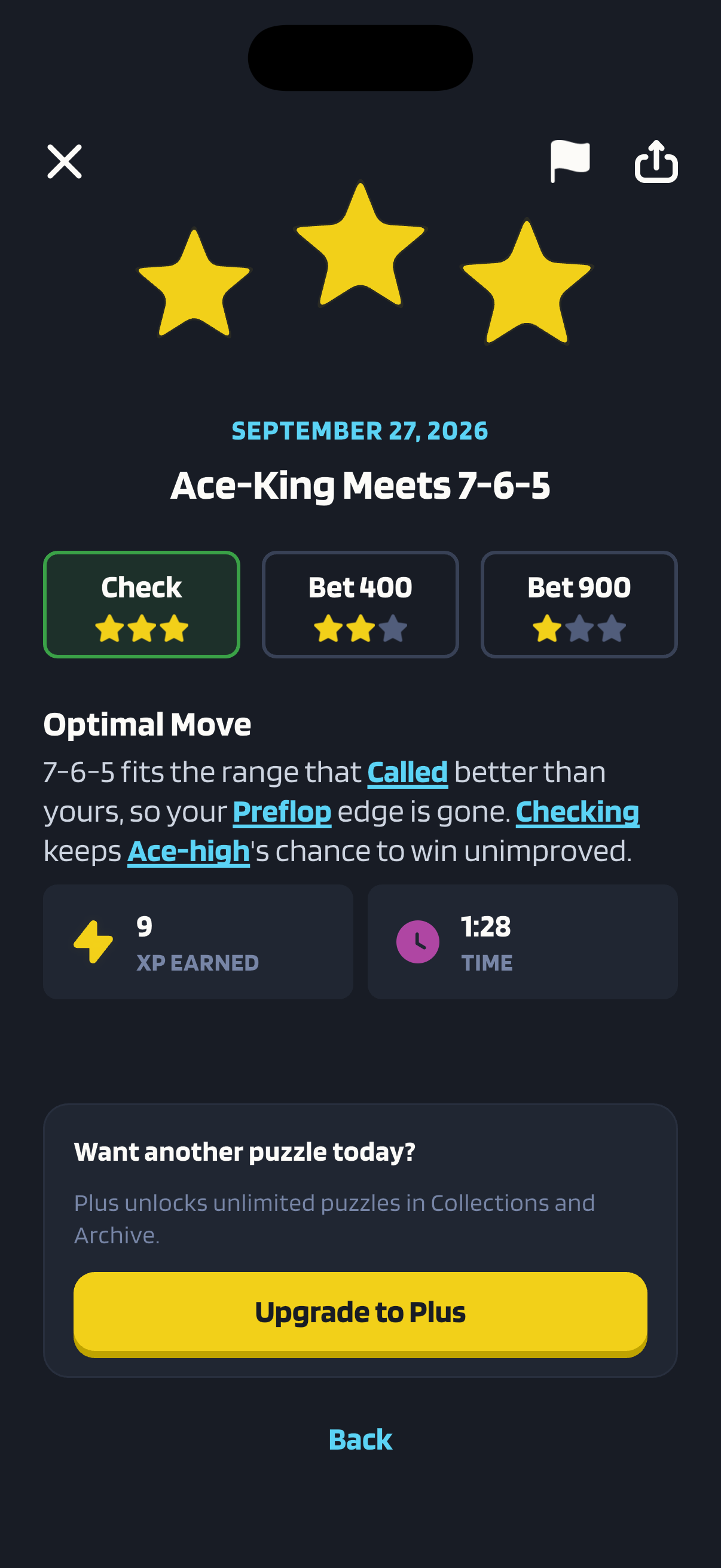
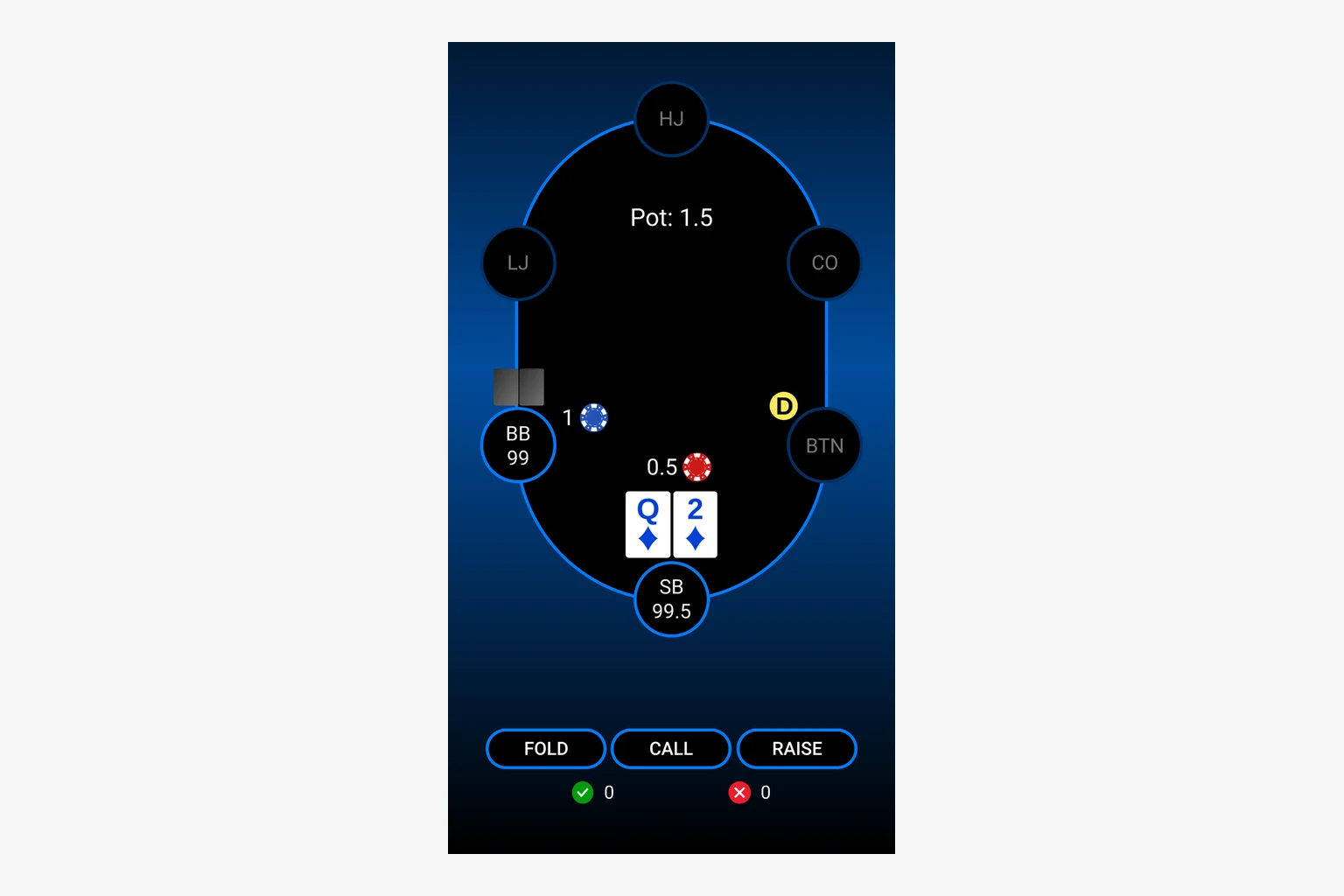
PokerTrainer (pokertrainer.se) mixes drills on preflop, postflop, odds, equity and hand rankings with a hand simulator, a training plan aimed at your weakest areas and short tutorials with quizzes. It runs in a browser and in its apps, free under a daily limit. After a mistake it shows the right answer and why. A right answer just scores a point. Untick "Show only on mistakes" in Practice mode and right preflop answers get the reason too.
Compared with Poker Skill: PokerTrainer is the pick for free drills and a simulator in a browser, while Poker Skill teaches the game in order, one lesson at a time.
River
A placement quiz, then a guided path
Free Premium $19.99 a month
Best for Learners who know a little and want a placement quiz to start at their level, with a coach they can ask questions.
Skip if You want the whole path free. Every lesson tier and both GTO trainers come with River Premium.
Free version Part of the lesson path. Premium opens every tier, both GTO trainers and more daily questions for its coach.
Where it runs iPhone, iPad and Android
River comes from the makers of GTO Gecko. It opens with an adaptive placement quiz, then walks you down a path of bite-sized lessons from rules and hand strength to ranges and postflop play. Practice spots show how often a solver takes each action and what each choice is worth. A coach named Otto answers your questions in plain language, and a Journey screen tracks your lessons, accuracy and study streak.
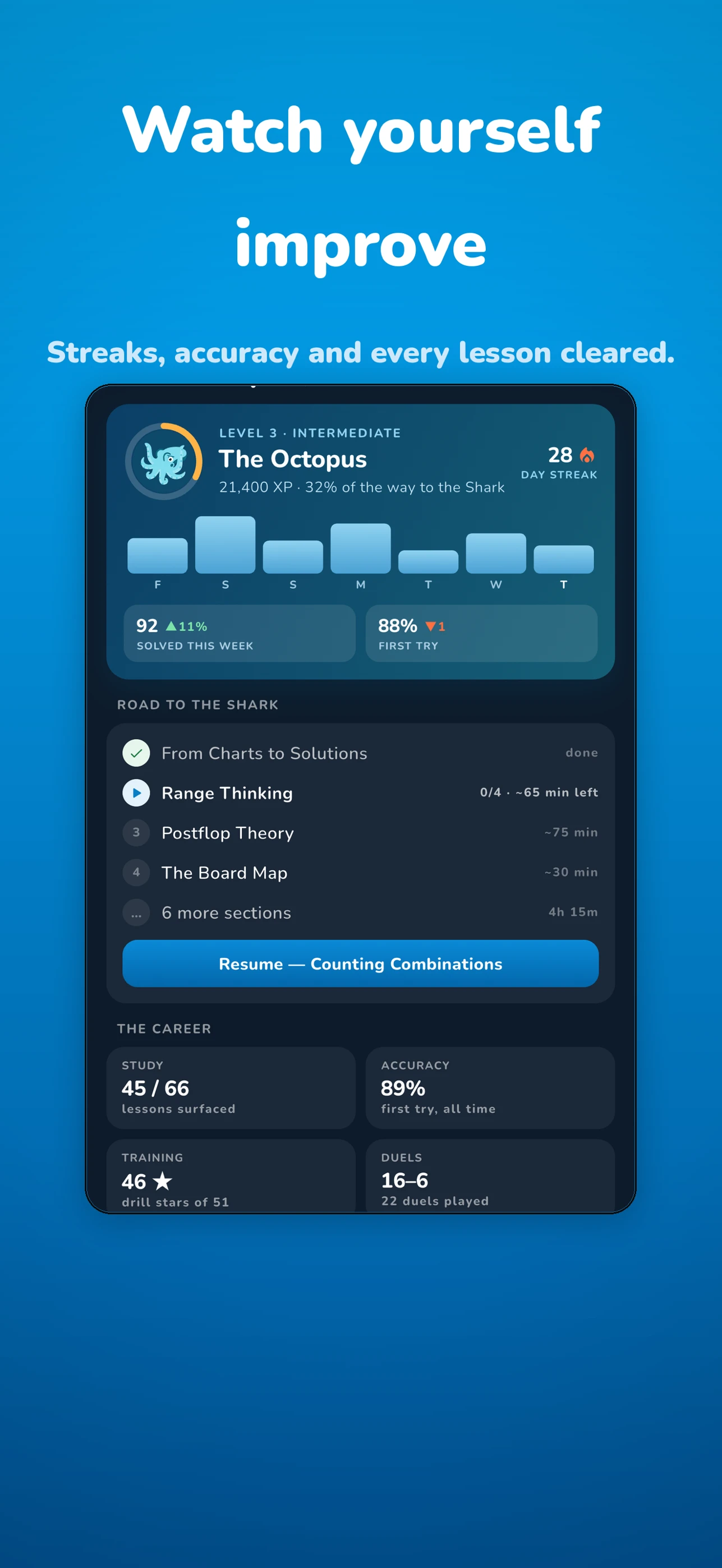
Compared with Poker Skill: River wins on its placement quiz and a coach you can question, while Poker Skill opens every lesson to free players.
Ollin
Learn by playing coached hands
Free no in-app purchases listed
Best for Android players who would rather learn by playing hands, with one sentence of coaching after every decision.
Skip if You want an App Store app. On iPhone, Ollin runs only as a TestFlight beta.
Free version The whole app is free.
Where it runs Android, and iPhone through a TestFlight beta
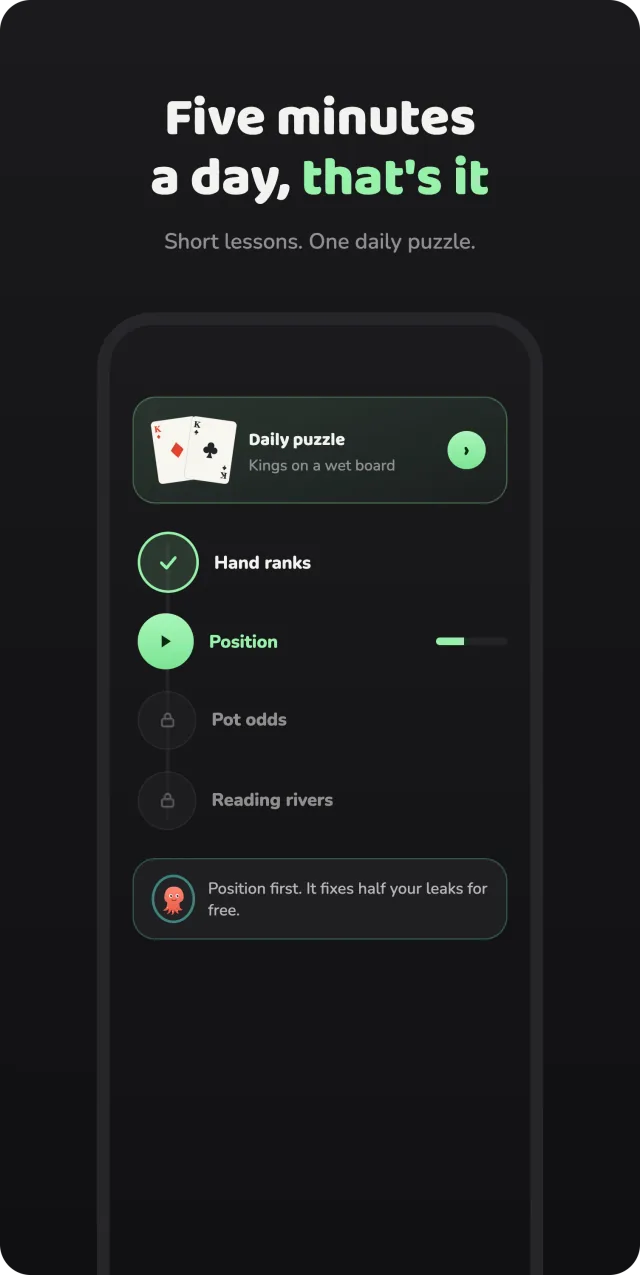
Ollin is built around playing hands: a coach named Ollie gives one clear sentence of coaching after every decision. Short lessons open one at a time, from hand rankings to position, pot odds and reading rivers, and one daily puzzle sits at the top of the path.
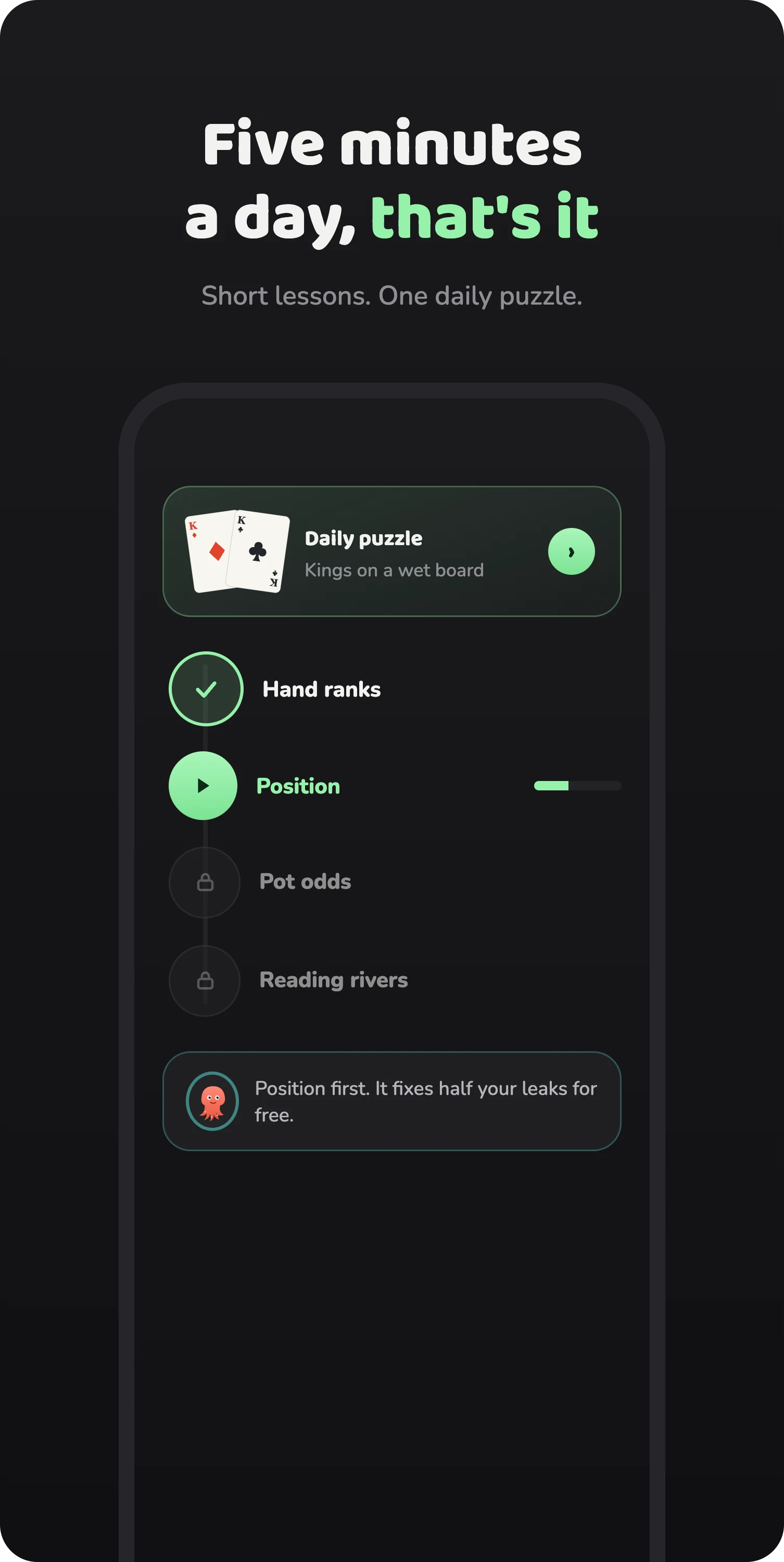
Compared with Poker Skill: Ollin is the better pick if you would rather play hands than take lessons, while Poker Skill leads with lessons, adds coached games against AI and is out on both the App Store and Google Play.
Stack Poker
Ranked duels, with lessons around them
Free Pro $9.99 a month
Best for iPhone players who learn best by competing, with ranked duels, daily missions and a rank to chase.
Skip if You want lessons at the center. Stack is built around ranked play, and the full lessons library comes with Stack Poker Pro.
Free version Ranked play against AI, daily missions, puzzles and Range Rush.
Where it runs iPhone
Stack Poker calls itself poker built like a sport, and ranked 1v1 duels against other players are at its heart. Games against AI opponents, rated puzzles with explanations, a preflop trainer and a library of short lessons sit around the duels, and you climb rank tiers as you play.
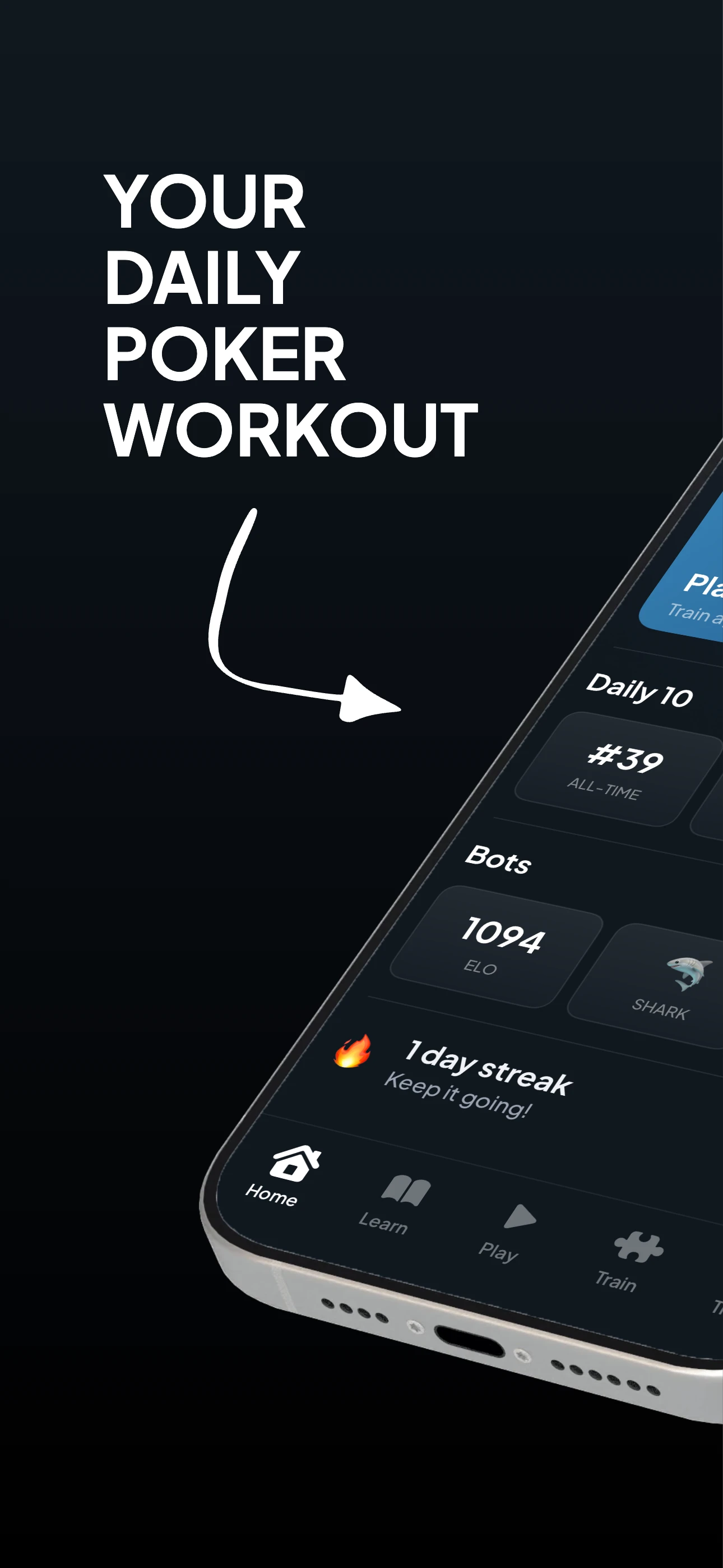
Compared with Poker Skill: Stack Poker is the one if you want a person across the table, while Poker Skill's coached hands are played against AI, heads-up or three-player.
What a month costs
The seven tests
You can run these seven tests on any app in about five minutes. Test 2 matters most: an app that marks a wrong answer without telling you why it was wrong cannot coach you. The table shows the red flag that fails each test.
| Test | Red flag |
|---|---|
| 1. Decisions per minute | You mostly watch, scroll or wait for a table to fill |
| 2. Feedback quality | A green check or a red X and nothing else |
| 3. Curriculum order | Random tips, or advanced theory on day one |
| 4. Pressure without money | Real-money stakes, or stakes so fake nothing matters |
| 5. Measurable progress | Streaks, badges and XP with no poker underneath |
| 6. Session length | Sessions only count if you grind for an hour |
| 7. The free tier | The wall comes before the first real lesson |
Tick the passes off in the app itself. Seven passes is a teaching app; four or fewer is a card dealer with a curriculum bolted on.
Score the app you are considering
If test 7 decides it for you, our guide to the best free poker apps compares what each free version teaches and whether it explains every answer.
Running Poker Skill through the checklist
Fair is fair: here is the same scorecard, filled in for our own app, the good and the not-yet.
| Test | How Poker Skill scores |
|---|---|
| 1. Decisions per minute | Pass. Lessons are built on real decisions from the first minute. |
| 2. Feedback quality | Pass. Every answer gets coaching that explains why a play works. |
| 3. Curriculum order | Pass. Hand rankings, then position, then counting outs and choosing which hands to play. |
| 4. Pressure without money | Pass. No wagering and no real money anywhere. |
| 5. Measurable progress | Not yet. Nothing in the app tracks your accuracy by concept over time. |
| 6. Session length | Pass. A lesson or the daily puzzle fits inside a coffee break. |
| 7. The free tier | Pass. Free to use, so tests 1, 2, 6 and 7 cost nothing to check. |
Test 5 is where we score ourselves down: a streak and an XP number measure attendance, and nothing in the app yet tracks which concepts you miss. Poker Skill also teaches Texas Hold’em only, so if you want Omaha or stud, we are not your app today.
Why GTO Wizard is not on this list
GTO Wizard is often the first name you hear when you ask for a poker app. It pairs a library of pre-solved spots with a trainer that gives GTO and EV feedback, and it was built for players who already think in ranges and frequencies. A beginner gets more from hand rankings, starting hands, position and basic betting first, and the trainer vs solver page covers when solver study starts to pay.
If you would rather watch than decide
Some people learn best from a teacher talking through hands. PokerCoaching’s Premium membership is built for that, with courses, classes, quizzes and live coaching, for $147 a month or $999 a year. The best way to learn poker compares deciding, reading, watching and a full course side by side.
Can you really learn poker from an app?
Yes, for the parts of poker that are decisions: which hands to play, how position changes them and what price you are being offered. Those are exactly the things an app can hand you over and over with an answer attached, and repetition with correction is how they stop being trivia. What an app cannot give you is the feel of real money in front of you. Practice away from stakes builds the thinking. Sitting at a table with money in play is a separate skill, and that one you learn at the table.
The rules take an evening. The decisions take reps rather than weeks: hand rankings land fast, position soon after and pricing your calls once you have had it corrected often enough for the pattern to stick, which is why fifteen minutes a day beats a Sunday marathon.
How we compared
We read each app’s store listing and its own site and looked at the screens in its listing. Prices come from each app’s own listing or plan page. Poker Skill’s own scorecard against the seven tests is above, with the test it does not pass yet.
The five in one line each
| App | Best for | Price |
|---|---|---|
| Poker Skill | Starting from zero, with a reason after every answer | Free forever. |
| PokerTrainer | Free drills once you know the rules | Free, paid plan $14.99 a month |
| River | A placement quiz and a coach to ask | Free, Premium $19.99 a month |
| Ollin | Learning by playing hands on Android | Free |
| Stack Poker | Learning by competing on iPhone | Free, Pro $9.99 a month |
Frequently asked questions
What is the best app to learn poker?
For most beginners, Poker Skill: it teaches Texas Hold'em in order, from hand rankings up, and every answer comes back with why it is right or wrong. Poker Skill is free. Forever. We make it, so we also say who should pick PokerTrainer, River, Ollin or Stack Poker instead.
What is the best free app to learn poker?
Poker Skill, because so much of it is free: every lesson, the Daily Puzzle and one Practice vs AI game a day cost nothing, and Plus is optional. Ollin is free too and teaches by playing hands, on Android. PokerTrainer's drills are free under a daily limit. Whichever you try, answer one question wrong on purpose and see whether the free version tells you why.
Is there a game that teaches you how to play poker?
Yes. Poker Skill teaches Texas Hold'em as a game: short lessons from the rules up, a Daily Puzzle and full hands against AI opponents in Practice vs AI, where Coach Max grades your decisions. Nothing is played for real money, and there are no chips to buy.
Is there a Duolingo for poker?
Several apps borrow its short daily lessons and streaks. Poker Skill, River and Stack Poker all pair short lessons with a streak to keep, and they differ in depth, in price and in the phones they run on.
How do I teach myself poker?
Learn the hand rankings and the order of play first, then position, then which hands to play from each seat, then how to price a call. Learn each one by making decisions and finding out why they were right or wrong, a few minutes a day. An app that grades every answer gives you those reps fastest.