


Reshove
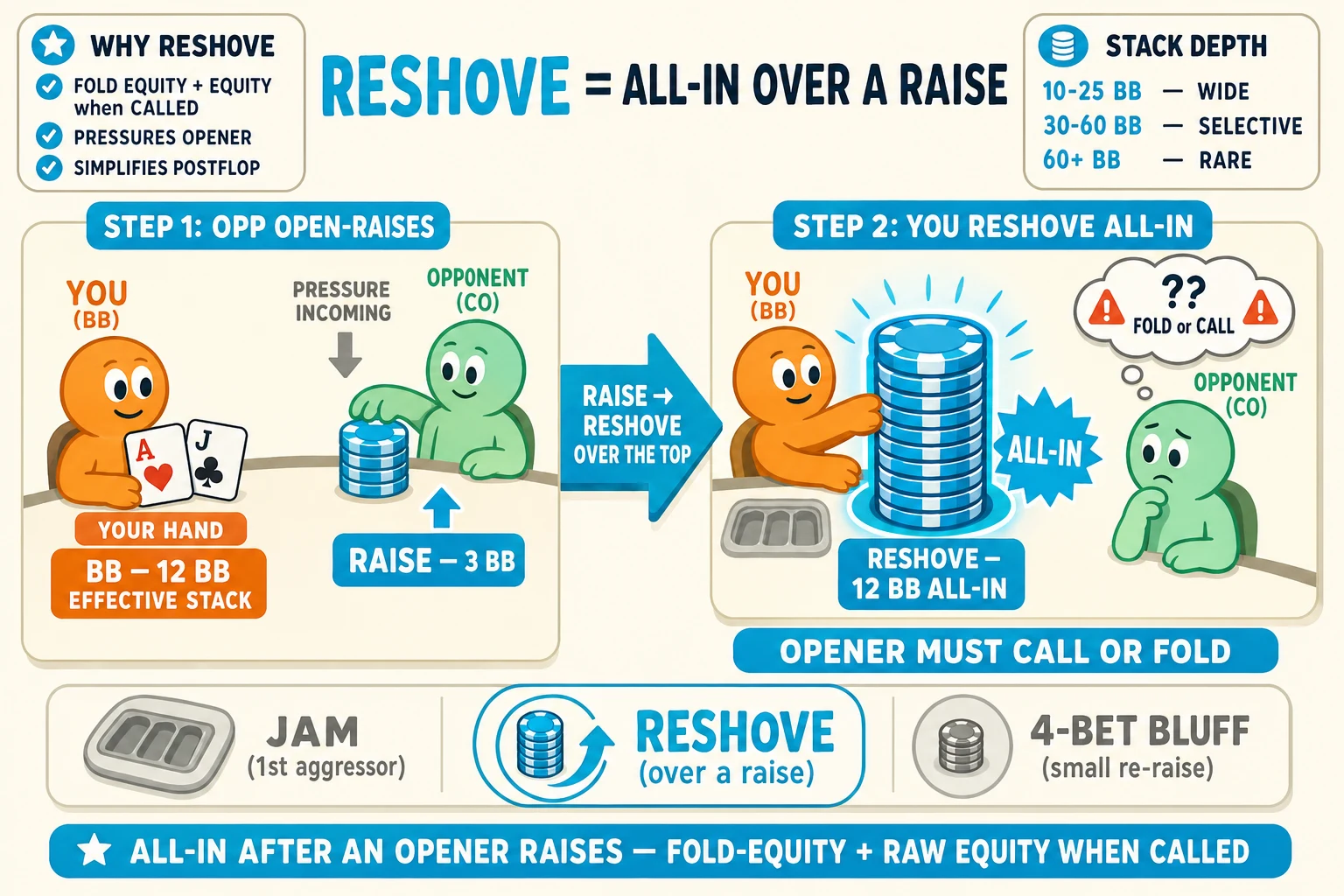
A reshove is moving all-in after another player bets, raises, or shoves. It appears most often preflop in tournaments. The play mixes fold equity - the chance opponents fold and you win the pot - with raw showdown equity, how often your hand wins if called. Primary goals: apply pressure to the opener, isolate weaker holdings, and either take the pot or get called when ahead. Reshoving works especially well with short stacks where committing chips is realistic - for example, with 12 big blinds in the big blind after a late-position open. A shove with A9s or 77 can force folds or win value when ahead.
Reshove: Definition, When to Use It, and How to Execute
What a reshove is and what it achieves
A reshove is moving all-in after another player bets, raises, or shoves. It appears most often preflop in tournaments. The play mixes fold equity - the chance opponents fold and you win the pot - with raw showdown equity, how often your hand wins if called. Primary goals: apply pressure to the opener, isolate weaker holdings, and either take the pot or get called when ahead. Reshoving works especially well with short stacks where committing chips is realistic - for example, with 12 big blinds in the big blind after a late-position open. A shove with A9s or 77 can force folds or win value when ahead.
Stack-depth rules of thumb for reshoving
- Short stacks (≈10-25 big blinds): reshove widely. At these depths many playable hands become all-in candidates because fold equity and simple equity matter most. Example: with 15bb facing a cutoff open, shoving suited aces, medium pairs, or strong broadways often proves profitable.
- Medium stacks (≈30-60 big blinds): reshove selectively. Favor hands with strong raw equity and postflop playability, such as suited aces, strong broadways, and pairs. Example: with 40bb prefer 3-bets or calls to preserve postflop options; shove only premium hands or exploit very loose openers.
- Deep stacks (well above 60 big blinds): reshoving preflop is rare. Deep play rewards postflop maneuvering and requires stronger hands to commit all chips.
Poker Skill’s Response to Opens lessons sit in that deep row, dealing 100-big-blind stacks where the answer to an open is a 3-bet, a call or a fold rather than an all-in.
Position and opponent tendencies: exploitative adjustments
Position affects your reshove range. Tighten versus UTG opens - UTG (first to act preflop) usually opens stronger ranges, so reshoving over UTG should be more value-heavy. Widen versus late-position opens where ranges tend to be looser. Adjust to opponent types: versus fold-heavy openers, reshove lighter to exploit their tendency to surrender equity. Versus calling stations - players who call frequently - tighten and shove only value-dense hands, since they will often call and you need stronger showdown equity.
Pot size, antes, and tournament context
Antes and bloated pots increase effective pot odds for shoving. Tournament play with antes typically widens profitable reshove ranges compared with cash games because the pot you can steal is larger. If the opener sized a large raise or multiple players have called, a reshove loses effectiveness unless your hand holds strong showdown equity. In later stages factor in ICM - the tournament value of chips - and avoid marginal reshoving that risks significant tournament equity.
GTO baselines and how to adapt them practically
GTO solvers provide baseline reshove charts accounting for stack size, position, and pot, assuming balanced play. Use those ranges as a starting point: around 10bb many hands appear in reshove charts; at 30-60bb ranges become more nuanced. Deviate from GTO when you have reliable reads. Widen against frequent folders, tighten against loose callers, and adjust for aggressive openers who will 4-bet shove. Blend solver guidance with exploitative moves to raise your expected value.
Quick checklist
- Confirm stack depth and map it to short/medium/deep rules of thumb.
- Note opener position and recent tendencies before committing chips.
- Factor antes, pot size, and ICM implications before reshoving.