
Big blinds in No-Limit Texas Hold’em
What the big blind is
The big blind is a forced bet posted by the player two seats left of the dealer button before any cards are dealt. The small blind, posted by the player immediately left of the dealer, is typically half that amount. Together the two blinds put money in the pot before anyone has a hand and give every seat a reason to fight for it. The big blind also sets the table’s minimum stake and starts the action clock each hand.
Big blind position and preflop action
The big blind posts blind, before seeing hole cards. On the preflop round (the betting round before community cards), the big blind acts last after everyone else has had a chance to call, raise, or fold. Acting last hands you extra information.
For example: several players fold, one raises, and a player to the raiser’s left calls. When action reaches the big blind, they fold, call, or reraise after watching the earlier action. Note that “in position” postflop is a different question. Postflop the big blind acts first on every street, so the preflop information edge does not extend past the flop unless the seat with position folded out preflop.
How big blind size influences strategy
The big blind sets the table minimum and pulls directly through to pot odds, the pot size versus the cost to call. Larger blinds make calls and opens more expensive and put pressure on short stacks. Smaller blinds let players see more flops with speculative hands, since the implied cost of chasing a draw falls.
Practical effect:
- Opening ranges change: larger blinds push players to fold marginal hands unless they can steal or apply pressure.
- Defense thresholds change: defenders in the big blind may tighten or widen calling ranges depending on stakes and opponents’ tendencies.
- Post-flop planning adjusts: deeper effective stacks relative to the big blind favor multistreet play; shallower stacks favor simple commit-or-fold decisions.
Big blinds in tournament progression
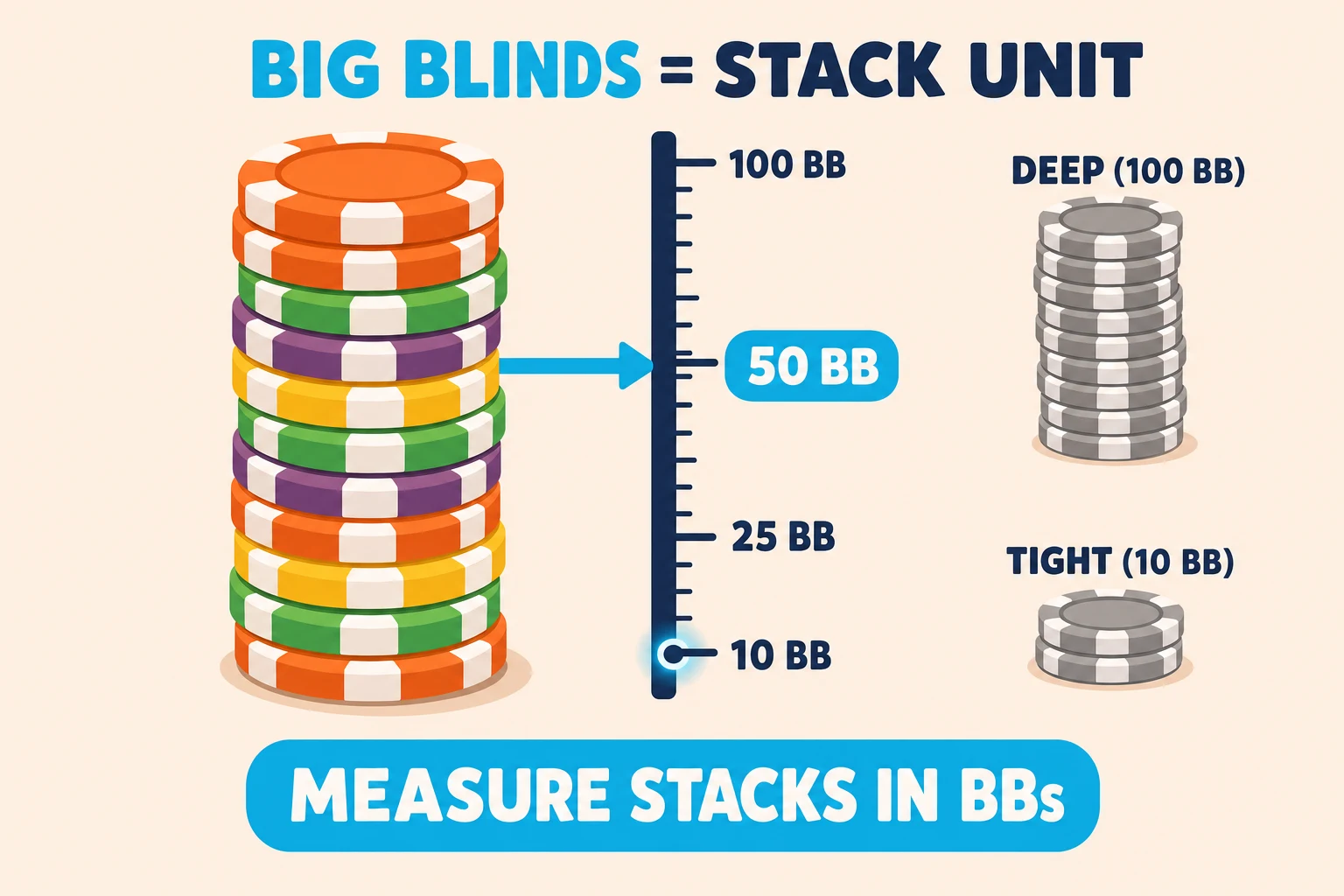
Tournament big blinds rise at regular intervals. As blinds climb, relative stack value shifts: a stack that was deep can become short, and the moves that made sense at 100 BB stop working at 25 BB. Rising blinds force action by reducing the hands you can afford to wait for and by raising the value of steals and ICM considerations (endgame equity). Tighten when preservation matters; widen stealing ranges when the blinds are close to eating you. The blind level is the metronome for the whole tournament.
Defending the big blind and expected value
Defending the big blind means calling or reraising to protect your posted bet. Because you already have chips in the pot, pot odds often justify defending with a wider range than from late position. That is why defenders frequently continue with hands that have reasonable equity against an opener.
Still, the long-term expected return from posting blinds is negative. You are forced to commit chips before seeing cards; over many hands that cost becomes a net loss unless offset by superior skill or fold equity elsewhere.
Practical defending steps:
- Count pot odds: compare the call cost to pot size.
- Consider position and opponent tendencies: are they stealing frequently?
- Choose ranges: defend wider against frequent stealers; tighten versus strong openers.
- Plan post-flop: know when to continue and when to release the hand.
Quick checklist
- Big blind = forced bet two seats left of dealer; posts before cards.
- Usually double the small blind; ensures money in the pot.
- Big blind acts last pre-flop after others have acted.
- Tournament blinds rise regularly, increasing pressure and changing strategy.
- Defend wider due to pot odds, but expect a negative long-term return from posting blinds.