


Regular
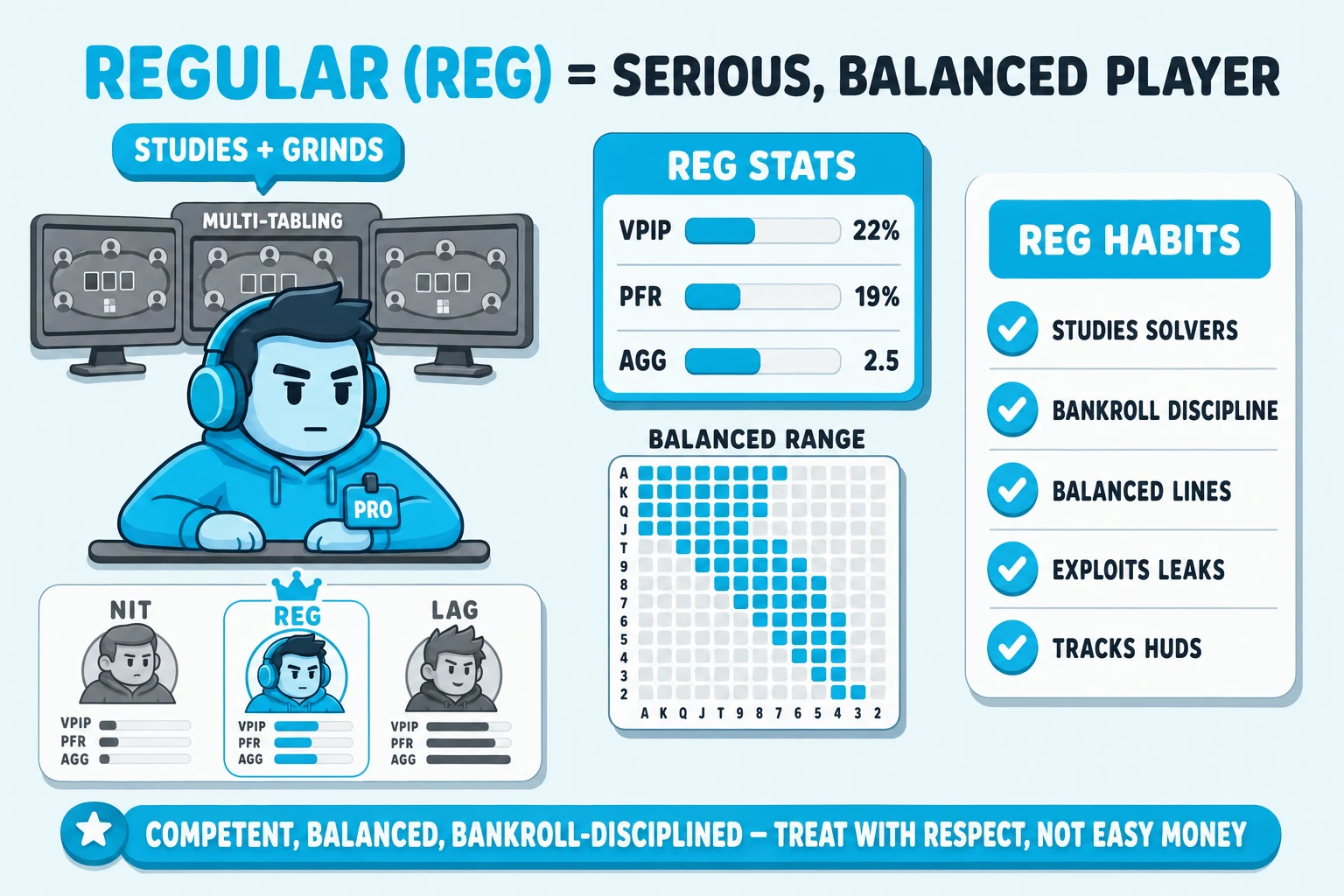
A regular ("reg") is a serious, studied player you'll see at the same stakes most days. Balanced ranges, disciplined bankroll, and the leaks of a recreational player largely closed.
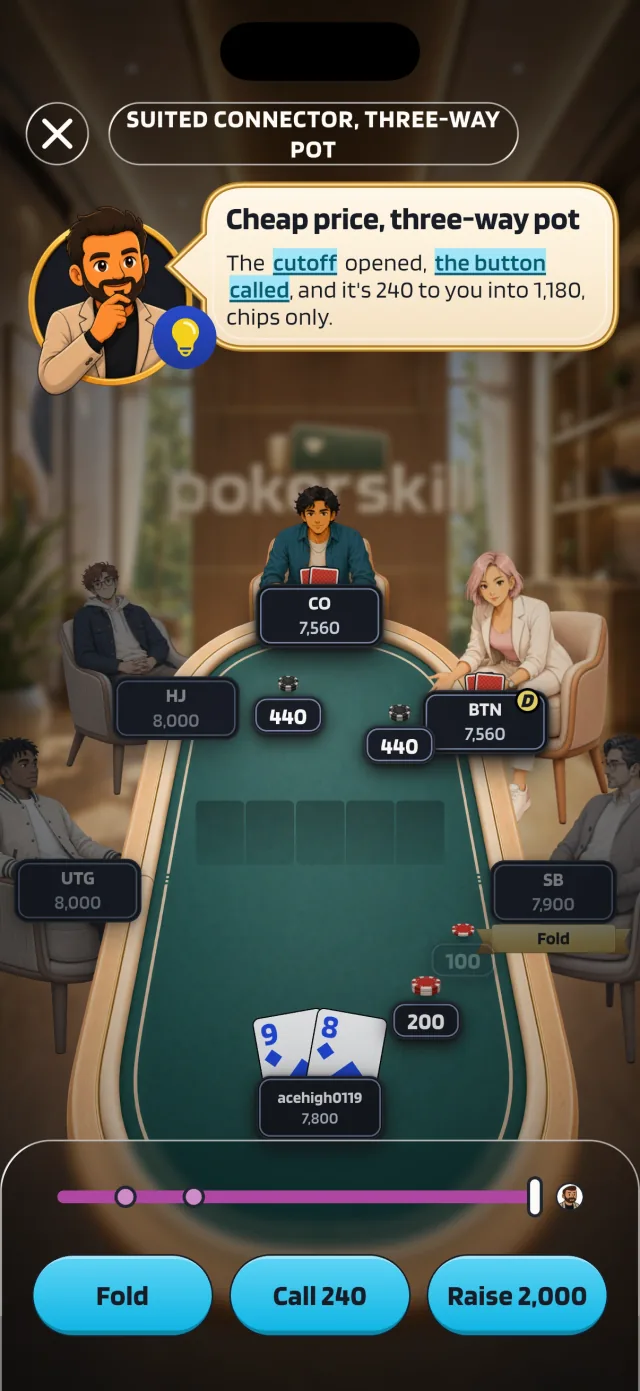
Practice this in Poker Skill. A regular is a studied player, and the Daily Puzzle gives you one Hold’em spot a day that grades the decision you commit to.
Get the free appRegular in No-Limit Texas Hold’em: what every serious player needs
Core NLHE rules every regular must know
Quick review of mechanics shaping regular play:
- Deal structure: each player receives two private hole cards; five community cards are dealt face-up across the flop (three cards), the turn (one), and the river (one).
- Hand construction: make the best five-card hand using any combination of your hole cards and the community cards.
- Betting rounds: four betting rounds - pre-flop, flop, turn, river - with action between each deal.
- No limit: players may wager any amount of their chip stack at any time, including pushing all chips (“all-in”), which increases variance and creates high-leverage spots.
Example: pre-flop you hold A♠K♦. You may raise, face a reraise, and still shove all chips if the situation merits - that freedom to stake your whole stack defines NLHE.
Fundamental strategic habits of a regular
These habits produce long-term results.
- Aggression and selective bluffing: aggression means betting and raising more than calling. Bluff selectively; pressure wins pots without showdown and extracts value with strong hands.
- Positional advantage: position means where you act in the betting order. Acting later gives more information and more control. On the button (last to act) you can play a wider range than from early position.
- Starting-hand discipline and opponent reading: be selective with opening hands. Use observed patterns - bet sizes, timing, tendencies - to assign opponents likely ranges (the set of hands they could reasonably have) and adjust each street (each betting round).
Example: facing a tight early-position open, defend only with premium hands and avoid marginal calls out of position. Versus a loose raiser, widen your calling and three-betting ranges.
Advanced plays and table adjustments
Techniques regulars use to exploit opponents and dynamics.
- Three-betting: raising after an initial raise seizes initiative, isolates one opponent, or applies pressure. Mix value hands and bluffs so opponents can’t exploit you.
- Adjust ranges and aggression to table dynamics: tighten against many aggressors; loosen and pressure passive tables. Good regulars shift quickly as opponents change.
- Psychological leverage and consistent pressure: use bet sizing and timing to tell a believable story. Consistent pressure forces errors from players who call down too wide.
Example: if a known caller defends too wide post-flop, three-bet them pre-flop with hands that play well in position to exploit their mistakes.
Bankroll and stack management for regulars
Discipline here determines longevity.
- Higher variance from no-limit betting makes strict bankroll management essential. Size your play so a losing session doesn’t prevent continued play.
- Stack management matters because big bets and all-ins decide sessions quickly. Know how effective stack depth affects hand equities and implied odds (future potential winnings) - shallow stacks reduce post-flop maneuvering; deep stacks reward multi-street thinking.
- Choose stakes consistent with your bankroll comfort and avoid risking full stacks when tilted or bankroll-constrained.
Example: adjust opening and shove ranges by effective stacks - play differently when deep versus when either player is short-stacked.
Why being a regular matters: tournaments, study, and culture
NLHE’s prominence creates development pathways.
- NLHE is the headline game of major tournaments, which gives regulars a deep, live strategy library to study against.
- The game is widely analyzed live and online, so there is plenty of study material and practice volume available.
- Televised events and modern poker literature give regulars feedback loops most other games do not — coverage hands, solver databases, and discussion communities all built around the same format.
Quick checklist
- Know the deal structure and betting rounds cold (hole cards, flop, turn, river).
- Build habits: aggression when appropriate, positional awareness, selective starting hands.
- Study three-bet lines, table adjustments, and psychological leverage.
- Set and follow strict bankroll and stack-management rules.
- Get consistent live/online practice and review hands regularly.