


Leverage
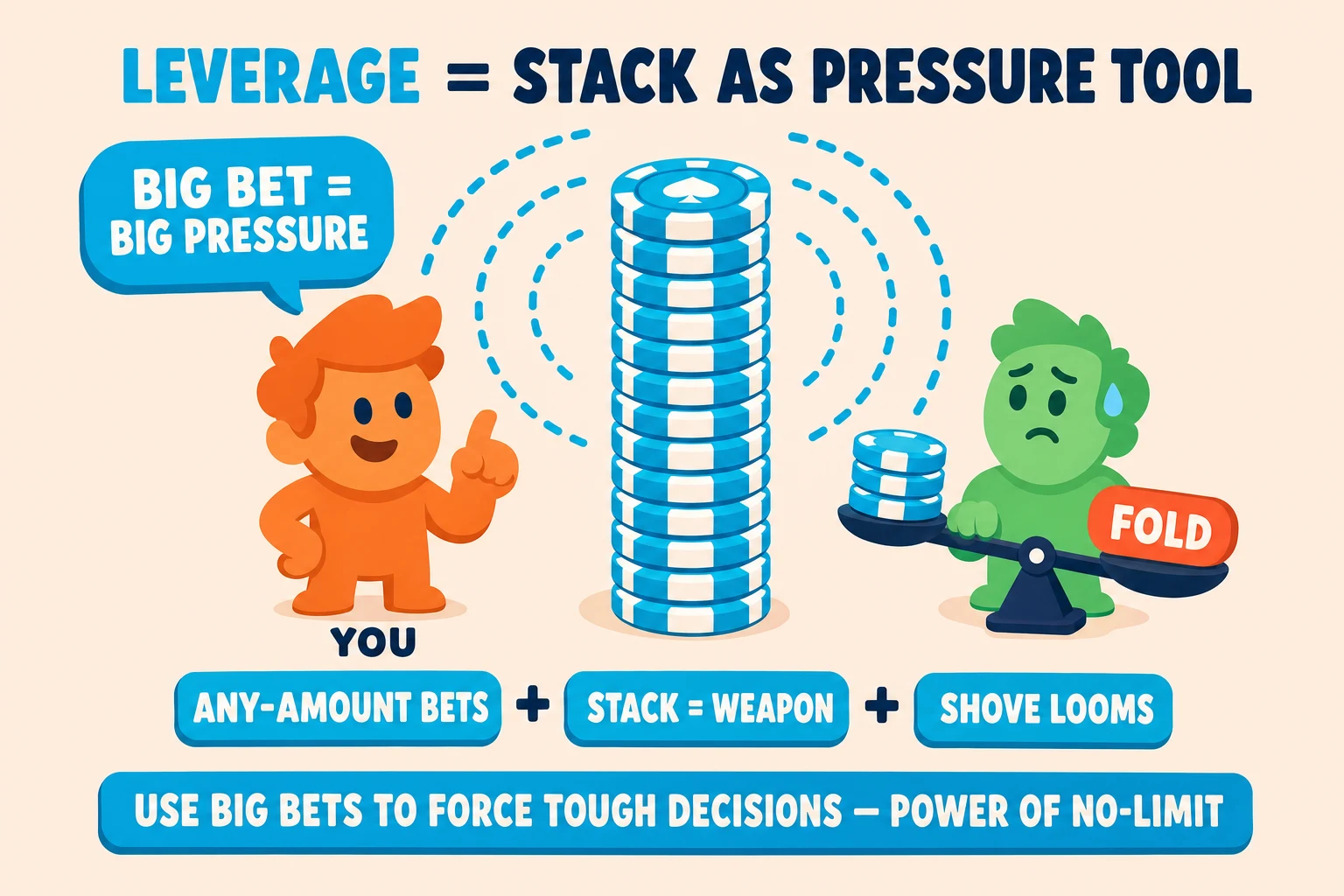
The pressure your stack puts on opponents in No-Limit. Any chip can be at risk on any bet, so a well-timed wager threatens stacks, prices out draws, and forces folds.
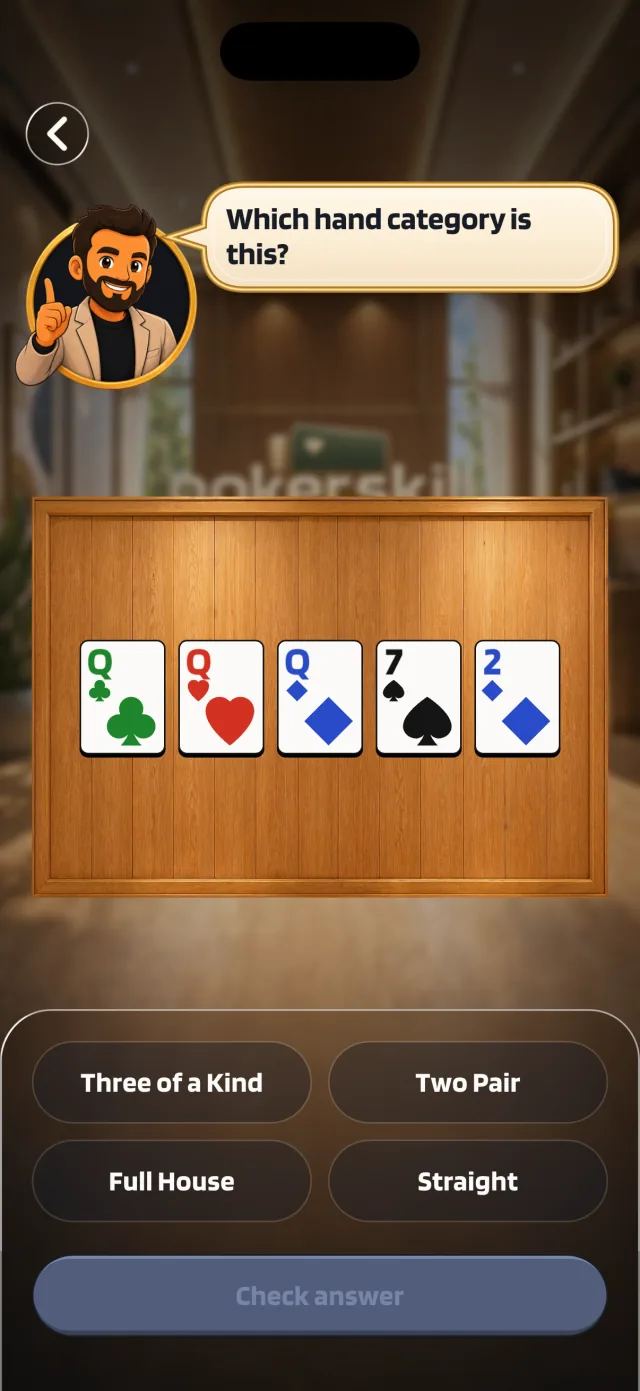
Practice this in Poker Skill. Building toward a stack-threatening bet starts early in the pot-control lesson: A♦ 9♦ raises top two pair on A♠ 9♣ 4♠ to grow the pot while it’s ahead, and Q♠ 10♠ just calls on K♦ Q♥ 6♠ to keep a marginal pot small.
Get the free appLeverage in No-Limit Texas Hold’em
What leverage is and why it matters
Leverage is the pressure your stack puts on opponents in No-Limit Hold’em. Because any wager can threaten the whole stack, a single well-timed bet can force folds, charge a maximum price for draws, or end a hand by putting an opponent all-in.
That same freedom magnifies both reward and risk compared with fixed-limit games. A correctly timed large bet can win a pot without a showdown. A mistimed shove can cost your tournament life or most of your cash-game stack.
How betting structure creates leverage
No-Limit rules let you choose any bet size, so a single wager can threaten an opponent’s entire stack. That threat creates fold equity, the chance your opponent folds and you win the pot immediately.
Large bets alter opponents’ cost-benefit calculations. If the pot is 100 and you bet 300, a caller risks 300 to win 400. Marginal hands that call small bets often fold to these larger asks.
Stack size relative to the pot determines a bet’s leverage. A shove with 2x the pot behind delivers far more pressure than one with 0.2x the pot behind.
Using leverage to bluff and build value
Use leverage deliberately for both bluffs and value extraction:
- Turn marginal hands into bluffs when fold equity exists. With a weak top pair on a dangerous board, a large bet or shove can make better hands fold.
- Size bets to charge draws. A large bet can deny correct pot odds and make drawing incorrect. If the pot is 200 and you bet 300, the caller risks 300 to win 500, often insufficient pot odds to call.
- Extract maximum value from strong hands. Against loose callers, a big river bet or shove often gets paid by second-best hands.
Mix your sizes. If you only bluff with huge bets, opponents will start to call or re-raise more often. A varied sizing tree is what keeps your leverage credible.
Position, pot odds, and SPR: leverage drivers
Acting in position increases leverage because you control the final bet size and see your opponent’s actions before committing. From position, you can size larger overbets knowing the likely responses.
Pot odds, the ratio of the call to the total pot, determine whether calling a high-leverage bet is profitable on a draw. If the price is worse than your draw’s equity, folding is usually correct.
Stack-to-pot ratio (SPR), stack size divided by pot size, shows how committed both players will be after the flop. Low SPRs favor all-in leverage; a single shove can end the hand. High SPRs need multi-street planning and smaller, more deliberate sizing.
Managing risks and defending against opponent leverage
Respect large bets. Fold when pot odds and equity don’t justify a call. Use check-raises to punish frequent overbetters. Use pot control, checking to keep the pot smaller, when you want to avoid high-leverage confrontations.
Adjust calling frequency and all-in tolerance based on tournament life or cash-game depth. Against aggressive opponents, widen calling ranges where bluffs are likely. Against tight players, give their big bets more credit.
Quick checklist
- Identify when your stack size creates meaningful leverage (compare stack to pot).
- Choose bet sizes that combine value extraction and fold equity for the situation.
- Use positional advantage to apply or avoid high-leverage confrontations.
- Factor pot odds and opponent tendencies before committing large stacks.
- Practice balanced bluffing to prevent opponents from exploiting your leverage patterns.