


Lead Bet
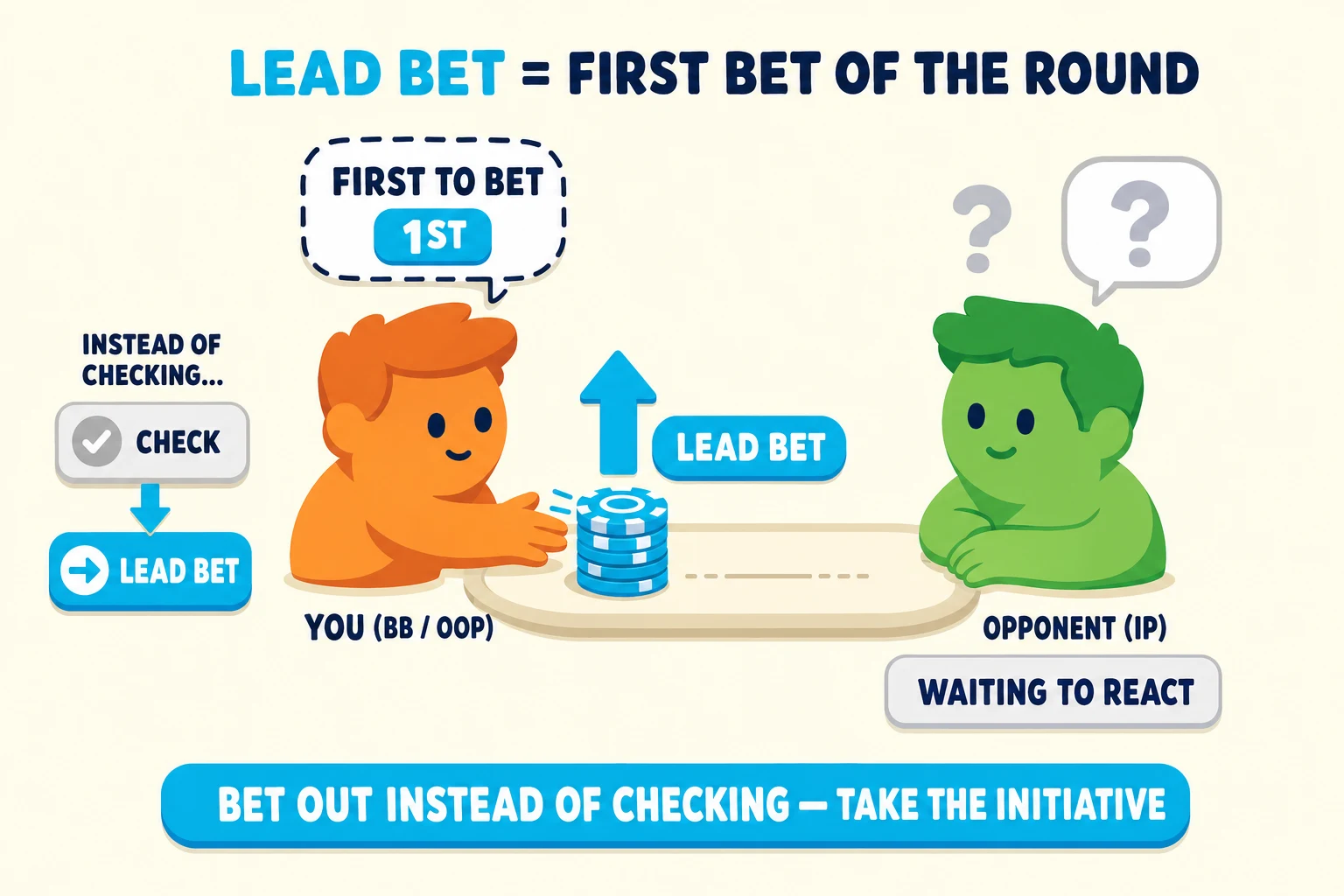
A lead bet (also called betting out) is making the first bet in a betting round instead of checking. The first bettor holds the betting lead. They control immediate action and force opponents to react.
Practice this in Poker Skill. The Lead and Donk Bets lesson starts from checking: it names the donk bet, then has you check to the raiser, as with K♥ 2♥ on Q♥ 10♦ 5♣.
Get the free appLead Bet
What a lead bet is
A lead bet (also called betting out) is making the first bet in a betting round instead of checking. The first bettor holds the betting lead. They control immediate action and force opponents to react.
In No-Limit Texas Hold’em, the first bettor can choose any bet size, which makes leading powerful. You can apply light pressure with a small wager or threaten a large portion of an opponent’s stack. If you raised preflop and then bet the flop to continue that story, that lead is a continuation bet (see below).
Core strategic purposes of leading
Leading serves three main aims.
- Extract value: With a strong hand, betting builds the pot and denies opponents free cards that could improve them. For example, betting made two-pair on a wet board charges draws.
- Apply pressure: A lead can represent strength or serve as a bluff to force folds. Fold equity - the chance an opponent folds - drives many bluff leads.
- Gather information: Opponents’ reactions (call, raise, fold) narrow their likely ranges and guide your later decisions.
Match purpose to your hand, the board, and the opponent. Don’t lead aimlessly; pick value, pressure, or information.
When to lead based on hand and board
Pick spots where a lead fits your hand and the board texture.
- Hand types: Favor hands that don’t fit a normal check/call or check/raise range - for example, some draws or marginal made hands that need fold equity or protection. A medium-strength top pair threatened by overcards may bet for value and to deny cards.
- Board texture: Lead where your story is credible. On a dry board (few draws), a lead more credibly represents a strong made hand. On a wet board (many draws), leading charges drawing hands.
- Opponent tendencies: If an opponent folds too often, lead more to exploit them. Against sticky callers, prefer value sizes over bluff leads.
Position, continuation bets, and donk betting
Position - whether you act after or before opponents - changes a lead’s intent.
- Leading in position, where you act after opponents, lets you control future prices and extract more value.
- A continuation bet (c-bet) is a lead by the preflop aggressor intended to continue representing the preflop raise. Example: you raised preflop, the flop comes, and you bet to maintain initiative.
- Donk betting is leading out of position into the preflop raiser. Use it to disrupt opponents or exploit a board texture; for example, extract value when the raiser expects a c-bet but faces a surprise bet.
Bet sizing and maintaining initiative in No-Limit
Sizing defines the tool you use.
- Larger bets apply pressure, increase fold equity, and can deny opponents correct pot-odds to continue.
- Smaller bets extract value from weaker hands and keep bluffs cheaper; they also gather information without committing too much.
No-Limit’s flexible sizing makes the betting lead a potent weapon. Controlling initiative helps you build pots when ahead, deny free cards, and steer the hand toward favorable runouts.
Quick checklist
- Decide to lead based on hand type, board texture, and opponent tendencies.
- Choose a bet size that matches your goal: pressure, value, or information.
- Note position: leading in vs. out of position changes objectives and risk.
- Use continuation bets to sustain the story when you were the preflop aggressor.
- Consider donk bets selectively to disrupt standard lines or exploit specific opponents.