


Preflop
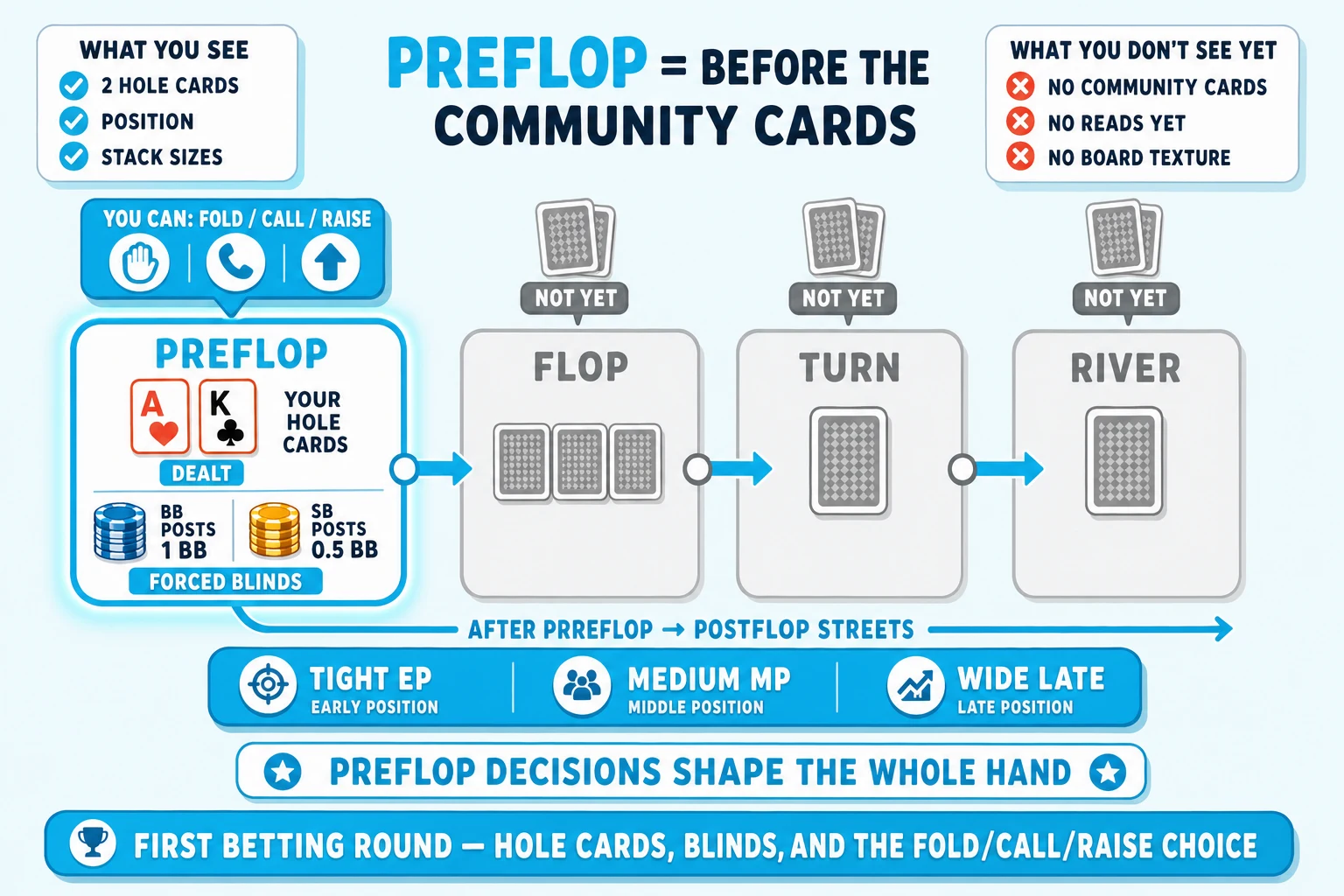
The preflop round is the betting before any community cards are dealt in No-Limit Texas Hold'em. Players see only their two hole cards, note position, and choose to fold, call, or raise. Disciplined preflop choices shape the entire hand and set your perceived range. Opening strong or folding weak hands often gives you initiative - the ability to act before opponents on later streets. That initiative simplifies postflop decisions and reduces difficult choices on the flop, turn, and river.
Practice this in Poker Skill. The Raise or Fold (No Limping) lesson practices the first-in choice, raising the hands worth playing and folding the rest, even 8-4 offsuit on the button.
Get the free appPreflop
What preflop is and why it matters
The preflop round is the betting before any community cards are dealt in No-Limit Texas Hold’em. Players see only their two hole cards, note position, and choose to fold, call, or raise. Disciplined preflop choices shape the entire hand and set your perceived range. Opening strong or folding weak hands often gives you initiative - the ability to act before opponents on later streets. That initiative simplifies postflop decisions and reduces difficult choices on the flop, turn, and river.
Position: how seat changes what you should play
Position means where you sit in relation to the dealer button at the table. Acting later gives you more information about opponents’ actions, which is a clear advantage. Play very tight from early positions because many players act after you and can apply pressure. From middle positions, open your range slightly while remaining selective to avoid getting crushed. From late positions - cutoff and button - widen your opens to steal blinds uncontested. Acting late also gives more postflop options, like selective bluffing and pot control.
Opening ranges: which hands to raise from each spot
Premium hands - A-A, K-K, Q-Q, and A-K - are core openers and should be raised or re-raised. Follow these practical opening guidelines:
- Early seats: open very tight, favoring premium pairs and top broadway hands.
- Middle seats: add some suited connectors and strong broadway combos, while staying selective.
- Late seats (cutoff and button): widen your opening range to steal blinds and use positional advantage. Use starting-hand charts and range tools as guides, but adjust to table dynamics. Widen late-position opens against players who fold often; tighten or raise stronger against aggressive defenders.
Aggression and why raising beats limping
Raising takes initiative, builds the pot with strong holdings, and creates fold equity. Entering a pot with a raise also keeps opponents guessing about your range. Limping - calling the big blind instead of raising - surrenders initiative and makes postflop play harder and less profitable.
When you enter a pot for the first time, prefer:
- Raise with hands you intend to play for value or use as potential bluffs.
- Fold clearly weak holdings that have little postflop playability.
- Avoid open-limping except in rare, specific strategic spots.
This tight-aggressive approach makes your strong hands more valuable and your bluffs more credible.
Adjustments: tailor preflop to stacks, table, and format
Adjust preflop strategy for stack size, opponent tendencies, and game format or type. Short or shallow stacks narrow profitable opening ranges and increase shove-or-fold decisions. Deeper stacks allow more speculative hands and reward extended postflop maneuvering. Against loose-passive tables, widen openings; against aggressive tables, tighten and prefer selective re-raises. Tournaments require extra caution because blind structures rise and preserving chips matters. Cash games allow steadier exploitative aggression and more consistent, long-term adjustments.
Quick checklist
- Play tight and aggressive from early positions.
- Widen your opening range from late positions to exploit blind-stealing opportunities.
- Raise when first entering pots; avoid open-limping.
- Always open premium hands (A-A, K-K, Q-Q, A-K) with a raise or re-raise.
- Adjust ranges for stack sizes, opponent tendencies, and game format.