


Button
The Button marks the player with the table's positional advantage and indicates the nominal dealer. This rotation ensures every player eventually posts the Small Blind (SB) and Big Blind (BB). The player on the Button acts last in every post-flop betting round. Acting last lets you see other players' actions before deciding, a powerful information advantage.
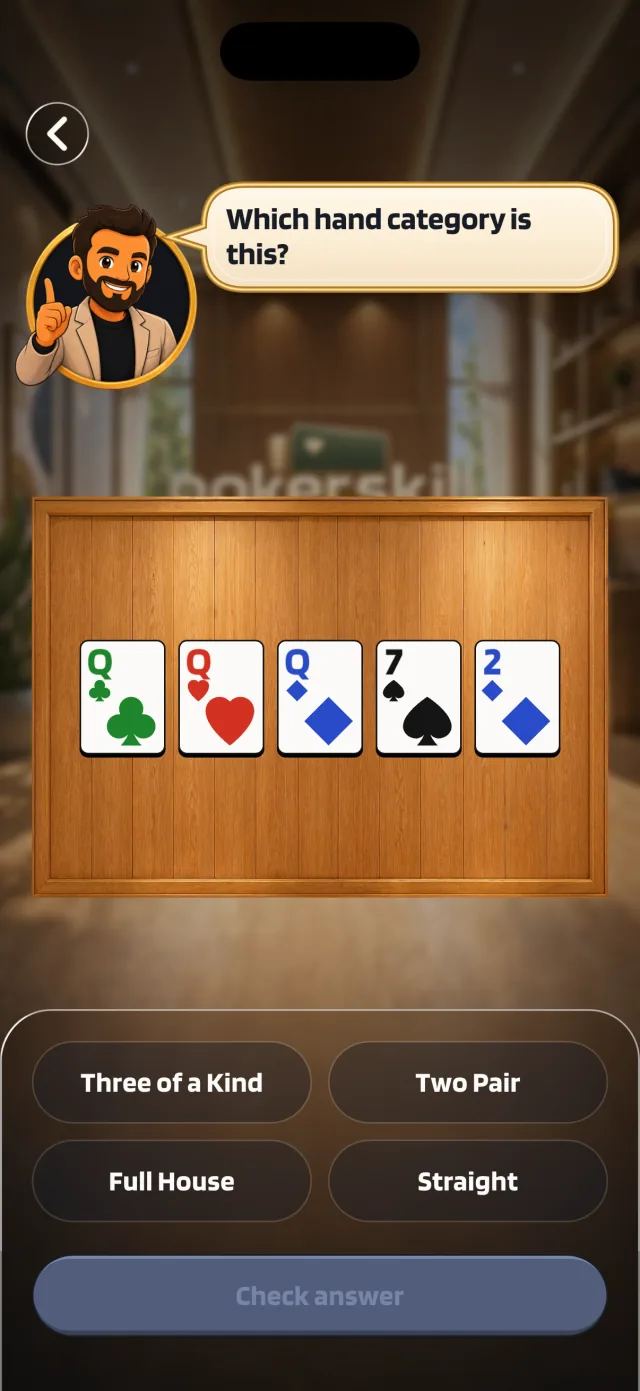
Practice this in Poker Skill. The Button: Raise or Fold lesson shows how wide that edge lets you open: A♠ J♦ and Q♣ J♦ are standard raises from the seat, while 10♦ 6♣, a disconnected offsuit hand, still folds.
Get the free appThe Button (Dealer Button) in No-Limit Texas Hold’em
What the Button Is
The Button marks the player with the table’s positional advantage and indicates the nominal dealer. This rotation ensures every player eventually posts the Small Blind (SB) and Big Blind (BB). The player on the Button acts last in every post-flop betting round. Acting last lets you see other players’ actions before deciding, a powerful information advantage.
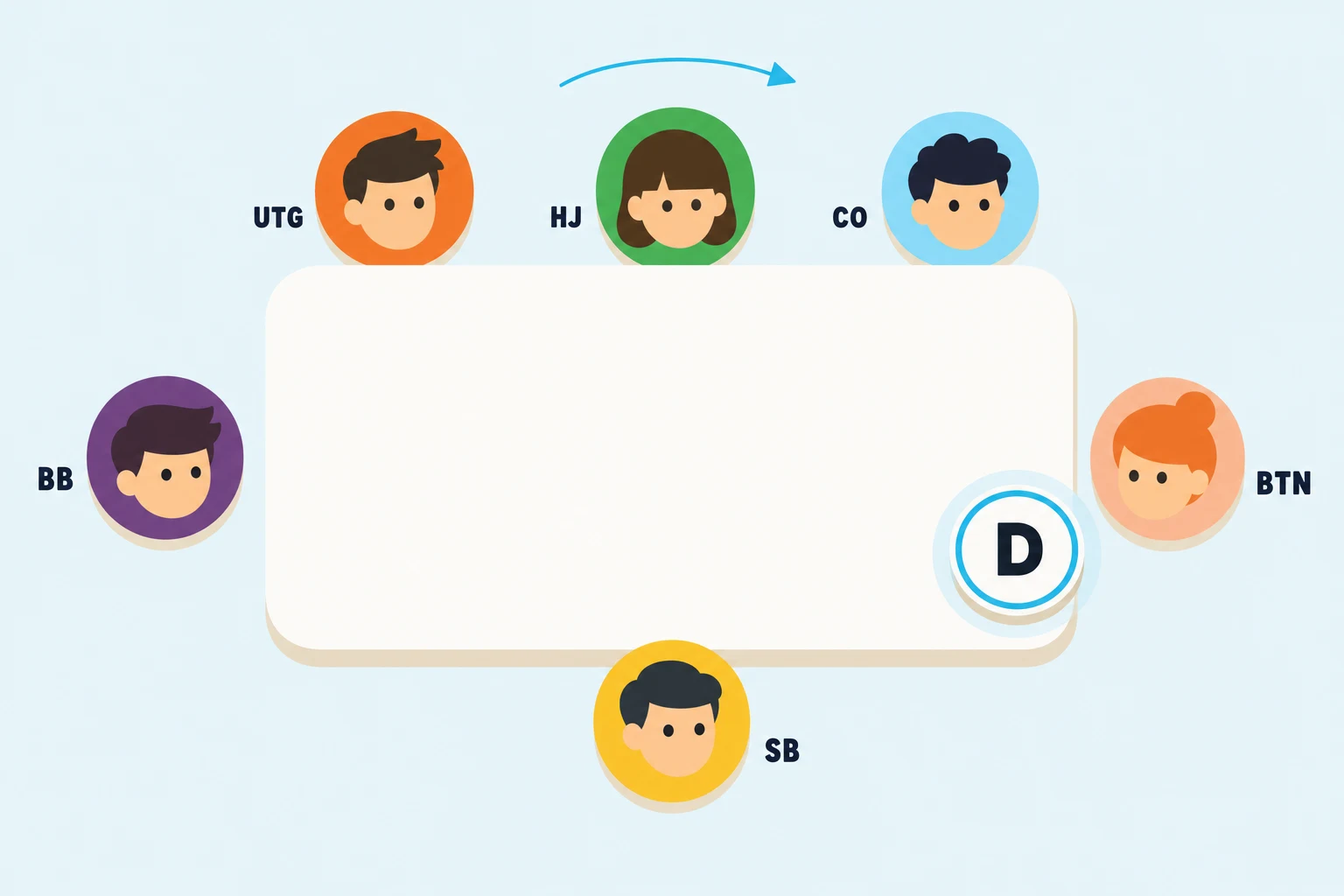
Why the Button Is the Most Powerful Seat
Acting last post-flop gives you extra information and more valuable decision flexibility. That helps you avoid costly mistakes and pick optimal spots to apply pressure. With that information edge, the Button can play a wider, more profitable hand range. Hands marginal from early positions often become playable from the Button. Examples include KJo (king-jack offsuit) and suited connectors (connected cards of the same suit). The Button controls initiative; you can pressure earlier seats, force folds, and control pot size. That leverage makes the Button the most lucrative seat over long stretches.
How the Button Shapes Betting Order and Table Dynamics
The Button’s last action post-flop alters opponents’ incentives and strategy. Early positions like Under the Gun (UTG) - the seat immediately left of the big blind - typically tighten up. Middle seats, such as the Hijack and Cutoff, also tighten because they act before the Button post-flop. Because you react to prior actions, the Button can exploit tight play from UTG or the Cutoff. If UTG opens and players fold to you on the Button, a wide raise will often take the pot preflop. Interplay with the Small Blind (SB) and Big Blind (BB) is central. Preflop, the Button can often “steal” the blinds by opening a wide range. Postflop, acting after the blinds creates profitable bluffing and value-betting opportunities.
Common Preflop Button Strategies
- Open wider to steal: raise with a broader range than from early position. Examples: KJo (king-jack offsuit), A9s (ace-nine suited), or 76s (seven-six suited) when folded to you. These hands can win uncontested pots or play well postflop with position.
- Use selective 3-bets and 4-bets: 3-bets isolate opponents and seize initiative. Example: Cutoff (CO) opens to 3BB, you 3-bet to 10BB with AJs, then play heads-up with initiative. Occasionally 4-bet to polarize against very aggressive openers and define ranges.
- Attack passive defenders: target blind players who defend too often with weak hands. If the BB defends too wide, widen your opens and apply postflop pressure.
3-bet = first re-raise preflop; 4-bet = re-raise after a 3-bet.
Post-Flop Play and Practical Application on the Button
Acting last lets you gather information before committing chips on later streets. Example: you raise to 3BB preflop and the BB calls. Flop: Q-7-2 rainbow (three different suits). If BB checks, a continuation bet often takes the pot because many blind ranges miss this board. Focus aggression on boards that miss earlier positions’ ranges. A dry 9-8-3 flop often favors wide Button ranges versus UTG’s tight range, so a bet frequently forces folds. On coordinated boards where early ranges connect, such as A-K-Q, play more cautiously. Aim to maximize equity by mixing value bets, bluffs, and checks based on opponent tendencies. If a BB defender folds too often to river aggression, raise your bluff frequency on missed draws.
Quick checklist
- Act last post-flop: use the information advantage before deciding.
- Open wider preflop to steal blinds, balancing this with selective 3-bets and 4-bets.
- Target boards that miss early ranges and pressure weak defenders.
- Remember the Button rotates clockwise so every player receives the opportunity in turn.