


Steal
A steal is a preflop raise aimed mostly at winning the blinds and antes uncontested. Players often use less-than-premium hands, aiming to take the pot without seeing the flop. The play relies on fold equity - the chance opponents will fold rather than call. Steals usually come from late positions like the cutoff and button after everyone folds. As blinds and antes grow, each successful steal wins a larger reward.
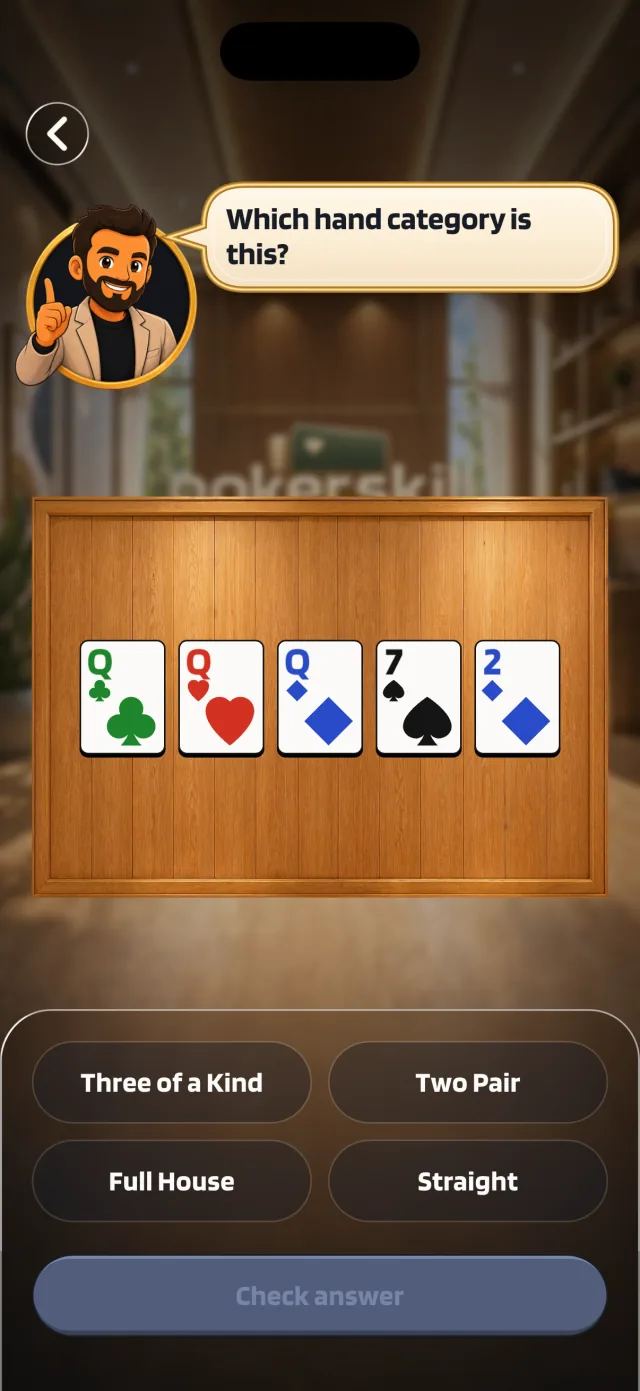
Practice this in Poker Skill. The Cutoff: Raise or Fold lesson practices the steal from the cutoff, raising playable hands wider than under the gun and still folding trash.
Get the free appSteal
What a steal is and why it works
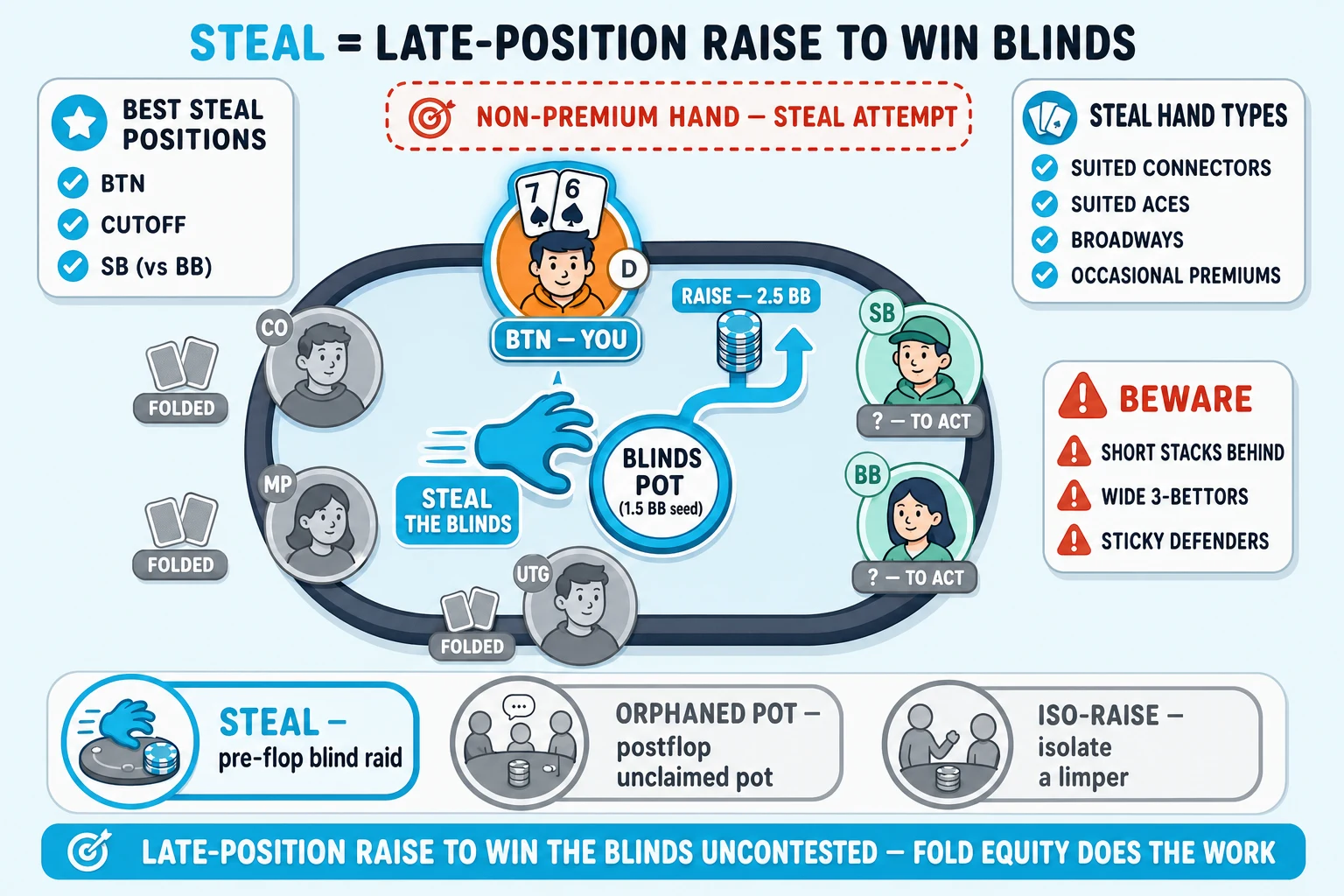
A steal is a preflop raise aimed mostly at winning the blinds and antes uncontested. Players often use less-than-premium hands, aiming to take the pot without seeing the flop. The play relies on fold equity - the chance opponents will fold rather than call. Steals usually come from late positions like the cutoff and button after everyone folds. As blinds and antes grow, each successful steal wins a larger reward.
Example: You’re on the button with 7♠6♠, everyone folds to you, and you raise to steal the blinds. Both blinds fold and you collect the pot without a flop.
Best positions and timing to attempt a steal
Late positions give the best chance to steal, especially the cutoff and button. Steals become more attractive when antes and blinds cost more relative to stacks. That pressure increases opponents’ incentive to fold marginal hands. Avoid frequent stealing when short stacks who can shove are still to act. A short-stack shove removes your fold equity, because they can push all in and force decisions.
Example: You open-raise from the button but the small blind is short and likely to shove. Folding or tightening your range is usually better than risking a shove you can’t call profitably.
Hand selection and sizing for steals
Use a steal range filled with many non-premium hands but also playable holdings to stay balanced. Suited connectors, broadway cards, and suited one-gappers often work because they can flop well if called. Make your raise large enough to discourage calls, but small enough to preserve your stack against shoves. Mix in strong hands occasionally to stay unpredictable and avoid being exploited by callers or re-stealers.
Example: From the button you mix 9♠8♠ and K♦Q♦ with occasional A♠K♣ raises. Sometimes you get folds; sometimes you see a flop with a hand that can continue.
Reading opponents and table dynamics
Target opponents who fold the blinds often, and look for clear defending patterns. Note whether they defend only with premium holdings or call wider ranges. Your table image also matters: tight players get more respect, loose players get fewer folds. Account for stack distributions because short stacks may shove and large stacks may re-steal or call.
Example: If the big blind is deep-stacked and aggressive, your button steal faces more calls and re-steals. That contrasts with passive blinds, who fold more often.
Counterplay: defending and re-stealing
A re-steal is a three-bet over a steal raise intended to punish frequent or light stealers. Use re-steals against late-position raisers who appear weak or who raise too often. If opponents defend aggressively or re-steal often, tighten your steal range. You can also steal from slightly earlier positions to gain more respect and fold equity.
Quick checklist
- Steal from late position after folds and when antes/blinds make the pot worth stealing.
- Target opponents who fold the blinds frequently and avoid stealing into short-stack shoves.
- Mix in real hands and vary raise sizes to remain balanced and hard to exploit.