


Raise
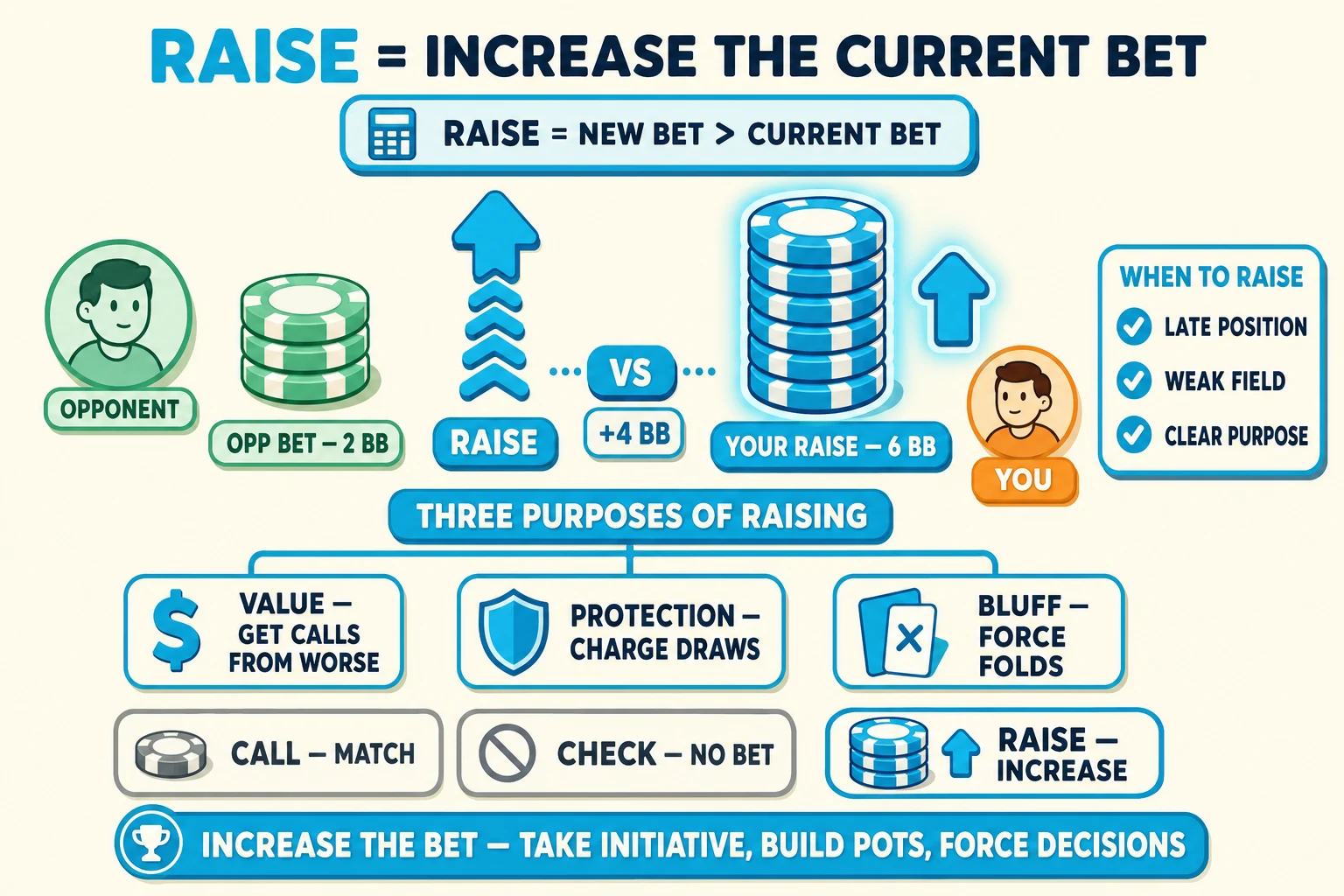
A raise increases the current bet in No-Limit Texas Hold'em, giving players wide sizing freedom. Raising asserts control, applies pressure, and changes hand dynamics by growing the pot and forcing decisions. For example, raising preflop with Ace-King from late position builds the pot and can steal the blinds.

Practice this in Poker Skill. The Bet vs Raise lesson drills where one ends and the other starts, so adding chips after the blinds or an open counts as a raise and the first chips in on a street after checks count as a bet.
Get the free appRaise
What a raise is
A raise increases the current bet in No-Limit Texas Hold’em, giving players wide sizing freedom. Raising asserts control, applies pressure, and changes hand dynamics by growing the pot and forcing decisions. For example, raising preflop with Ace-King from late position builds the pot and can steal the blinds.
Why you raise
There are three primary reasons to raise:
- To build the pot and extract value when you expect to be ahead, like pocket Queens.
- To protect a vulnerable leading hand by forcing opponents to pay for draws. For example, raise with top pair on a two-suited board to charge straight and flush draws.
- To bluff, isolate weak opponents, or punish limp callers. For example, a late-position raise against a limper often isolates a weaker player and simplifies postflop play.
(First time jargon: limp - to call the big blind instead of raising.)
Strategic considerations when raising
Aggression is central; proactive raising often wins pots uncontested and defines No-Limit success. But raise frequency and size must fit the context.
Key factors to weigh:
- Position - raise more from late position because you act after opponents on later streets.
- Table dynamics and image - frequent raises build an aggressive image, making future bluffs more credible. A tight image makes selective raises more effective.
- Opponents’ tendencies - raise more versus players who fold too often; value-raise less against those who call down light.
- Stack depths - deep stacks favor larger, multi-street raises; short stacks favor all-in shoves.
Against passive players who call down light, emphasize value raises to extract chips. Against a tight table, increase bluff frequency to exploit fold equity.
Bluff raises versus value raises
A value raise targets worse hands when you expect to be ahead, like top pair seeking calls from second pair. A bluff raise uses a large bet threat, sometimes an all-in, to force folds and avoid showdown.
Select bluff spots where your betting story fits the board and opponents show weakness. Value raises focus on sizing to get called by worse hands and avoid giving free cards. Balance both: bluff less if opponents fold too often, and value-raise more if they call down light.
(First time jargon: reraise - to raise again after someone has already raised; 3-bet - a common term for a preflop reraise.)
Raising limp pots and reraises (advanced scenarios)
Raising limpers from late position exploits weakness and seizes the initiative. When several players limp and you raise, you often play heads-up against a single weaker opponent. This simplifies postflop decisions and increases chances to win without showdown.
Reraises, including 3-bets, apply extra pressure and often represent strong hands. Tight players’ 3-bets usually signal premiums, so note who reraises and how often. Use that info to decide whether to fold, call, or 4-bet (raise again).
Both moves demand situational awareness: consider chips behind, opponents’ reactions to aggression, and recent table flow.
Quick checklist
- Confirm your hand strength and relative position before committing to a raise.
- Choose a raise size that matches your objective-build, protect, or pressure.
- Consider opponents’ tendencies and stack depths when planning bluffs or value bets.
- Use raises to shape your table image deliberately, balancing aggression with selectivity.
- Reassess after reactions-calls, reraises, or folds-and be ready to adjust on later streets.