


Raise First In
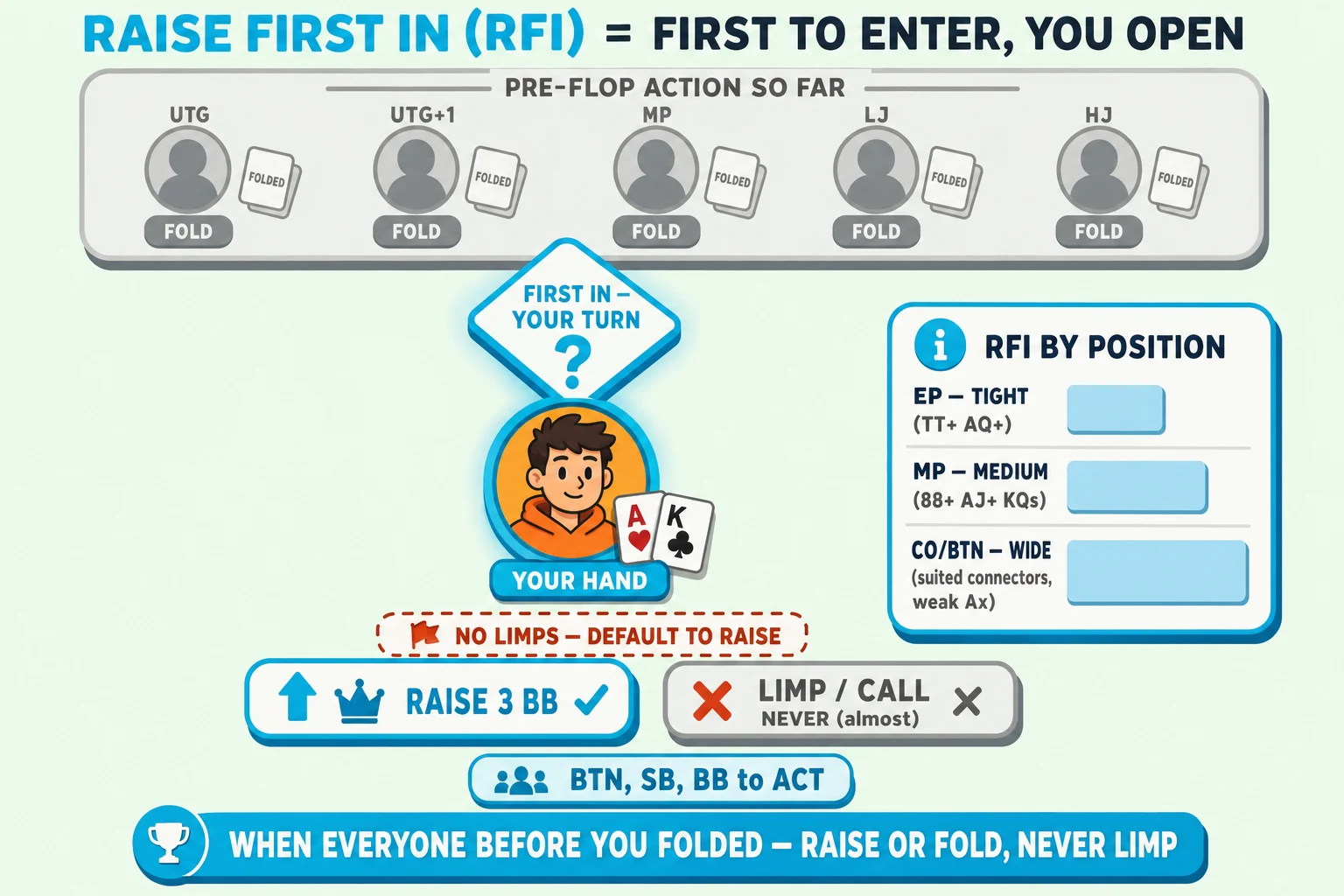
Raise First In (RFI) means being the first player to voluntarily raise the pot preflop. Players commonly call that an open raise. In No-Limit Texas Hold'em, where bet sizes are unrestricted, RFI is the baseline aggressive move. It takes initiative and shapes the rest of the hand. Opening the pot signals you're willing to commit chips and forces opponents to react. Your "range" - the set of hands you might hold - gains importance once you open, since opponents interpret your action and adjust accordingly.

Practice this in Poker Skill. The UTG and Button raise-or-fold lessons practice both ends of an RFI range, folding queen-jack offsuit under the gun and opening it on the button along with suited connectors.
Get the free appRaise First In (RFI): The Open-Raise Preflop Move
What Raise First In (RFI) Means
Raise First In (RFI) means being the first player to voluntarily raise the pot preflop. Players commonly call that an open raise. In No-Limit Texas Hold’em, where bet sizes are unrestricted, RFI is the baseline aggressive move. It takes initiative and shapes the rest of the hand. Opening the pot signals you’re willing to commit chips and forces opponents to react. Your “range” - the set of hands you might hold - gains importance once you open, since opponents interpret your action and adjust accordingly.
Why Open Raising Pre-flop Matters
Open-raising serves several strategic purposes:
- Limits competition: a raise reduces the number of players seeing the flop and increases immediate or post-flop win chances.
- Establishes table image: frequent opens build an aggressive image you can exploit; calling or folding patterns create other images.
- Forces reactions and gains information: opponents’ responses - fold, call, or reraise - narrow their likely ranges and guide your decisions.
- Enables steals and range definition: in late position you can often steal the blinds; from any position RFI helps mix strong and speculative hands to conceal strength.
Example: On the button with 8♠7♠, an open raise often wins the blinds. If called, 8♠7♠ plays well post-flop because of straight and flush potential.
Building RFI Ranges by Position
Position matters because acting later gives you more information and control. Build your RFI range accordingly:
- Early position: use a tight RFI range. Favor premium hands that perform well multiway, like big pairs and top broadways.
- Middle position: moderately widen your range. Add playable hands with fold equity, such as medium pairs, suited broadways, and suited connectors.
- Late position: significantly broaden your range. Open more speculative and deceptive hands since you act last and can often take the pot uncontested.
Numbered example:
- UTG / early: open tight - premiums like AA, KK, QQ, AK.
- MP: add AQ, AJ, KQ, and medium pairs.
- CO/Button: include suited connectors (9♠8♠, 6♥5♥), weaker broadways, and one-gap suited hands.
Adjusting RFI for Stack Depth
Stack depth - effective big blinds for you and opponents - changes which hands belong in your RFI range.
- Deep stacks: expand RFI to include speculative hands like suited connectors and small pairs. Deeper stacks increase implied odds and reward post-flop playability.
- Short stacks: tighten RFI toward hands with strong raw equity and high-card value, such as big pairs and strong broadways. Hands that require post-flop maneuvering lose value when stacks are shallow.
Always use effective stacks rather than absolute stacks. Adjust when a player behind has a short stack or is likely to shove.
Using RFI to Balance, Steal, and Extract Value
Mixing hand types in your RFI range keeps opponents guessing. Include premiums to extract value and speculative hands to win big when they hit.
- Balance: don’t open only with premiums. Mix bluffs and semi-bluffs so opponents can’t easily exploit you.
- Steal: from late position, frequent opens consistently win blinds. Opponents folding the blinds is pure profit.
- Extract value: when premiums get called, your position and initiative help build pots and get paid.
Checklist:
- Confirm you’re the first raiser (an open raise) before applying RFI strategy.
- Tighten RFI in early position; widen on cutoff and button.
- Expand speculative hands with deep stacks; favor high-card equity with short stacks.
- Include both strong and speculative hands to stay balanced and hard to read.