


First In
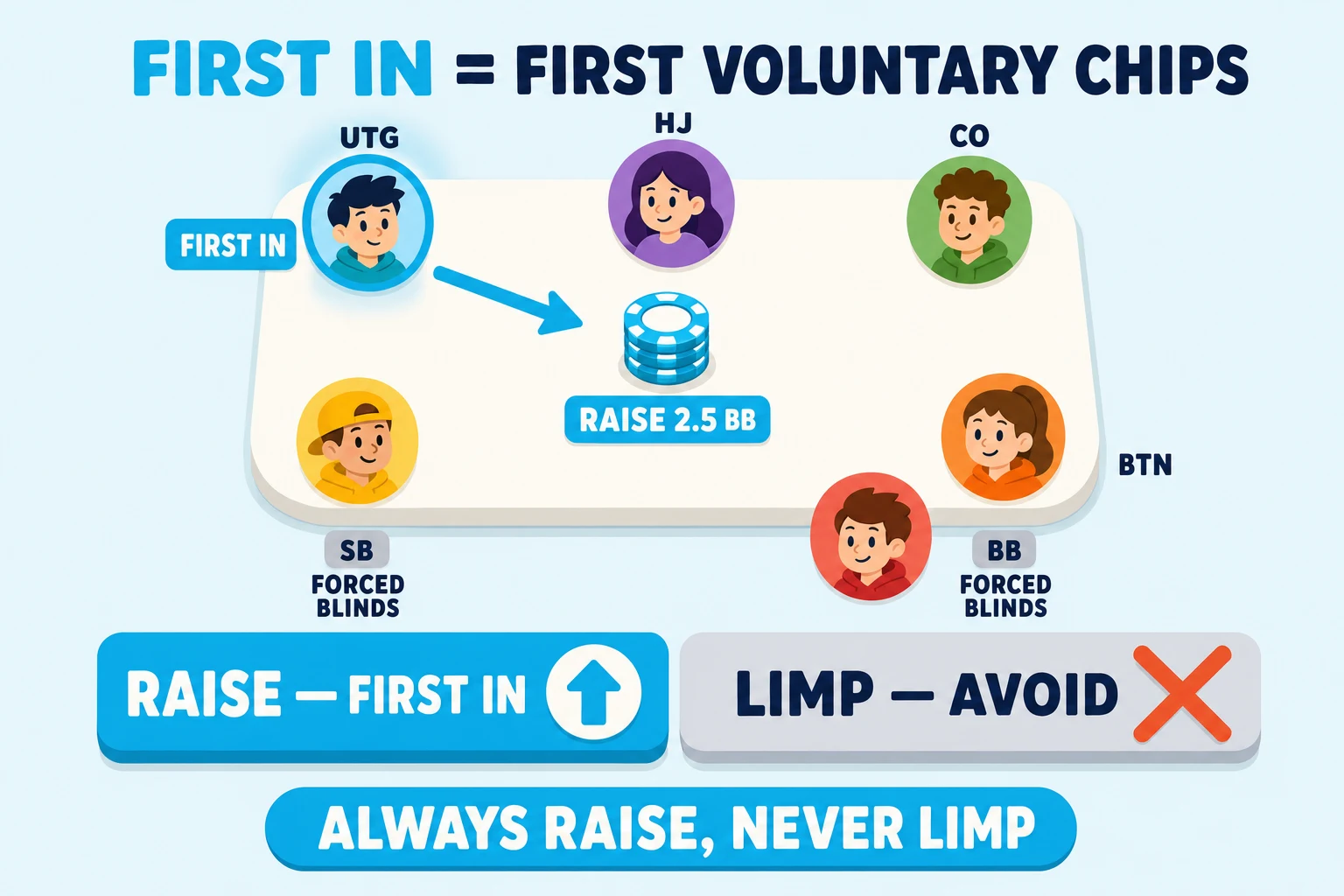
"First in" is the first voluntary chip contribution to the pot after the forced blinds. The player to the left of the big blind acts first; that seat is called "under the gun" (UTG). In practice, "first in" usually means open-raising (raising when no one has raised yet) rather than limping. Limping means just calling the big blind, not raising.
Practice this in Poker Skill. Limp is always on the menu and never the answer in the First In: Don’t Limp lesson, where from the hijack K♥ Q♥ and 9♠ 9♥ raise and J♥ 7♦ folds.
Get the free appFirst In - Preflop Opening Strategy in No-Limit Hold’em
What “First In” Means
“First in” is the first voluntary chip contribution to the pot after the forced blinds. The player to the left of the big blind acts first; that seat is called “under the gun” (UTG). In practice, “first in” usually means open-raising (raising when no one has raised yet) rather than limping. Limping means just calling the big blind, not raising.
Example: With blinds 1/2, if UTG raises to 2.5x the big blind (about $5), that player is “first in.” If they only call the $2 big blind, that’s a limp and not the usual first-in strategy at higher levels.
Why Open-Raising First In Works
Open-raising does three things. It builds the pot when you hold a strong hand. It creates fold equity - the chance opponents fold to your raise - so you can win pots without seeing a flop. It narrows the field, increasing the chance you face one opponent or take the pot immediately.
Example: You open-raise from the button with K♠J♠. Several players fold, the big blind folds, and you pick up the blinds without a flop. That’s fold equity at work. When called, you also benefit from acting last after the flop, a clear positional advantage.
How to Size Your First-In Raise
Consistent sizing hides information and keeps your postflop options open. Standard guidelines:
- Early position (UTG, UTG+1): 2.5x-3x the big blind to keep the pot manageable.
- Later positions (cutoff, button): increase sizing slightly to pressure blinds and exploit steal opportunities.
Example: With a $2 big blind, a 2.5x raise is $5. From the button you might bump to 3.5x or 4x to make speculative calls by the blinds more costly.
Keep sizing consistent in similar situations so opponents can’t read strength from tiny changes. Consistent sizing also preserves your ability to continue aggression postflop.
Adjusting Opening Ranges by Position
Position controls how wide you can open first in.
- Early position needs a tighter opening range because many players still act behind you. Favor strong, high-equity hands and hands that play well postflop (for example A♠K♦, Q♣Q♦, 9♠9♦).
- Middle position can include more broadways and suited connectors; remain more selective than late positions.
- Late position (cutoff, button) allows much wider first-in ranges. Add hands that play well in position such as K♣J♣, 7♦6♦, and suited aces.
Example: From UTG you might open 10-15% of hands; from the button that range widens substantially because you act last postflop.
Key Considerations and Recommended Approach
Adjust openings for stack depth, table dynamics, and specific opponent tendencies. Deeper stacks favor hands with postflop playability. Tight-aggressive play works: open-raise rather than limp and favor hands that can realize equity later.
Checklist - quick steps before you act:
- Confirm blinds are posted and your position (UTG = first to act).
- Choose an opening size (start 2.5x-3x from early positions; increase slightly later).
- Use tighter ranges early; widen on cutoff/button; prefer raising to limping.
- Adjust for stack depth, table dynamics, and opponent tendencies.
Use these principles to build pots when strong, deny free flops when you’re not, and put opponents on the defensive.