


Big Blind
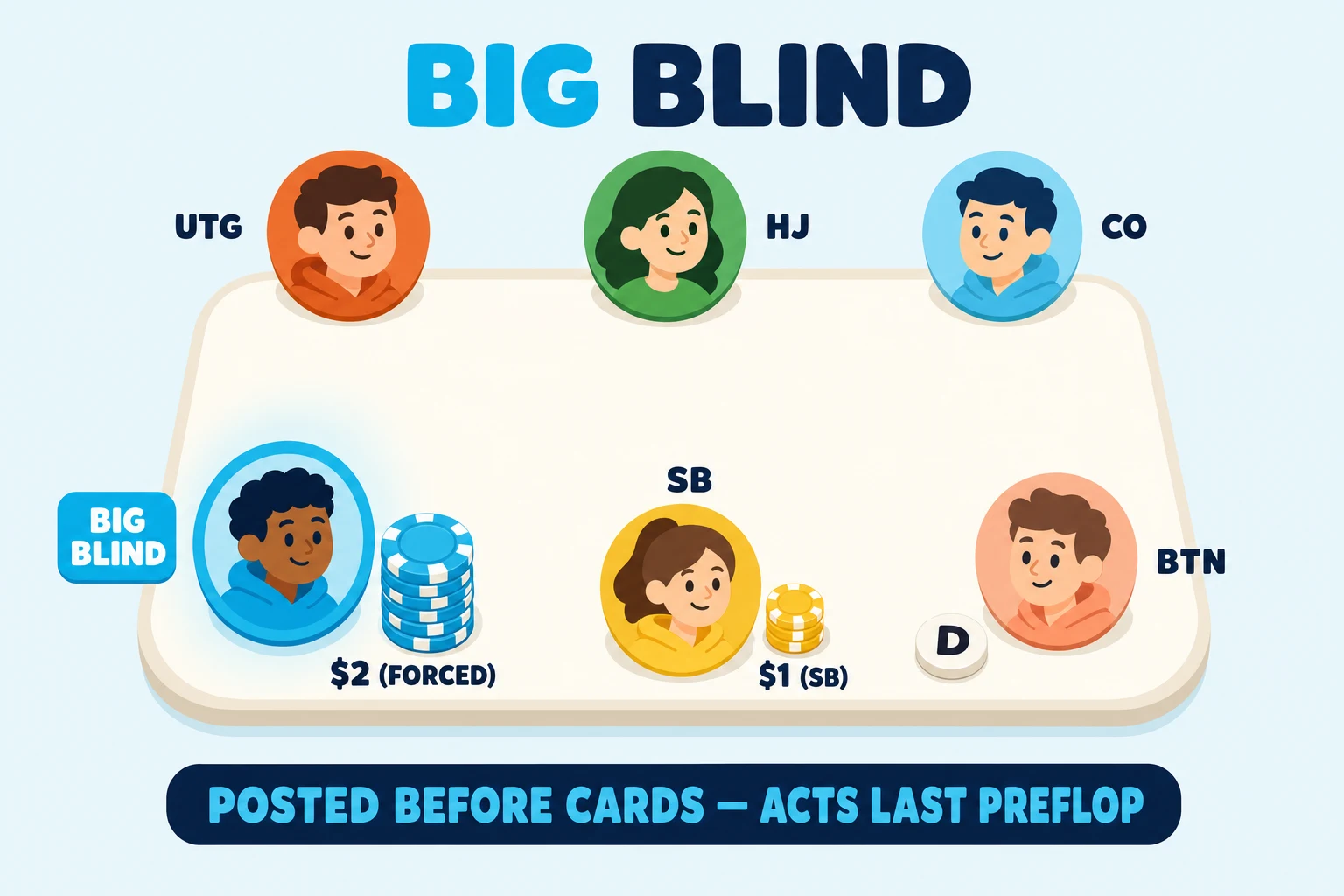
The Big Blind is a mandatory bet posted by the player two seats to the left of the dealer button before cards are dealt. The dealer button marks the player who acts last on later betting rounds. The Big Blind is usually double the Small Blind and sets the hand's minimum stake.
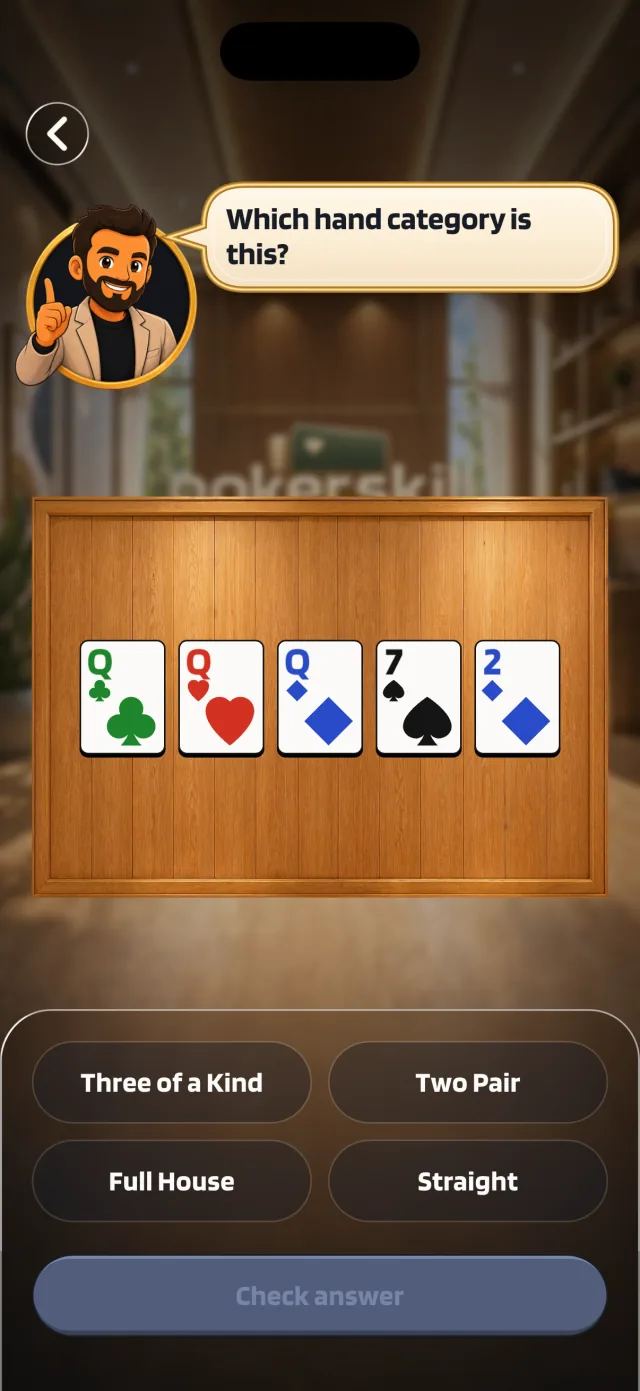
Practice this in Poker Skill. The lessons on the big blind cover each of its options: you check A♦ 2♣ after a limp, call K♦ Q♦ against an under-the-gun raise, 3-bet K♠ K♥ against a button open and fold 10♣ 5♦ to it.
Get the free appBig Blind: How It Works and How to Play
What the Big Blind Is
The Big Blind is a mandatory bet posted by the player two seats to the left of the dealer button before cards are dealt. The dealer button marks the player who acts last on later betting rounds. The Big Blind is usually double the Small Blind and sets the hand’s minimum stake.
By seeding the pot, the Big Blind prevents universal folding and keeps action moving. In a $1/$2 cash game the Big Blind is $2, so the pot contains money before any decisions. That forced investment also improves your post-flop pot odds, making calling cheaper relative to the pot than for players who must put chips in from scratch.
Those two words also name the unit that stacks and bets get counted in, as in a 40 BB stack or a 3 BB raise. For that sense, see big blind (BB) as a unit.
Pre-flop Rights and Responsibilities from the Big Blind
You act last in the pre-flop betting round after opponents have folded, limped (just called the blind), or opened with a raise. Pre-flop means the betting that occurs before the community cards are dealt.
Your options:
- Check - if no one raises, check and see the flop for free.
- Call - match an opener’s bet and see the flop.
- Raise - reraise (a 3-bet) to apply pressure or isolate.
- Fold - forfeit your blinds and exit the hand.
Because you already have chips in the pot, calling often costs less relative to pot size than for other players. That improves your pot odds and justifies defending a wider range.
How to Defend the Big Blind
Defending means calling or raising instead of folding when someone opens. Basic principles:
- Defend widely in cash games. The forced bet and favorable pot odds let you continue with many hands - about three quarters of hands versus a single open in steady cash play.
- Be selective with weak holdings in multiway pots. Hands that flop poorly (small offsuit cards) are targets to fold when several opponents remain.
- Tighten up in tournaments. The risk premium - extra equity needed because survival matters - means defend less often when laddering money or when your stack is short.
Example: In a cash game you might call an early raise with A-9s or K-8s. Near a tournament bubble, fold those same hands unless pot odds are compelling.
Tactical Plays from the Big Blind
You can do more than call:
- Check-raises: When you have strong hands or good equity against an aggressive opener, a check-raise extracts value or punishes loose raisers.
- Squeezes: If multiple players limp and one player opens, a large reraise (squeeze) can isolate the opener or win the pot immediately.
- Bluff-catching and selective aggression: Use your pot odds to call down medium-strength hands or convert marginal holdings into bluffs on favorable boards.
Choose these plays based on table dynamics and opponent tendencies.
Big Blind in Tournaments: Stack Depth and Survival
As blinds rise, the Big Blind becomes more costly and more valuable. Adjustments:
- Shallow stacks: Play tighter or adopt a shove/fold approach because post-flop play grows risky.
- Deep stacks: Defend wider and rely on post-flop skill edge.
- Bubble or pay-jump situations: Prioritize survival. Fold more marginal defenses to protect your tournament life.
Quick checklist
- Remember: Big Blind = forced bet, two seats left of the dealer, typically double the Small Blind.
- Use pre-flop last action to your advantage; defend widely when pot odds justify it.
- Adjust defending ranges for tournament risk premium and stack depth.
- Employ check-raises, squeezes, and bluff-catching selectively based on table context.