


Bet Sizing
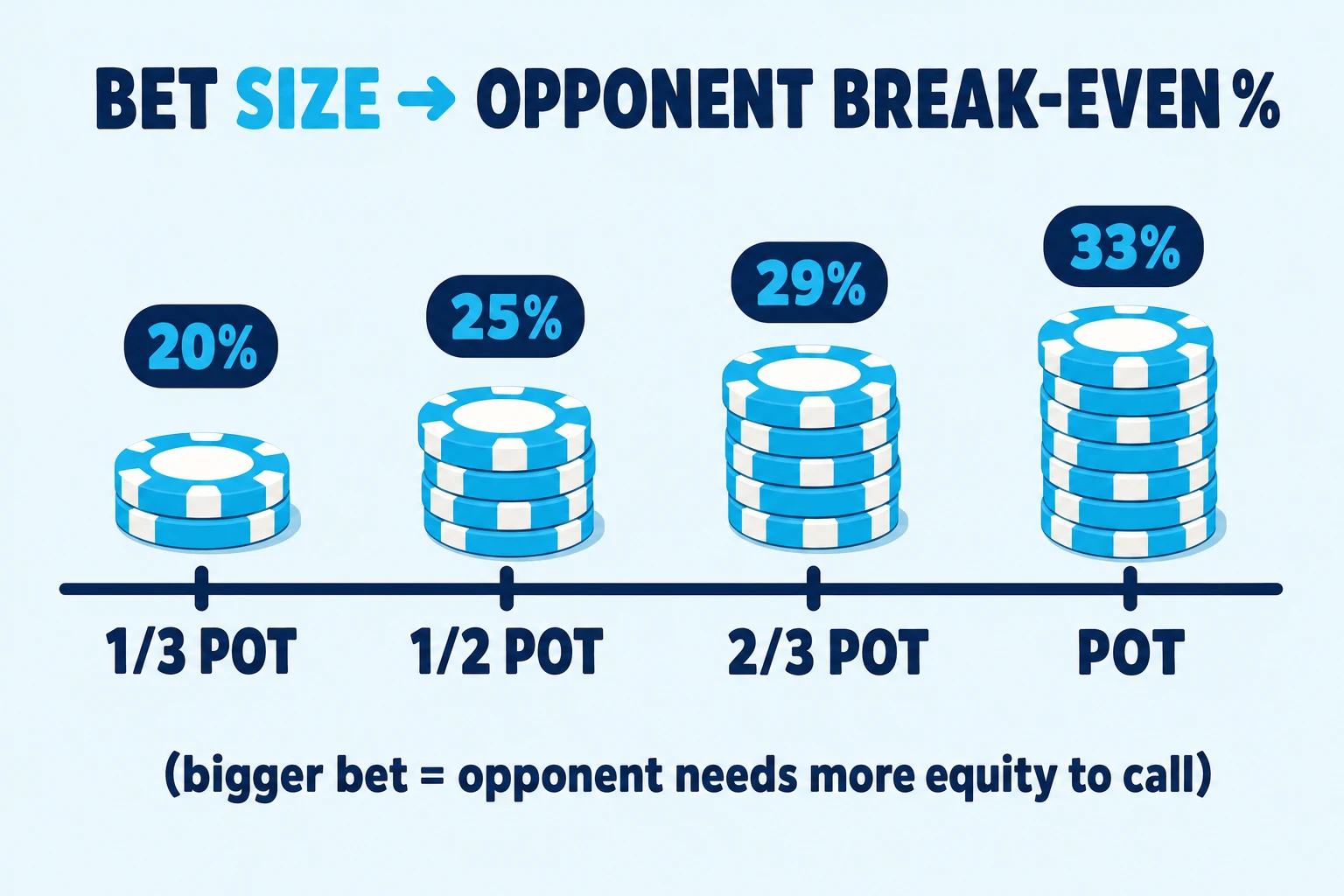
How big you bet relative to the pot. Larger sizes raise the equity opponents need to call; smaller sizes keep weaker hands in for thin value.
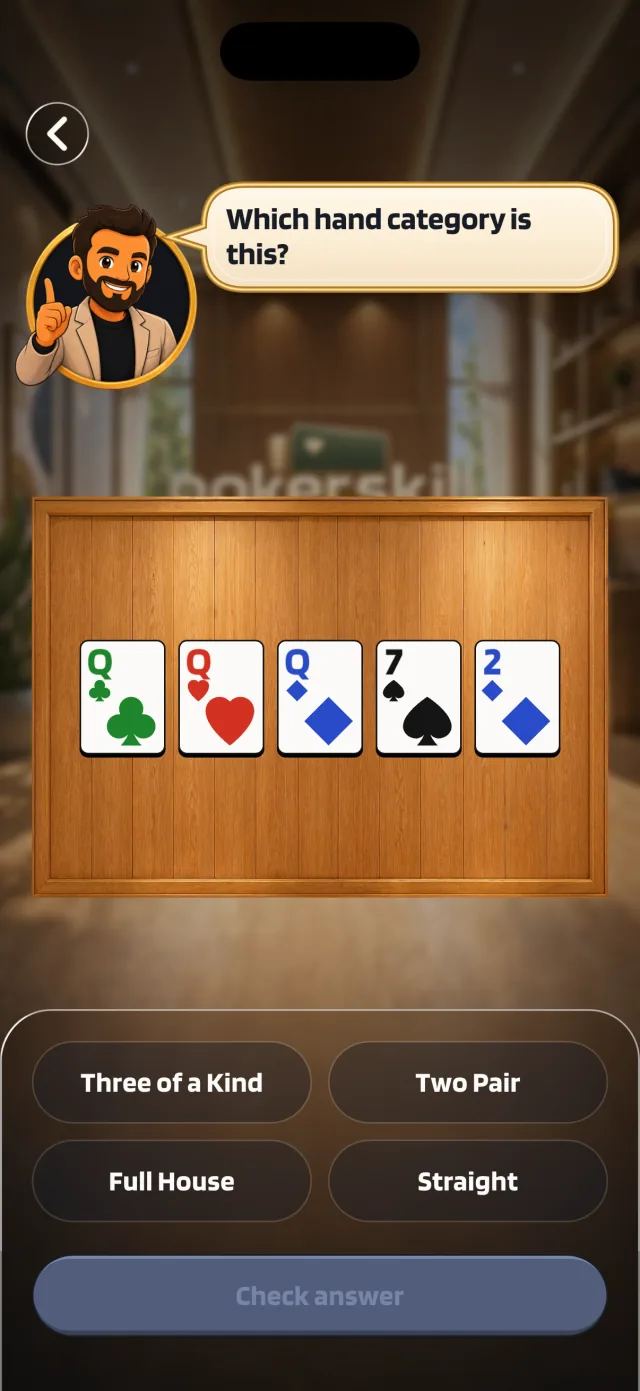
Practice this in Poker Skill. In the lesson on c-bet sizing you pick between checking, betting small and betting normal, and middle pair on a dry queen-high board takes the small size because it wants cheap pressure.
Get the free appBet Sizing
Why bet sizing changes everything
Bet size directly alters expected value by changing opponents’ incentives. Larger bets increase fold equity - the chance an opponent folds - while smaller bets give callers better pot odds, the ratio of the call to the pot. For example, $33 into a $100 pot (1/3) offers worse odds to a caller than $20, while $200 into $100 (2x pot) forces much tighter calls. Proper sizing extracts value, protects vulnerable hands, and makes bluffs credible. Medium bets keep many marginal hands in play to gain value; large bets pressure medium-strength hands to fold. Small tweaks can change fold equity or calling ranges, but tiny decimal shifts, like 2.25bb versus 2.3bb, usually have marginal practical effect.
For the sizes to use street by street and the price each one asks, read poker bet sizing.
Position and stack depth: sizing drivers
Position matters: in-position (IP) means you act after opponents on later streets, while out-of-position (OOP) means you act first. OOP players often prefer larger bets to compensate for lacking later information and to simplify multi-street decisions. IP players can probe and control pot size with smaller bets. Stack depth (effective stack size) changes your options. Short stacks (under ~25 big blinds) push the game toward shove-or-fold dynamics and larger all-ins. Deeper stacks allow more nuanced sizes and multi-street bluffs. Choose sizes that fit your seat and effective stacks, not only your hole-card strength.
Pot-relative sizes and their tactical roles
Common pot-based sizes serve distinct tactical roles:
- 1/3-1/2 pot (small-to-medium): Keeps your range wide, invites calls from weaker hands, and controls pot growth. Example: $30 into $100 on a dry board often gets called by middle pairs and draws.
- 2/3 pot to pot (larger): Narrows callers to stronger hands and increases fold equity for bluffs. Example: $67-$100 into $100 folds many medium pairs.
- Overbets (greater than the pot): Polarize your range toward either strong value hands or bluffs. Example: $200 into $100 forces marginal hands into very tough decisions.
Standardized fractions simplify choices and create pressure points you can exploit by applying sizes consistently in the right spots.
Preflop sizing essentials
Preflop sizing sets pot size and shapes later decisions. Keep these habits to reduce mistakes:
- Vary open-raise size by position: raise larger from late position to reflect stealing opportunities, and slightly smaller from early positions to limit multiway action. Example: many games use 2.2-2.8bb UTG and 3-4bb on the button - adjust to table dynamics.
- Against potential short-stack shoves (<25bb), prefer a smaller open to discourage profitable shoves and preserve fold equity.
- Preflop sizing determines post-flop commitments-pick sizes that lead to manageable decisions on later streets.
Simplicity, solvers, and exploitative adjustments
Modern solvers support a few standard sizes, like 1/2-pot or 2/3-pot, as solid defaults. Overcomplicating your sizing toolkit increases execution errors; master a limited set you can deploy reliably. Deviate exploitatively when opponents are predictable or inexperienced. Against calling stations, favor larger sizes for value. Versus players who fold too much, raise your bluff frequency and apply appropriately sized pressure. Use deviations sparingly and only with a clear read.
Checklist
- Memorize a small set of pot-based sizes (~1/3, 1/2, 2/3, pot/overbet) and when to use each.
- Always factor position and effective stack depth before selecting a size.
- Avoid sizing patterns that reveal hand strength; don’t size solely by your hole cards.
- Prefer simplicity and consistency; use exploitative deviations only with clear reads.
- Use smaller opens to reduce shove incentives from opponents with <25bb.