


Overbet
An overbet is a wager significantly larger than the current pot, for example, betting more than the pot's size. No-limit games allow players to stake any amount of chips at any time, which makes overbets possible. Overbets rarely occur in limit games because those games use fixed bet sizes. Overbets change both the math and the pressure in a hand by shifting opponents' decision thresholds. When a bet exceeds the pot, callers must risk more than the amount already at stake. Fold equity, the chance an opponent will fold to your bet, is a core reason to use overbets.
Overbet in No-Limit Texas Hold’em
What is an overbet?
An overbet is a wager significantly larger than the current pot, for example, betting more than the pot’s size. No-limit games allow players to stake any amount of chips at any time, which makes overbets possible. Overbets rarely occur in limit games because those games use fixed bet sizes. Overbets change both the math and the pressure in a hand by shifting opponents’ decision thresholds. When a bet exceeds the pot, callers must risk more than the amount already at stake. Fold equity, the chance an opponent will fold to your bet, is a core reason to use overbets.
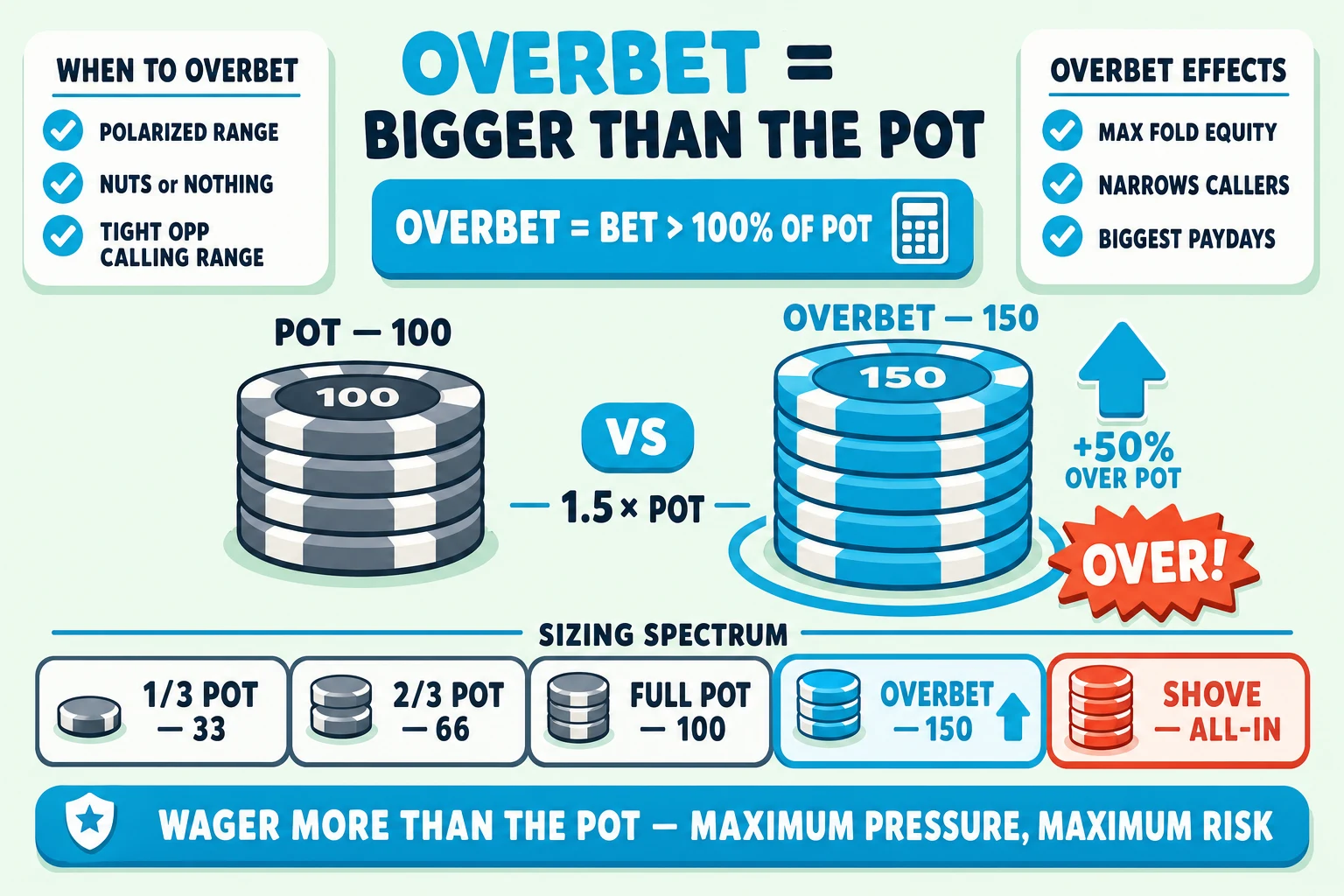
Primary strategic objectives of an overbet
Players overbet primarily to apply pressure, extract value, and create credible bluffs.
- Apply maximum pressure - an overbet forces opponents to risk a large portion of their stack to continue. For example, a 220 bet into a 100 pot makes marginal pairs and single-card draws unlikely calls.
- Extract value with strong hands - very strong hands earn extra value when opponents call oversized bets with second-best holdings. Overbets can convert thin-value hands into much larger paydays when opponents misjudge the strength required to call.
- Create credible, polarizing bluffs - overbets already sit at the extremes, so they credibly represent either the nuts or nothing. That credibility increases fold equity for carefully chosen bluffs on the right textures.
- Exploit board texture and tendencies - on dry boards where draws are unlikely, marginal hands tend to fold to overbets. Against risk-averse opponents, overbets often force folds that smaller bets would not induce.
Turn overbetting: a common and effective spot
The turn is a frequent spot to overbet because the pot often becomes large by then. A large turn bet increases both fold equity and opportunities for extracting value. For example, if the pot sits at 250 on the turn, a 500 bet equals two times the pot. That overbet often pushes weak top pairs, single-pair hands, and many draws off the pot. Those hands might call a 100-200 bet but cannot justify risking 500. High-level players may “jam” (move all-in) or overbet the turn when they believe an opponent’s calling range is narrow. If opponents call only with very strong hands, an overbet for value will receive calls. If opponents hold many marginal hands, the overbet will win frequently by fold.
Balancing overbets between value and bluffs
If you overbet only with monsters, opponents will fold to your big bets and you lose value. If you overbet mostly as a bluff, opponents will call you light and exploit you. Mixing overbets with both very strong hands and selective bluffs makes your range harder to play against. Practical rule: include some bluffs that remain credible on the board, such as missed draws that block strong holdings. That balance forces opponents into tougher decisions and prevents easy exploitation.
Overbets compared with standard bet sizes: effects and risks
Compared with pot-sized or smaller bets, overbets present far greater aggression and risk. Smaller bets, like one-third or two-thirds pot, tend to get called by a wide range. By forcing callers to risk more, overbets dramatically narrow opponents’ calling ranges. The trade-off is simple: when called, you either win a much larger amount or lose a big portion of your stack. Consider stack sizes, pot size, and player tendencies before overbetting.
Poker Skill’s c-bet lessons stop below the pot: their biggest option is about three-quarters of it, saved for sets and strong draws on wet boards.
Quick checklist
- Confirm you are in a no-limit game where oversizing is permitted.
- Prefer turn spots with large pots and exploitable opponent calling ranges.
- Use overbets both for strong-value hands and selective bluffs to stay balanced.
- Remember smaller bet sizes elicit wider calls; overbets aim to force folds or extract maximum value when called.
- Avoid routine overbetting in limit games or versus opponents who always call large bets.