


Small Blind
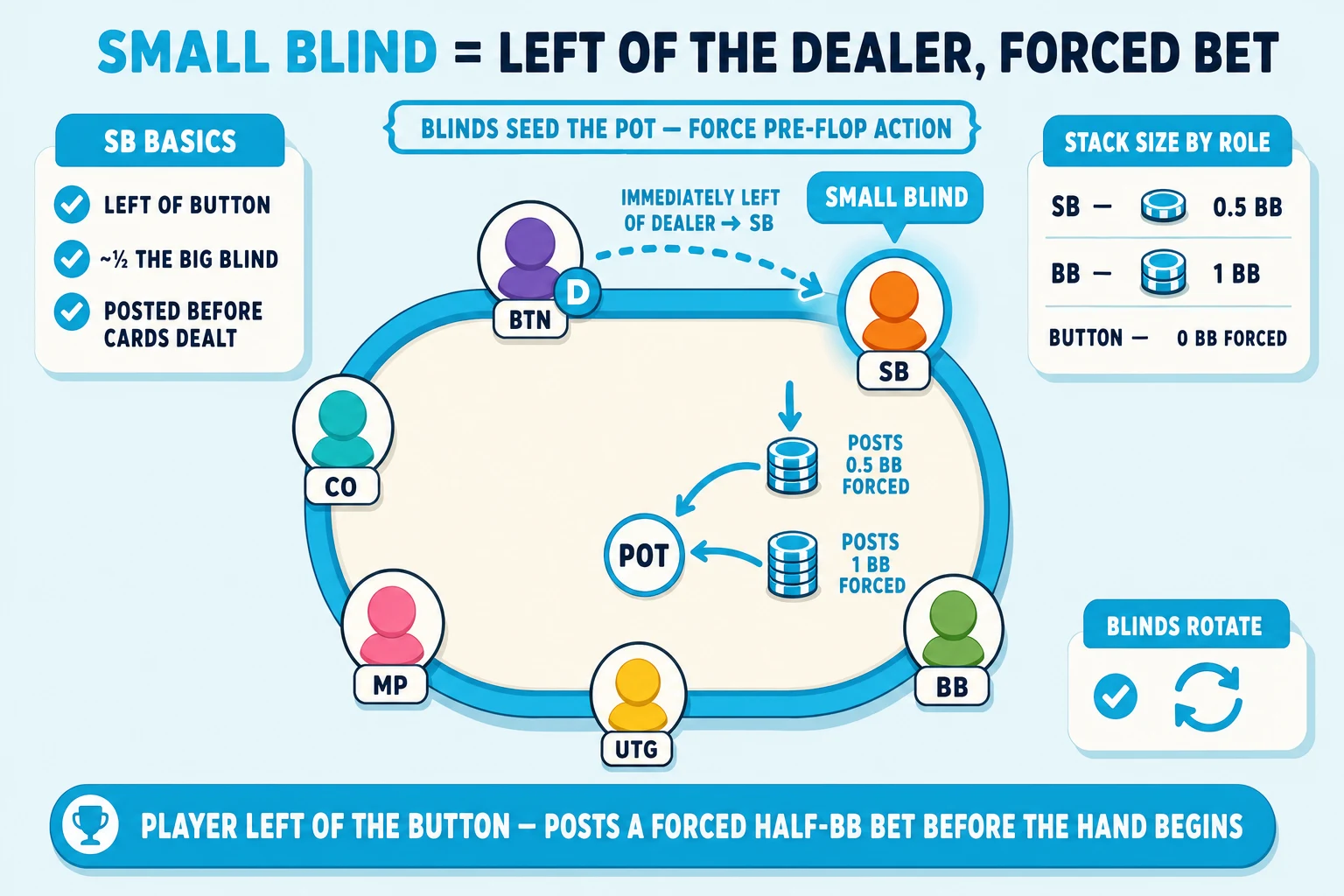
The small blind (SB) is the forced bet posted by the player left of the dealer button. Players post it before cards are dealt. The small blind is typically around half the size of the big blind (BB). Together, the blinds seed the initial pot and force preflop action at the table. Blinds rotate with the dealer button, so every player pays them over time. In tournaments, blind amounts increase at set intervals and change decisions and stack-management priorities.
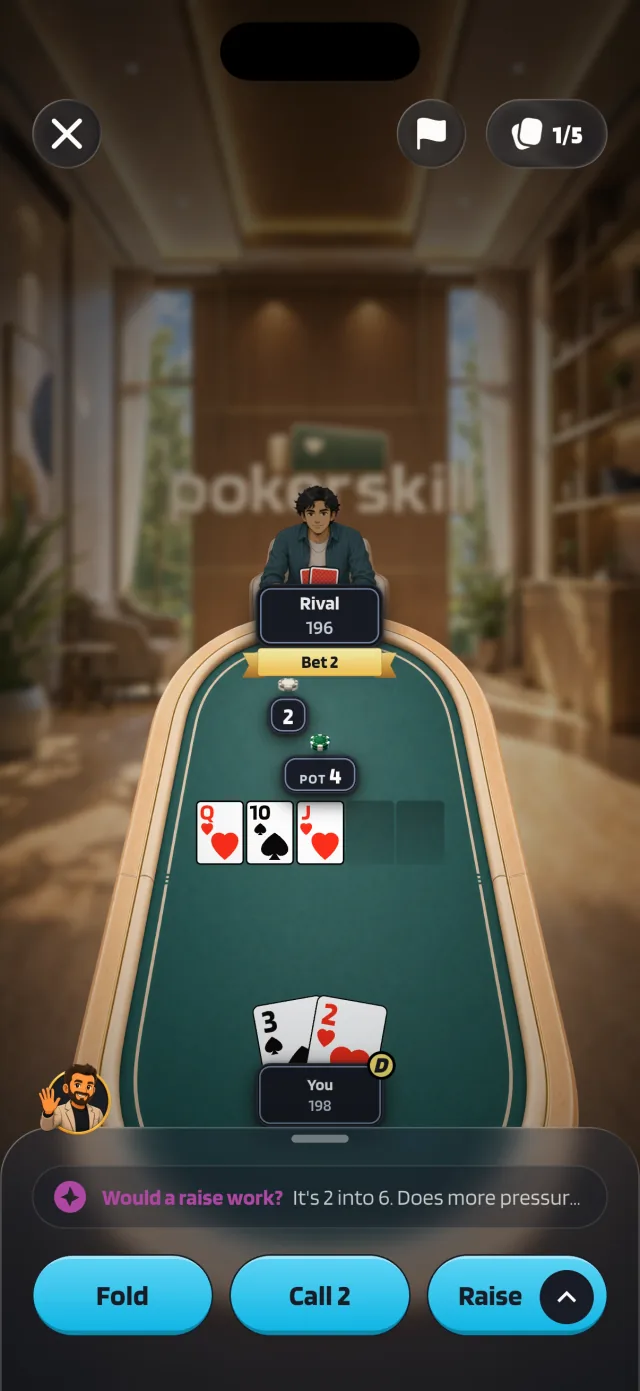
Practice this in Poker Skill. The small blind’s order of action flips heads-up. At the two-player table in Practice vs AI, one AI opponent faces you hand after hand, and the small blind is also the button, so it acts first before the flop and last on every street after it.
Get the free appSmall Blind
What the Small Blind Is
The small blind (SB) is the forced bet posted by the player left of the dealer button. Players post it before cards are dealt. The small blind is typically around half the size of the big blind (BB). Together, the blinds seed the initial pot and force preflop action at the table. Blinds rotate with the dealer button, so every player pays them over time. In tournaments, blind amounts increase at set intervals and change decisions and stack-management priorities.
Quick jargon: the dealer button marks the player who acts last after the flop. “Limp” describes calling the big blind instead of raising preflop. A “3-bet” is a re-raise, the third bet in the preflop sequence.
Why the Small Blind Is Challenging
The SB faces two structural disadvantages that make profitable play difficult over time. First, the SB acts first on every post-flop betting round, which means you are out of position. Acting first gives you less information and makes extracting value or realizing equity harder.
Second, you must post chips blind before seeing opponents’ actions, creating an immediate investment. That investment tempts players to “defend” with marginal hands, which usually loses money long term. Aim to minimize losses instead of chasing break-even defense that costs equity and chips.
Example: You post 0.5BB and hold KJo, then the button raises and you must decide. Calling often leads to difficult post-flop spots where you act first and face aggression. Folding often becomes the better long-term choice to avoid marginal, losing situations out of position.
Example: facing a cutoff raise in the small blind, Poker Skill has you fold J♣ 7♦, a hand ahead of too few cutoff opens that plays poorly out of position.
Playing the Small Blind: Core Principles
- Prioritize folding marginal hands; posted chips are a sunk cost, not a reason to call.
- Raise or fold more than limp; favor raising with hands that want initiative and fold weak holdings. Limp selectively with speculative, deep-stack hands that flop well, and avoid automatic limps.
- Use 3-bets with premium holdings like big pocket pairs and strong broadway hands to take control.
- Reserve calls for hands with strong post-flop playability, like suited connectors or small pocket pairs. Also call when pot odds justify it, particularly in multi-way pots where implied odds matter.
Example: With A♠K♣, 3-betting a button open from the SB is often correct to seize initiative. With 7♠6♠, calling or limping can be acceptable in deep stacks because the hand flops well.
Adjusting Small-Blind Play by Stack Depth
- Shallow stacks (~20 big blinds): Open-shoving becomes viable for many holdings, leveraging fold equity and avoiding post-flop trouble.
- Medium stacks (25-40 BB): Balance raises and limps; raising frequency decreases, limping rises with playable hands.
- Deep stacks (40+ BB): Avoid automatic shove or call habits; prefer plans that maximize post-flop playability. Use more selective raises and more speculative calls when the situation justifies them.
Example: At 20BB, a broadway like KQ often becomes a shove to maximize fold equity. At 30BB, KQ usually becomes a raise or fold decision, depending on opponents behind you.
Handling Steal Attempts and Position Interaction
Late positions, especially the button, raise frequently preflop to steal the blinds. When facing a steal:
- Assess opponent tendencies and effective stack sizes before committing chips to a contest.
- Fold marginal hands instead of entering high-variance post-flop fights where you’ll act first and have less information.
- Use squeezes (3-bets after a raise and a call) to punish loose stealers, but weigh position costs.
Example: The cutoff opens wide and the button calls, leaving you in the SB to act. A well-timed 3-bet with a premium from the SB can pick up the pot or secure heads-up initiative.
Short checklist
- SB: forced bet left of the button, typically around half the size of the big blind.
- You act first post-flop, so default to tighter, loss-minimizing choices and avoid marginal calls.
- Fold marginal hands rather than defending out of position with low equity or poor playability.
- Shove more often around 20BB; mix raises and limps as stacks deepen and implied odds rise.
- Prioritize 3-bets with premium hands and fold to wide steals when your hand equity is low.