


Limp
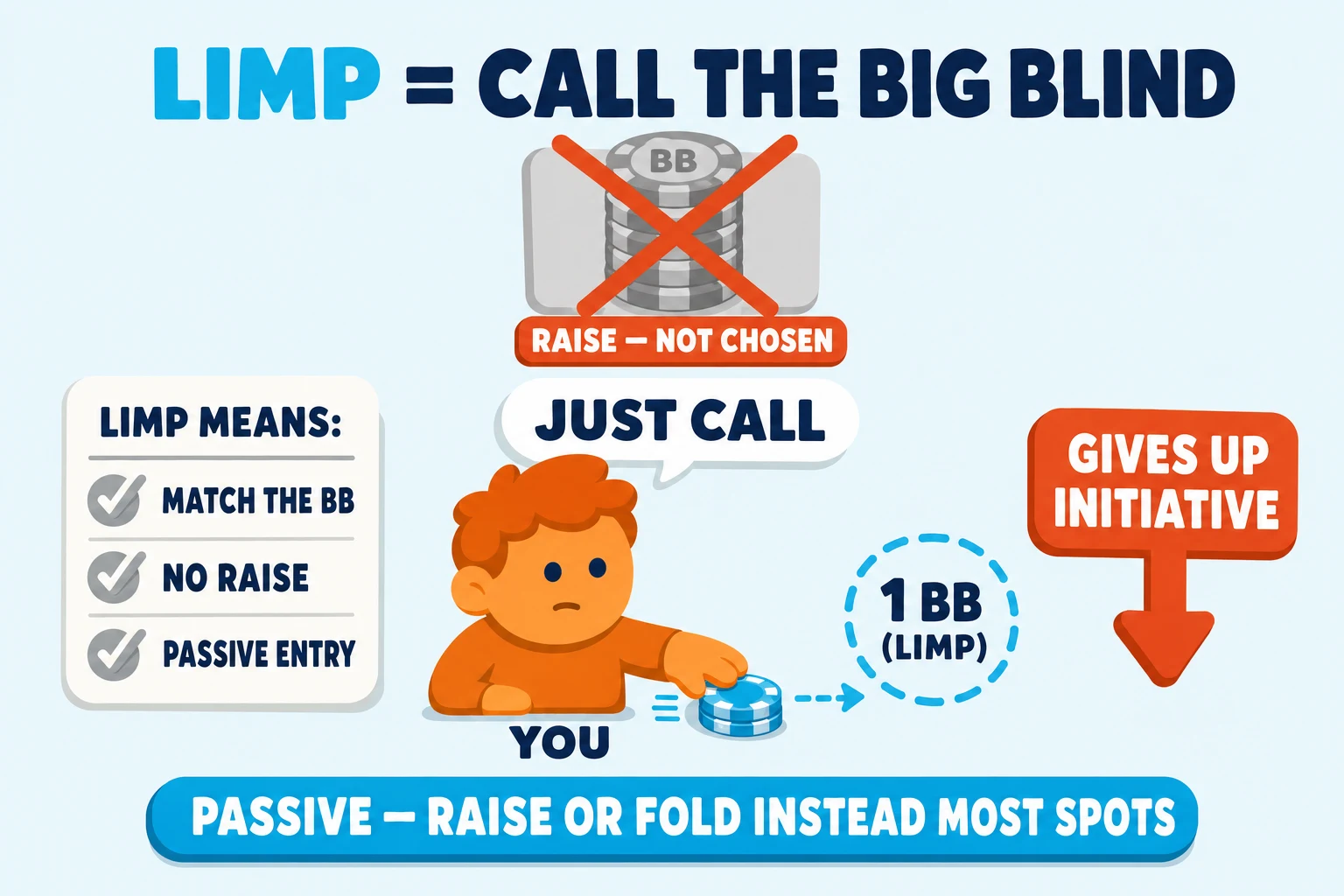
"Limping" means entering the pot by calling the big blind instead of raising. The big blind is the forced bet posted by the player two seats left of the dealer. Limping is a passive preflop action that concedes initiative - the ability to bet and apply pressure - to opponents.
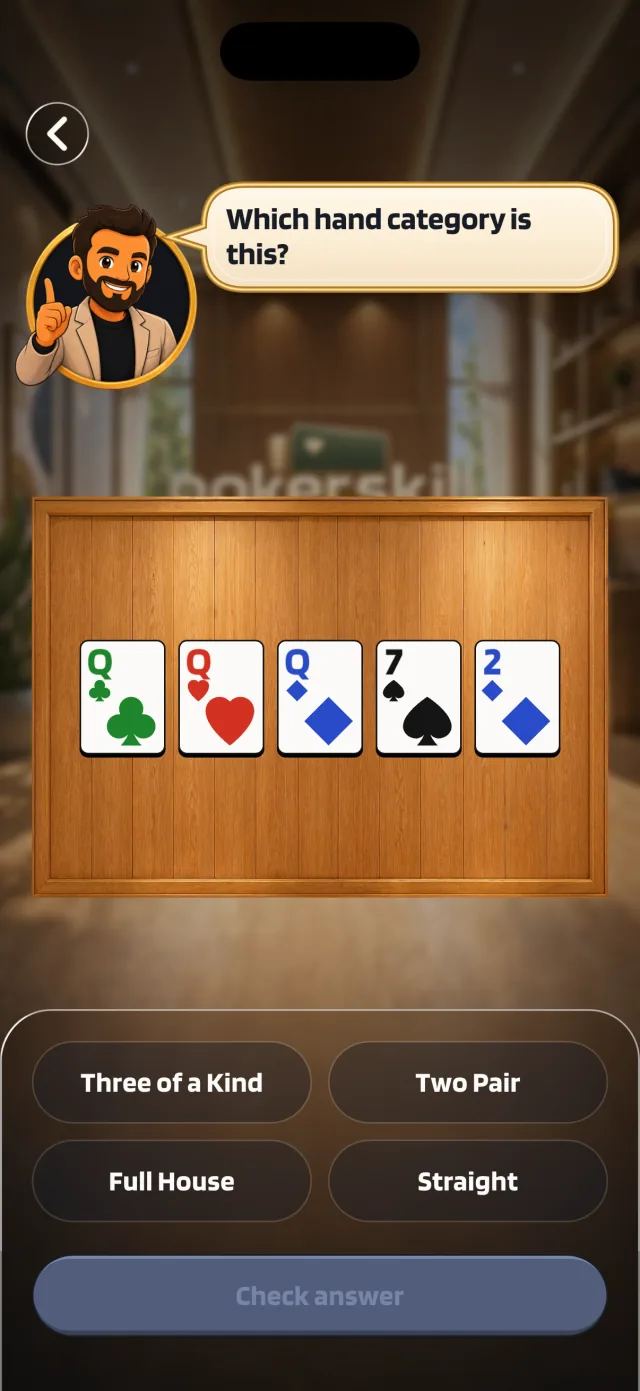
Practice this in Poker Skill. K♥ Q♥ first in from the hijack is one of the hands the lessons deal to teach raising first in: a limp would let the blinds in cheap and give up the initiative.
Get the free appLimp (Limping) in No-Limit Texas Hold’em
What “limp” means
“Limping” means entering the pot by calling the big blind instead of raising. The big blind is the forced bet posted by the player two seats left of the dealer. Limping is a passive preflop action that concedes initiative - the ability to bet and apply pressure - to opponents.
Example: you are first to act with 7♠6♠ and call the $1 big blind instead of opening to $3-$4. That call is a limp.
Why players limp
Players limp for several common reasons, including inexperience, speculative hands, and table dynamics.
- Inexperience or conservatism. Newer players often limp to avoid building large preflop pots or facing a 3-bet (a re-raise).
- To see a cheap flop with speculative hands. Small suited connectors and low pairs gain value in multiway pots, so limping keeps the pot small while seeing the flop.
- Table dynamics at microstakes or live games. Passive tables where many players limp make limping more common and sometimes more profitable than at tougher tables.
Example: on the button with 8♦7♦, a player might limp to see a cheap flop.
Main risks and limitations of limping
Limping is generally suboptimal in modern play because it has several clear weaknesses.
- You lose initiative. Opponents can raise and take control; the limper then must react with defensive decisions.
- You get isolated. Aggressive players often raise to isolate the limper, forcing uncomfortable postflop choices, especially out of position.
- Your range is capped. Limping tends to show a weaker range, one without the strongest hands, making it easier for opponents to apply pressure and read you.
Example: limp UTG with A♥Q♣; a middle-position player raises to isolate, leaving you out of position against an aggressive range.
For the full argument, including the multiway trap and the narrow spots where a limp survives, see why raising beats limping.
When limping can be a valid tactic (exceptions)
Limping can be valid in rare, well-defined spots when used selectively by skilled players.
- The small blind against the big blind. When the action folds to the small blind, game-theory solutions limp a lot, especially in rake-free games such as tournaments, where the small blind limps half or more of its hands at stacks of 25 to 60 big blinds.
- Certain tournament stack depths and positions. At some short or mid stack depths, or on the button, a well-timed limp with a clear postflop plan can be profitable.
- Completing behind a limper from the small blind. Poker Skill teaches this spot in its SB vs One Caller lesson: with a single limper in, J♠ T♠ completes for half a big blind more and takes the cheap flop, where a raise would build a pot out of position.
- Use sparingly. These are niche exceptions - limp only as part of a broader, reasoned strategy, not as your default.
Example: an experienced player on the button might limp occasionally with a mixed range to induce multiway pots or disguise holdings.
Limp-call and limp-raise lines
A limp-call is limping and then calling a later raise rather than folding or re-raising. Example: under the gun, a player limps with 7♦7♣ for one big blind, a later player raises to four big blinds, and the original limper calls instead of folding or 3-betting. It is a passive pre-flop line that usually signals a weaker or constrained strategy than open-raising, and it typically shows medium speculative holdings such as small pairs and suited connectors. The aggressive twin is the limp-raise, which re-raises instead of flatting and usually shows a very strong hand.
Practical rules: avoid limp-calling as your default and adopt a raise-or-fold plan when first into the pot; when facing limpers, prefer isolation raises over calling into bloated multiway pots; and versus habitual limp-callers, widen your value-isolation range and plan aggressive post-flop lines to punish them.
How to exploit limpers as an opponent
- Raise to isolate. Raise over a limp to take initiative and simplify decisions; use a wider, value-oriented range.
- Use position. When you isolate a limper and act after them, apply pressure with continuation bets and positional advantage.
- Adjust sizing and selection. If many players limp, widen your isolating range; if limpters show strength, tighten and choose hands carefully.
Example: a limper opens, you’re in the cutoff with K♠Q♠; raise to isolate. If they call and you see a favorable flop in position, c-bet for value so worse hands can call.
Quick checklist
- Remember: limp means calling the big blind, not opening with a raise.
- Prefer raising to take initiative and avoid being isolated.
- Reserve limping for rare, well-analyzed exceptions: position, stack depth, or solver-recommended spots.