
Limp-Call - Definition, When It Appears, and How to Play Against It
What is a limp-call?
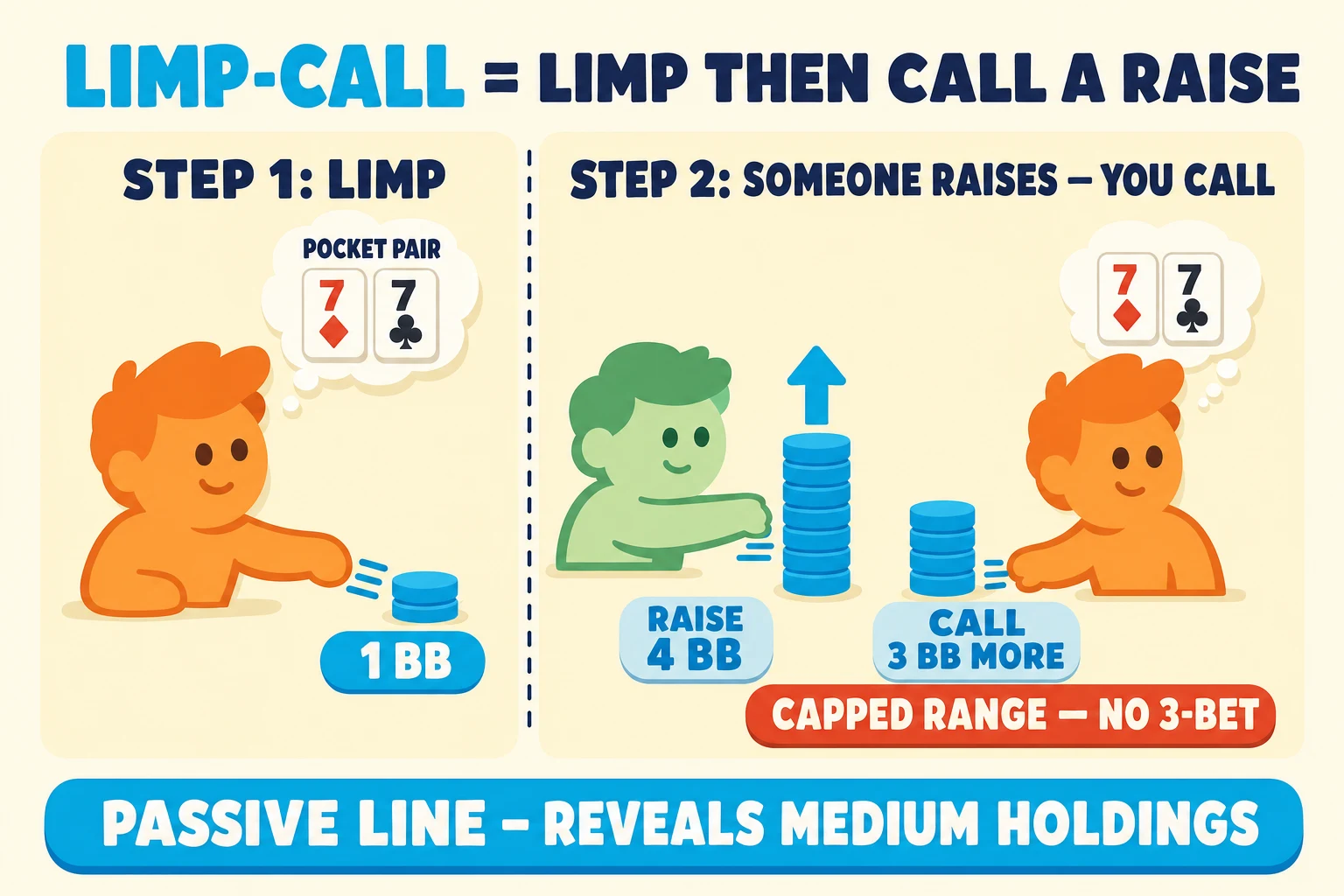
A limp is entering the pot by calling the big blind instead of raising when first to act. Limp-calling is when a player limps and then calls a later raise rather than folding or re-raising. Example: Under the gun, a player limps with 7♦7♣ by putting in one big blind. A later player raises to four big blinds; the original limper calls instead of folding or 3-betting - that’s a limp-call. Limp-calling is a passive pre-flop line that usually signals a weaker or constrained strategy than open-raising.
Why players limp-call
Weaker or passive players often limp to see the flop cheaply and avoid larger pre-flop decisions. They prefer multiway pots (pots with several players) and hope to hit a disguised hand. Occasionally, an advanced player limps with a very strong hand to deceive opponents, planning to call a raise and extract value later; this remains uncommon. Limp-calling surrenders initiative - the ability to make bets others must react to - and often creates large, awkward post-flop pots.
When limp-calling is more likely (stacks, position, and game type)
Stack sizes matter: short stacks limp more to see cheap flops and avoid building big pots they can’t play. Position matters: limping early is riskier since you act early post-flop; limping late is more common and harder to punish. Game type influences frequency: limp-calling appears more in live games and online microstakes with looser, less aggressive play. In tougher, higher-stakes games limp-calling is rarer and easier to exploit.
Typical hands and ranges for limp-calls
Limp-calling ranges are mostly speculative: suited connectors and small pocket pairs profit from cheap, multiway flops by hitting straights, flushes, or sets. Players also limp with medium-strength hands they won’t raise but won’t fold, such as K♣9♦ or Q♥J♣. Generally, avoid including strong value hands in a limp-call range unless executing a deliberate trap.
How to exploit limp-callers
- Raise to isolate: Counter open limps by raising to isolate the limper and seize initiative. From late position versus one limper, raise to about 3-4 big blinds.
- Use larger isolation sizes versus regular limpers: Versus habitual limpers, make raises large enough to discourage multiway calls and build a pot you can attack.
- Apply post-flop pressure: Limp-callers often have capped ranges - they lack many strong hands that dominate yours. When you raise and get called, continue aggression on favorable flops to exploit their weaker distribution.
Practical rules for most players
- Avoid limp-calling as your default; when first into the pot, adopt a raise-or-fold plan.
- When facing limpers, prioritize isolation raises instead of calling into bloated, multiway pots you can’t control.
- Versus habitual limp-callers, widen your value-isolation range and plan aggressive post-flop lines to punish them.
Quick checklist
- Don’t make limp-calling your baseline pre-flop tactic; default to raising or folding when first to act.
- Raise to isolate open limps whenever practical, securing initiative and simplifying post-flop decisions.
- Expect limp-callers to present speculative, often capped ranges that struggle to continue against aggression.
- Reserve limp-based traps for advanced, deliberate play where the deception adds clear, exploitable value.