


Squeeze
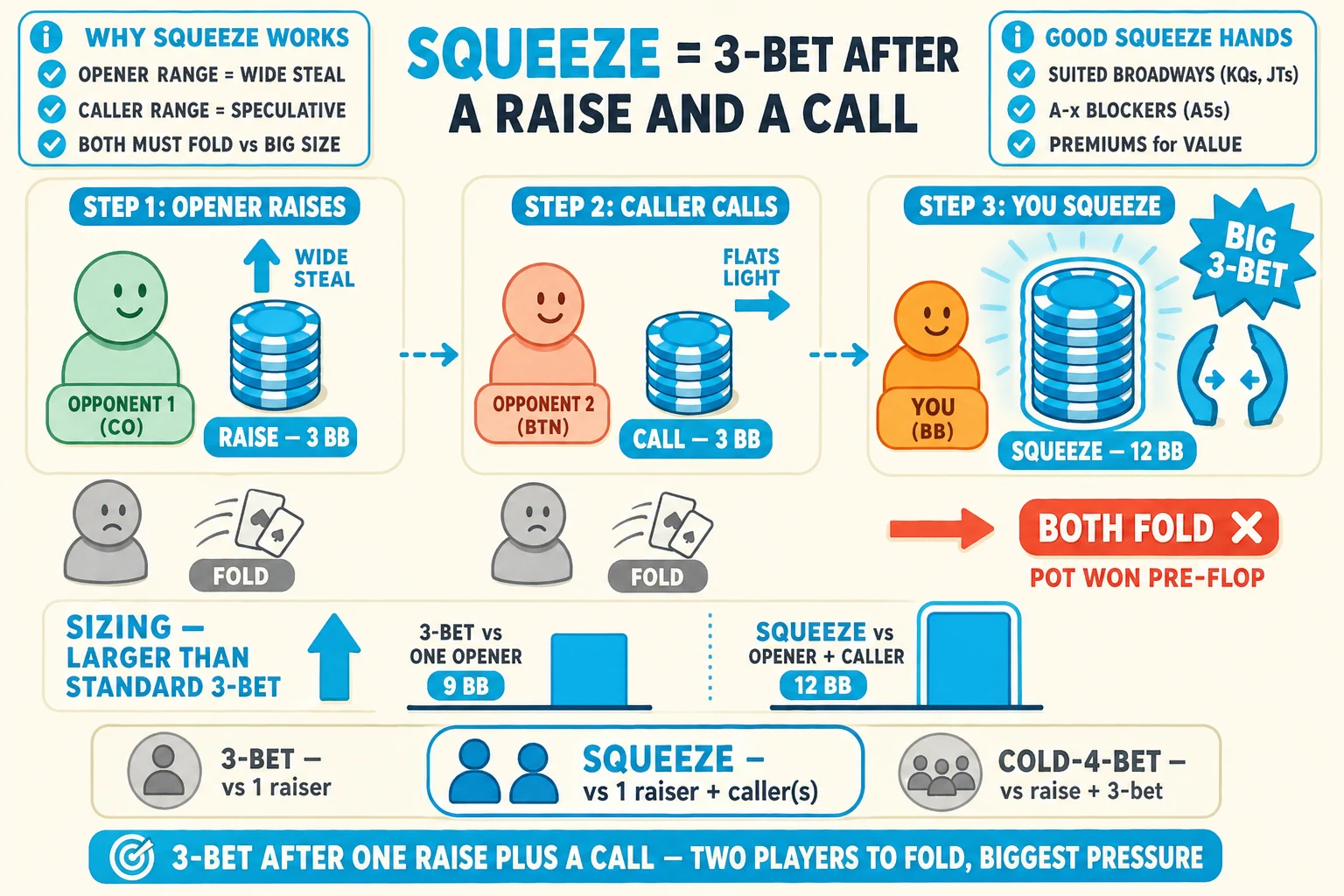
A 3-bet after one player has opened and at least one other has called. Both have to fold for the play to print, so size larger than a standard 3-bet to deny them profitable calls.
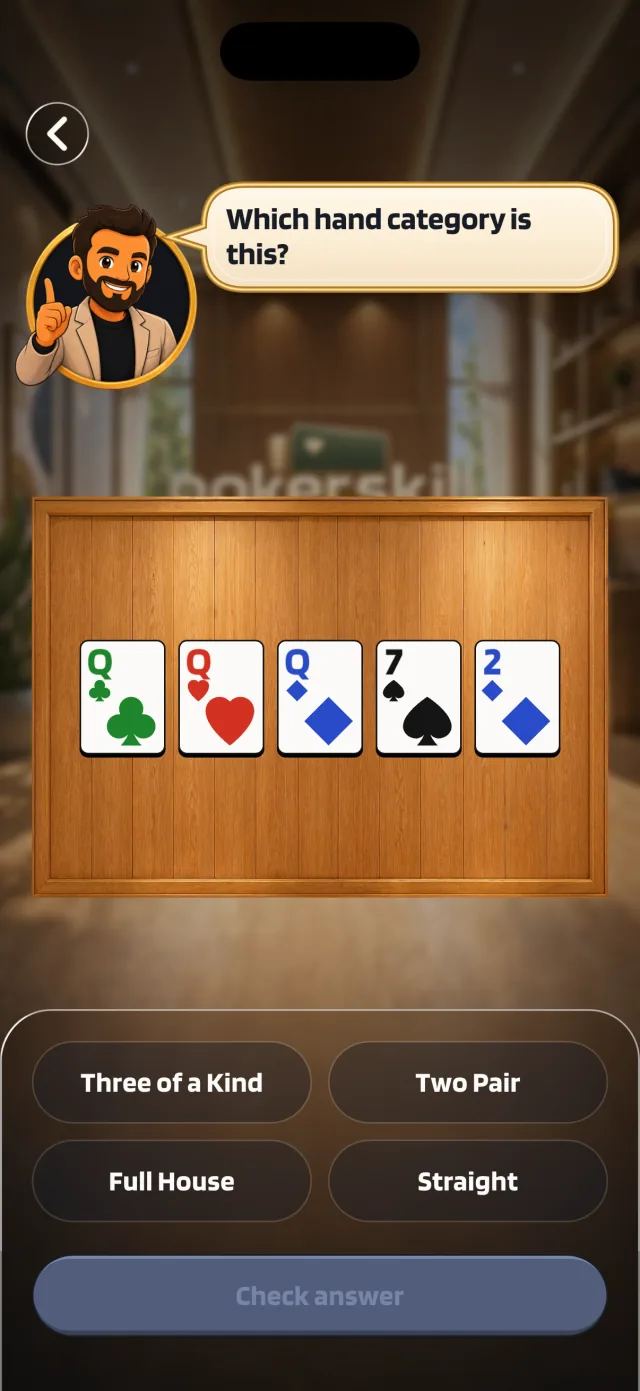
Practice this in Poker Skill. The Squeeze Play lesson starts with the value squeezes, 3-betting queens and ace-king over a raise and a call from the button, and folds the small pairs and suited connectors that wanted a cheap flop.
Get the free appSqueeze
What a squeeze is
A squeeze is a large 3-bet after an opener and at least one cold caller. The goal is to win the pot preflop by folding both of them out. The line works on two facts: openers often raise wide, and cold callers usually flat with speculative hands they don’t want to play for a 3-bet pot. A squeeze runs on fold equity and gives you initiative when you do get called. If called, you act first postflop and can lead with a continuation bet.
When to squeeze
Pick spots where opponents are most likely to fold and the opener’s range is wide.
- Late-position opens. A button or cutoff open followed by a flat usually means a wide steal and a speculative caller.
- Multiple callers. Two flatters in front of you increase pressure and shrink the chance one of them snap-defends with a strong hand.
- Tight table image. A re-raise from a player who hasn’t 3-bet recently lands harder.
For example, the button opens and the cutoff calls. You’re in the big blind, already invested through the blinds. You haven’t 3-bet this session. A large re-raise often folds both of them.
Which hands to squeeze with
You don’t need a top premium to squeeze profitably.
- Suited broadways and suited connectors (KQs, JTs) for postflop playability when called.
- Blocker hands. A small suited ace or a suited king blocks AA, AK, and KK and improves fold equity.
- Premiums for value: QQ+, AK. Always.
Squeezing with Ax or Kx works as a fold-equity tool and still makes top pair when called.
Sizing and positional principles
Size and seat together drive how often opponents fold.
- Size larger than a standard 3-bet. The math has to deny profitable calls to the opener and the flatter at once.
- Button and small-blind squeezes pay off most because openers are wide and callers are loose into them.
- Adjust to opponents. If they defend wide, size up or tighten the squeeze range. If they 4-bet often, squeeze less and only with stronger hands.
Postflop plans and tournament use
Decide in advance how you’ll proceed if called.
- Postflop, play it straight. Continuation-bet in position. Out of position, c-bet selectively and fold to strong resistance. The squeeze’s main edge is preflop fold equity, not a multi-street war.
- On dry boards, value-bet or check-fold. On coordinated boards, slow down without a real plan. Skip the creative bluff unless you have position and meaningful blockers.
- In tournaments, squeezes pay better than they do in cash. Stack-protective tendencies push fold frequencies up, especially as ICM bites.
Quick checklist
- Multiple callers? Good sign.
- Opener from late position with a likely steal range? Proceed.
- Tight table image or few recent 3-bets from you? Bigger fold equity.
- Sizing large enough to deny a profitable call from the opener and the caller at once? Use a bigger 3-bet.
- Hand has playability or useful blockers? Prefer suited broadways, suited connectors, or A-x/K-x.
- Postflop plan ready if called? Required before you put the chips in.
FAQ
What is a squeeze in poker?
A squeeze is a 3-bet made after one player has opened and at least one other has called. Two players have to fold for it to work, so it is sized bigger than a 3-bet against the opener alone. The opener’s range is usually wide and the caller’s is usually speculative, which is why both of them fold often enough to make it pay.
How big should a squeeze be?
Bigger than the 3-bet you would make against the opener on his own. Books put it near a pot-sized raise when you are squeezing out of the blinds and about three blinds under pot when you have position. Each extra caller has already grown the pot, so the raise grows with it instead of staying fixed.
Squeeze vs normal 3-bet: what changes?
The extra player. A normal 3-bet only has to beat the opener’s range. A squeeze has to fold out the opener and a caller who has already put dead money in the middle, so it is sized larger and it wins a bigger pot on the hands where everyone folds.