


Flat-Call
A flat-call is matching an opponent's raise pre-flop without re-raising. Players use it to control pot size, keep their range disguised, and gather information. Example: the cutoff opens to 3 big blinds; you call on the button with 99. You keep the pot smaller and see a flop with a hand that plays well post-flop.
Practice this in Poker Skill. On the button facing a cutoff open, A♥ 9♥ and 9♠ 8♠ flat in the lesson on that spot, because position helps them play the flop without swelling the pot into a 3-bet.
Get the free appFlat-Call: When and How to Use It in No-Limit Texas Hold’em
What a flat-call is and why you’d use it
A flat-call is matching an opponent’s raise pre-flop without re-raising. Players use it to control pot size, keep their range disguised, and gather information. Example: the cutoff opens to 3 big blinds; you call on the button with 99. You keep the pot smaller and see a flop with a hand that plays well post-flop.
Brief jargon: pre-flop = the betting round before community cards; broadway = T-A; suited = both hole cards same suit.
When to flat-call: tournaments vs cash games
Tournaments: Flat-calling preserves playable hands and maintains unpredictability in multi-stage events. Use it more when fold equity is low or you want to avoid committing chips early. Example: in middle stages you might call a raise with AQs to keep options open.
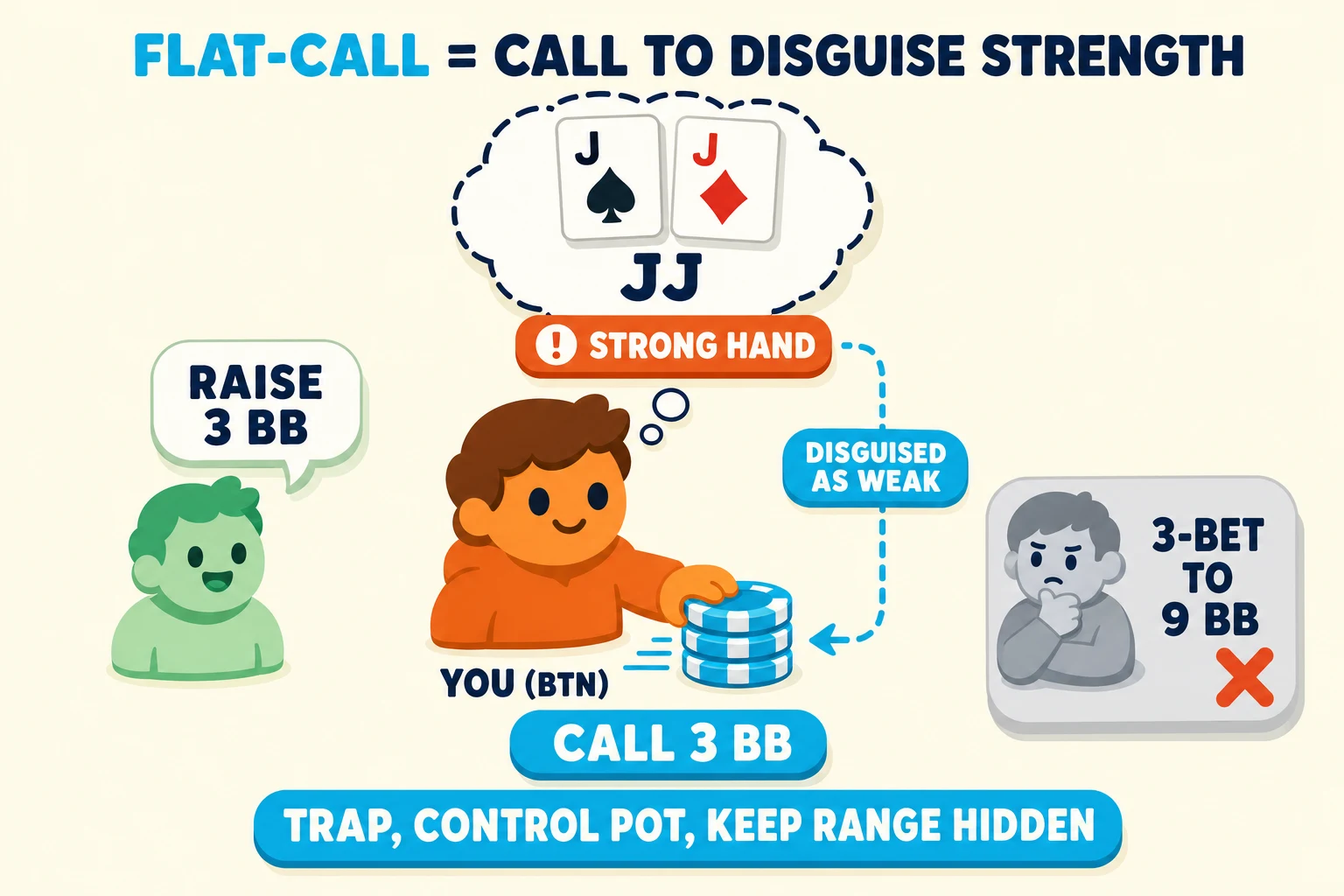
Cash games: Flat-calling can trap aggressive opponents or induce larger pots on later streets. Against an overly aggressive raiser, calling with AKs or JJ can provoke bluffs and extra value. Your choice depends on stage, stack depths, and whether a raise better serves your goals.
Quick 3-step decision before flat-calling:
- Identify your hand’s playability: pairs, suited Aces, and broadways are prime candidates.
- Assess position and opponent tendencies: will they barrel, fold, or continue aggression?
- Factor stack depth and format: tournament pressure changes choices compared with deep cash stacks.
Pre-flop hands commonly flat-called
Typical flat-calling candidates include all pocket pairs, broadways, and suited Aces. Pocket pairs 22-AA: small pairs aim to set-mine; medium pairs manage pot size for value. Broadways (AK, KQ, QJ): suited versions keep strong equity and post-flop playability. Suited Aces (AQs, AJs, sometimes ATo): they play well on many flops and can make nut flushes. Example: facing a cutoff raise, calling on the button with KQs or pocket 77 is standard. You retain positional advantage and preserve flexible post-flop options.
Adjusting your flat-calling range by opponent and position
Versus loose-passive raisers, widen flat-calls - you’ll often get multiway pots you can exploit. Versus very aggressive raisers, flat-call to induce or trap, but tighten if they 3-bet often. Positional advantage matters: acting later gives more information and increases flat-call value. Occasionally flat-call strong hands from late position to disguise holdings and set traps. Example: flat-call AKs from the button sometimes instead of 3-betting every time.
Common flat-calling mistakes and quick fixes
Mistake: flat-calling too often with weak, unplayable hands. Fix: restrict flat-calls to playable groups. Mistake: never 3-betting premium hands. Fix: mix raises with some strong holdings to avoid a passive image. Mistake: ignoring stack size and stage. Fix: adjust frequency - be cautious when short-stacked in tournaments. Fix: exploit deep stacks in cash by using flat-calls to trap or induce aggression.
Quick checklist
- Use flat-calls to control pot size, disguise strength, and evaluate post-flop action.
- Prefer pocket pairs, broadways, and suited Aces as primary flat-call candidates.
- Adjust your flat-calling range by opponent tendencies, position, stack size, and game format.