


Blockers
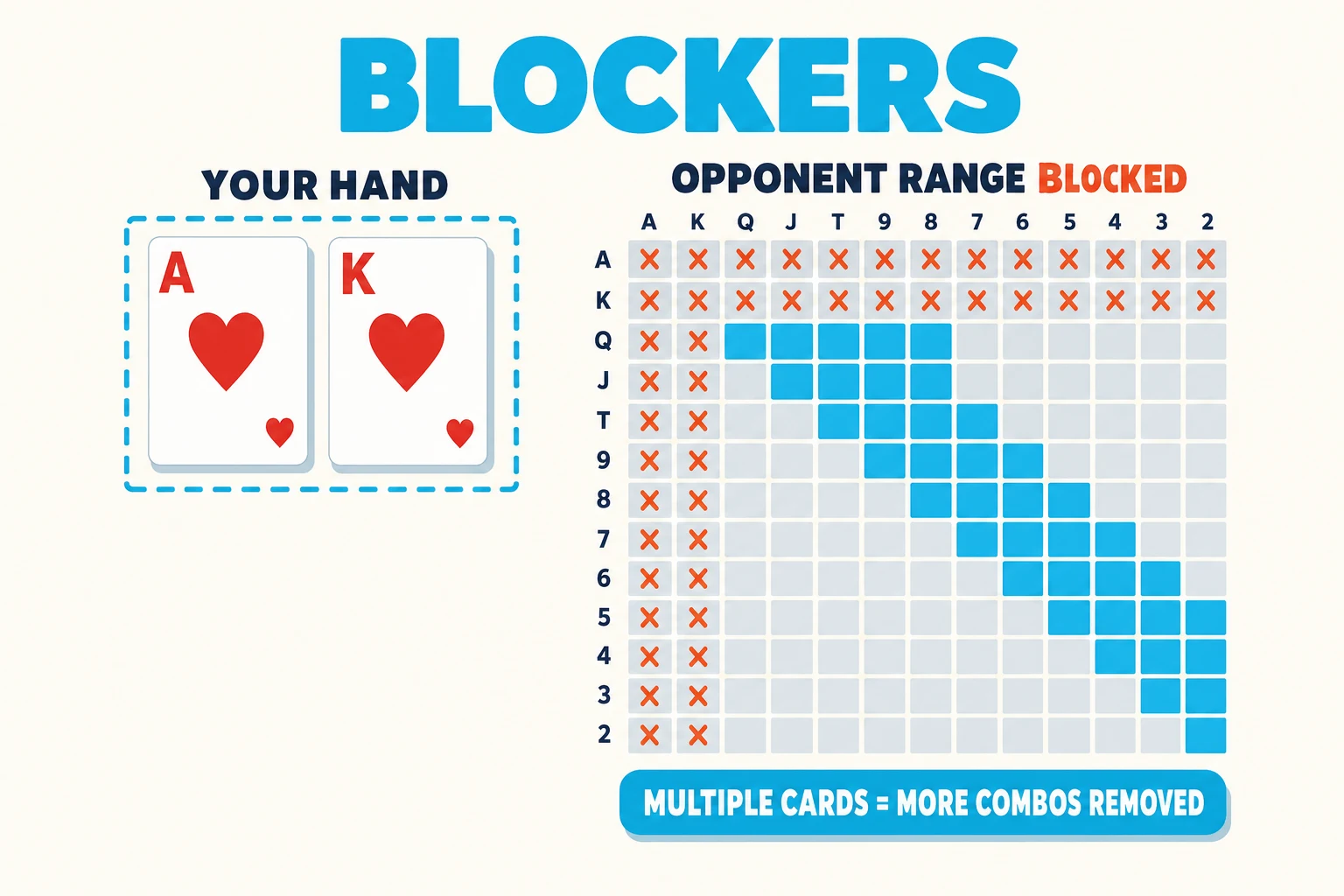
A blocker is a card you hold that removes combinations from an opponent's possible hands. Card removal means holding a card prevents your opponent from holding that same card, which slightly alters their range. For example, if you hold the Ace of clubs on a club-completing board, your opponent cannot have the nut flush using that Ace. That single-card removal can make some bluffs more profitable or some calls unnecessary. Solver-driven analysis showed blocker-based choices often improve precise decisions, so blockers became central to modern strategy.
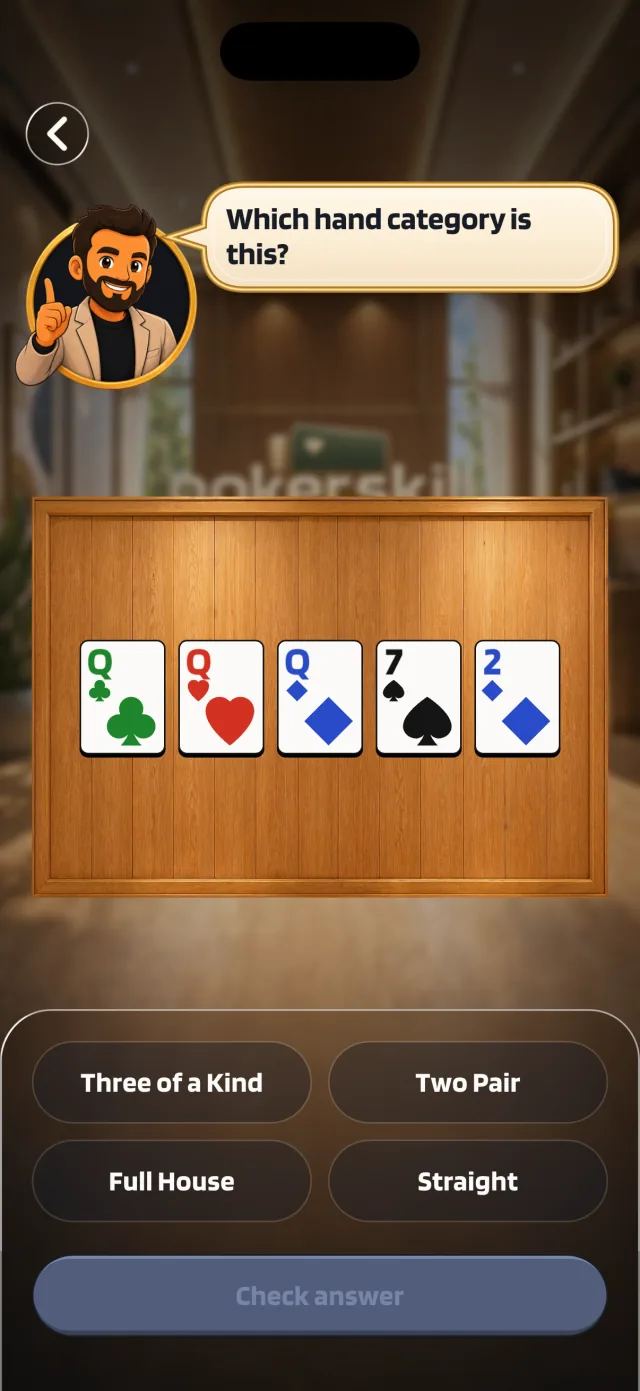
Practice this in Poker Skill. Knowing which card makes the nut flush comes first, and the Nut Flushes & Monotone Boards lesson drills it: on Q♣ 7♣ 2♦ only A♣ 5♣ draws to the nut flush, while K♣ 5♣ draws to one the ace beats.
Get the free appBlockers
What a blocker is - quick definition and why it matters
A blocker is a card you hold that removes combinations from an opponent’s possible hands. Card removal means holding a card prevents your opponent from holding that same card, which slightly alters their range. For example, if you hold the Ace of clubs on a club-completing board, your opponent cannot have the nut flush using that Ace. That single-card removal can make some bluffs more profitable or some calls unnecessary. Solver-driven analysis showed blocker-based choices often improve precise decisions, so blockers became central to modern strategy.
When blockers are most powerful: streets and range shape
Blockers matter most late in the hand-especially on the river-when ranges narrow and the number of relevant combinations is small. Early streets, like preflop and flop, contain many possible holdings, so removing one card has little practical effect.
Two related points:
- The narrower and more defined your opponent’s range, the larger the effect of removing a few combinations.
- When a decision is marginal, a blocker can tip the balance between two plays.
Example: on the river, if an opponent’s value range contains only a few specific hands, holding a key card that prevents those hands makes a bluff more attractive.
Selecting bluffs using blockers
Use blockers to choose bluffs that reduce the likelihood your opponent holds the strongest calling hands.
Practical steps:
- Identify your opponent’s likeliest calling combinations on the river.
- Prefer bluff candidates that remove those combinations, such as a hand with a nut blocker (a card that prevents the opponent from holding the best possible hand).
- Combine blocker selection with opponent tendencies; blockers only help if the opponent would call with the combos you’re removing.
Solvers commonly pick bluffs that include strong blockers to maximize fold equity. Missed straight draws often make better bluff candidates than missed flush draws because they tend to block hands opponents would call with, while missed flush draws can block hands that would fold.
Using blockers for bluff-catching and value decisions
Blockers affect both sides of a river call.
- Bluff-catching: ideal bluff-catchers block the opponent’s value hands. If your hand removes the combos an opponent would value-bet, your call gains justification.
- Value betting: prefer hands that do not remove the weaker holdings you want to extract calls from. In other words, value hands should “unblock” the calling range you target.
These distinctions matter most on the river because each removed or present combination materially shifts expected outcomes.
Limits, pitfalls, and practical tips
- Don’t overvalue blockers against very wide or ill-defined ranges; a single card has limited impact there.
- Treat blockers as a tiebreaker in close decisions, not a substitute for solid range and frequency thinking.
- Remember timing: blockers are far less influential early and most decisive on the river.
- Use blockers together with reads and range analysis, not as the sole justification for extreme plays.
Quick checklist
- Check whether your hand removes opponent nut/value combos before bluffing on the river.
- When calling, prefer hands that block opponent value but leave their bluff combos intact.
- Avoid relying on blockers against wide, undefined ranges.
- Prioritize blocker considerations only in marginal decisions and late streets.