
Blocker
What a blocker is
A blocker is a card you hold that reduces opponent combinations of a strong hand. A range is the set of hands you assign an opponent; a blocker makes some of those hands less likely. Example: you hold A♠ on a spade-heavy board. That ownership reduces the number of nut-flush combinations your opponent can have. That reduction can tip close decisions, making marginal bluffs more attractive and marginal calls more defensible.
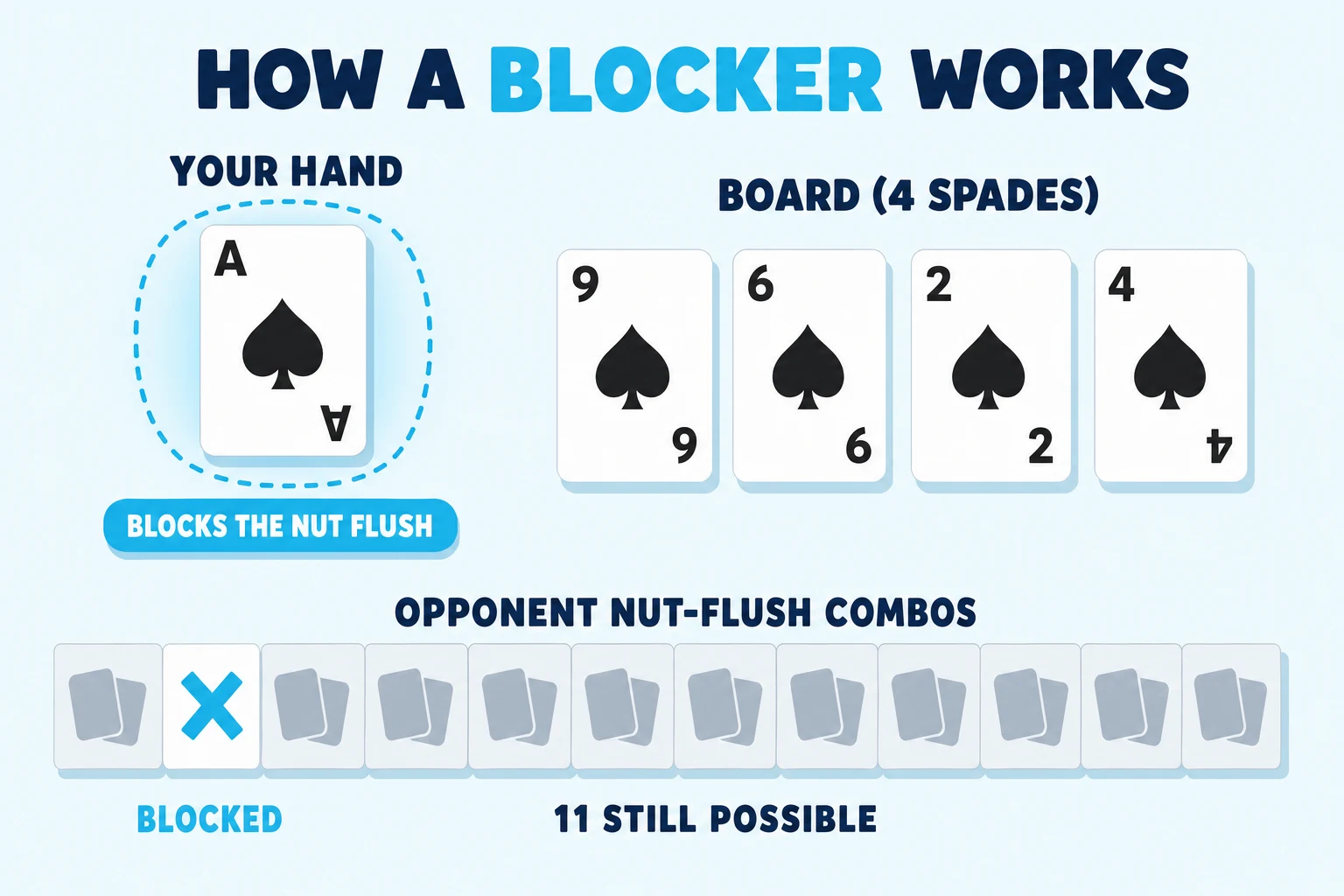
How blockers change opponents’ ranges
Holding a key card directly removes combinations from an opponent’s range. It’s a combinatoric effect: if a hand requires a specific card, your ownership shrinks the total combinations. Blockers matter most when opponents’ ranges are tight and well-defined. On dry boards or the river after heavy betting, ranges narrow and each removed combination counts. Conversely, on very wet boards or against extremely wide ranges, a single blocker has less practical impact. In practice, the altered range changes how you value bets, bluffs, and calls. If you block the nut, the opponent’s calling range lightens, increasing your fold equity and lowering their chance to beat you when you call.
Using blockers for bluffs and bluff-catching
Bluff-catching means calling with a hand that’s likely behind but can win because the opponent bluffs enough.
When planning a river bluff:
- Identify the opponent’s primary calling hands, the holdings they will not fold.
- Choose a bluff hand that blocks those calling hands.
- Size your bet to exploit the increased fold equity.
Example: the river completes a spade flush and the nut flush requires the A♣ (ace of clubs) in this scenario. If you hold A♣9♦ and plan a bluff, you block the nut-flush combos your opponent could reasonably call with, making the bluff more attractive.
When bluff-catching, prefer hands that don’t remove many of the opponent’s bluff combinations. If your holding blocks many of their bluff combos, your call loses value because you’ve eliminated some potential bluffs.
Blockers in solver/GTO thinking and balancing
Solvers incorporate blocker effects into close decisions, recommending bluffs or calls with specific cards because those cards change opponent combinations. Players use blockers to balance ranges. For example, suited Aces often serve as 4-bet bluffs preflop because they block strong Ace combinations like A-A and A-K, improving both fold equity and equity if called. Intentionally using blockers across bluffs and value bets helps keep your strategy hard to exploit.
Limitations and common mistakes
Blockers are one useful factor among many; they don’t replace pot odds, stack-size considerations, or reads. They matter least early in a hand, on very wet boards, or against opponents with wide, unrefined ranges. Over-relying on them, for example always bluffing when you hold a single blocker, creates exploitable patterns.
Quick checklist
- Check whether the opponent’s range is tight enough for a blocker to matter.
- Favor blocker-based bluffs on later streets, especially the river, when ranges are defined.
- When bluff-catching, verify you aren’t removing the opponent’s bluff combinations before calling.
- Use suited Aces and other blocker-heavy hands selectively for 4-bet bluffs.
- Study borderline spots with a solver to see the real combinatoric impact of blockers.