


Block Bet
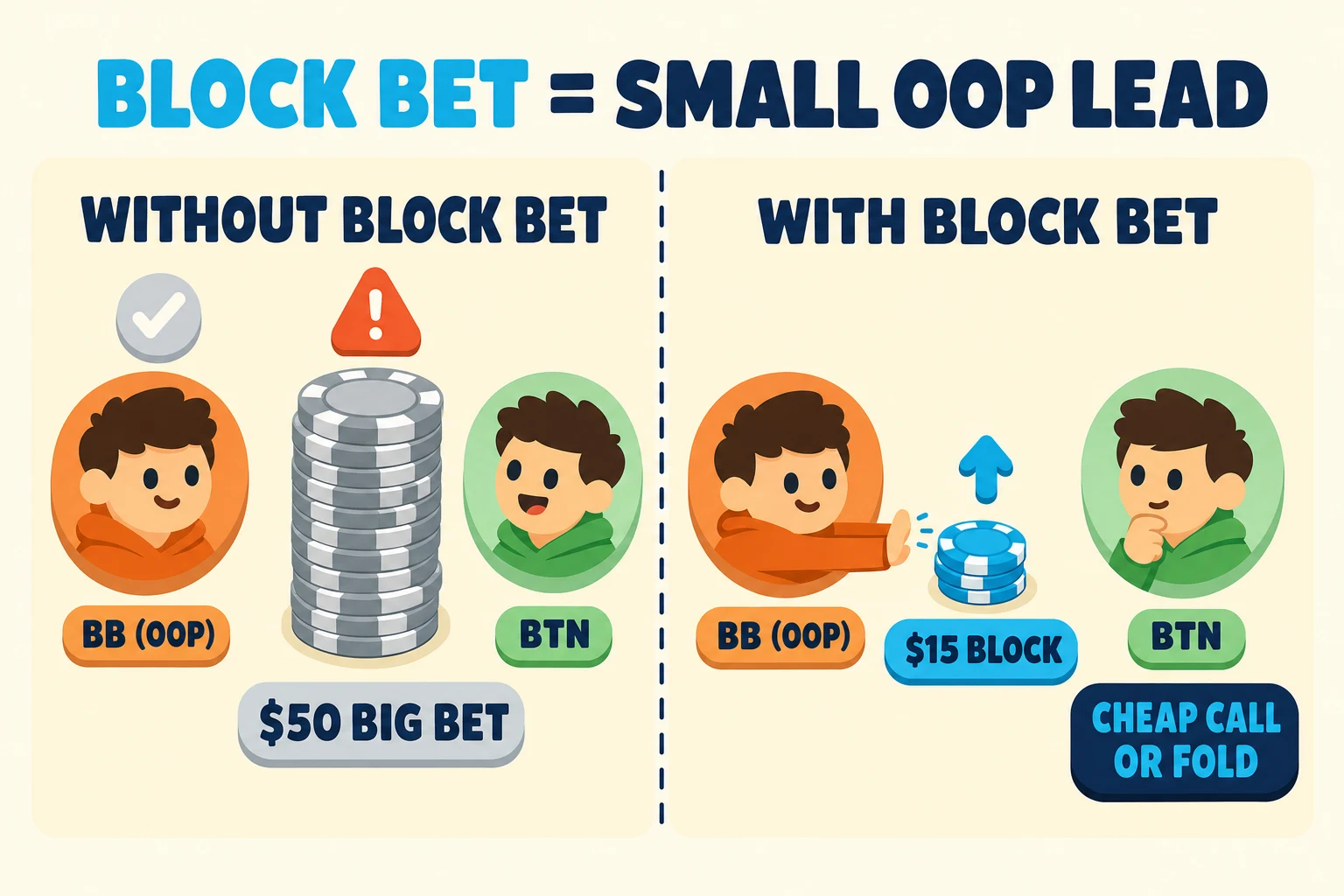
A block bet is a relatively small lead, usually made out of position (OOP) on the river or a late street. You use it to set the price for showdown and to discourage a larger in-position (IP) bet. Showdown means reaching the card reveal without further betting. The tactic works because a small OOP bet reduces your opponent's incentive to fire a much bigger bet. It also buys a cheaper showdown with marginal hands or bluff-catchers-hands that beat bluffs but lack strong value. You see block bets most often when your range contains few strong made hands and few pure bluffs to polarize your line.
Block Bet
What a block bet is and why it works
A block bet is a relatively small lead, usually made out of position (OOP) on the river or a late street. You use it to set the price for showdown and to discourage a larger in-position (IP) bet. Showdown means reaching the card reveal without further betting. The tactic works because a small OOP bet reduces your opponent’s incentive to fire a much bigger bet. It also buys a cheaper showdown with marginal hands or bluff-catchers-hands that beat bluffs but lack strong value. You see block bets most often when your range contains few strong made hands and few pure bluffs to polarize your line.
Example: You hold top pair with a weak kicker on the river and expect the IP opponent to often bet bigger. A small block bet ($5 into a $100 pot, for instance) can discourage a $30-$50 bet and either get called by worse or end the hand.
When to use a block bet (timing & board textures)
Use a block bet when you expect the in-position player might bet bigger if you check. It also works when opponents frequently check back and you can take a small stab. Block bets shine on boards that shift range polarity-cards that complete obvious draws create many marginal hands. Examples include a fourth flush card or a straight-completing river card. Prefer block bets for marginal value hands or thin bluff-catchers rather than polarized value hands or pure bluffs. If your hand needs protection (for example, vulnerable two pair versus a straight or flush draw), check or bet full-size for value instead.
Example: A river completes a flush. You have second pair and think your opponent will sometimes bet big with missed draws or medium made hands. A small block bet can force them to either call at a cheap price or fold.
Poker Skill’s pot-control lesson works toward the same aim from the calling side: with a marginal hand like 7♣ 6♣ on Q♠ 7♥ 2♦ you call the flop bet instead of raising, keeping the pot small into the turn.
Sizing and frequency: how much to bet and how often
Choose a small river size that makes facing a larger bet unattractive while still buying thin value or a cheap showdown. Steps to choose size:
- Estimate opponent’s likely larger bet sizes, then pick a block that makes those larger bets look inefficient. Practical sizes often fall between 10-25% of the pot on many boards.
- Ensure the size still gets called by worse hands you beat-don’t bet so small you invite a raise or so large you commit a marginal hand.
- Vary sizes so your block blends with legitimate value bets and occasional bluffs.
Frequency depends on your range composition and opponent tendencies. Don’t overuse block bets-if you block too often with marginal hands, opponents will exploit you by adjusting bet sizes or calling more.
Table dynamics and opponent selection for block betting
Block bets work best versus opponents who tend to make big in-position bets or who often check large portions of their range. They’re less useful against calling stations-players who call large bets regardless-because discouraging big bets loses value. Use reads about bet-sizing tendencies and aggression frequency. If an opponent rarely bluffs and rarely bets big, a block may be unnecessary. If they bluff big or bet large for value, a small lead can shape the action in your favor.
Common mistakes and quick rules to follow
- Don’t substitute a block bet for hands that need protection or for clear value hands-block betting targets marginal spots.
- Avoid excessively large “block” sizes that turn the play into a full-value bet.
- Limit usage frequency; over-reliance makes this line exploitable.
Quick checklist
- Confirm the opponent is likely to bet larger if you check.
- Verify the board texture favors marginal hands in your range.
- Pick a small, tactical size that discourages big bets but preserves thin value.
- Avoid block bets with hands that require protection or with polarized value.
- Vary frequency so the line remains non-obvious.