


Frequency
Frequency is the percentage of times a player takes a specific action (fold, call, raise, or all-in) in a given situation. Tracking frequencies shows how predictable a player is and whether your strategy is balanced or exploitable. Frequencies tell you when to follow solver recommendations for balance. They also show when to deviate to exploit opponents by position and stack size.
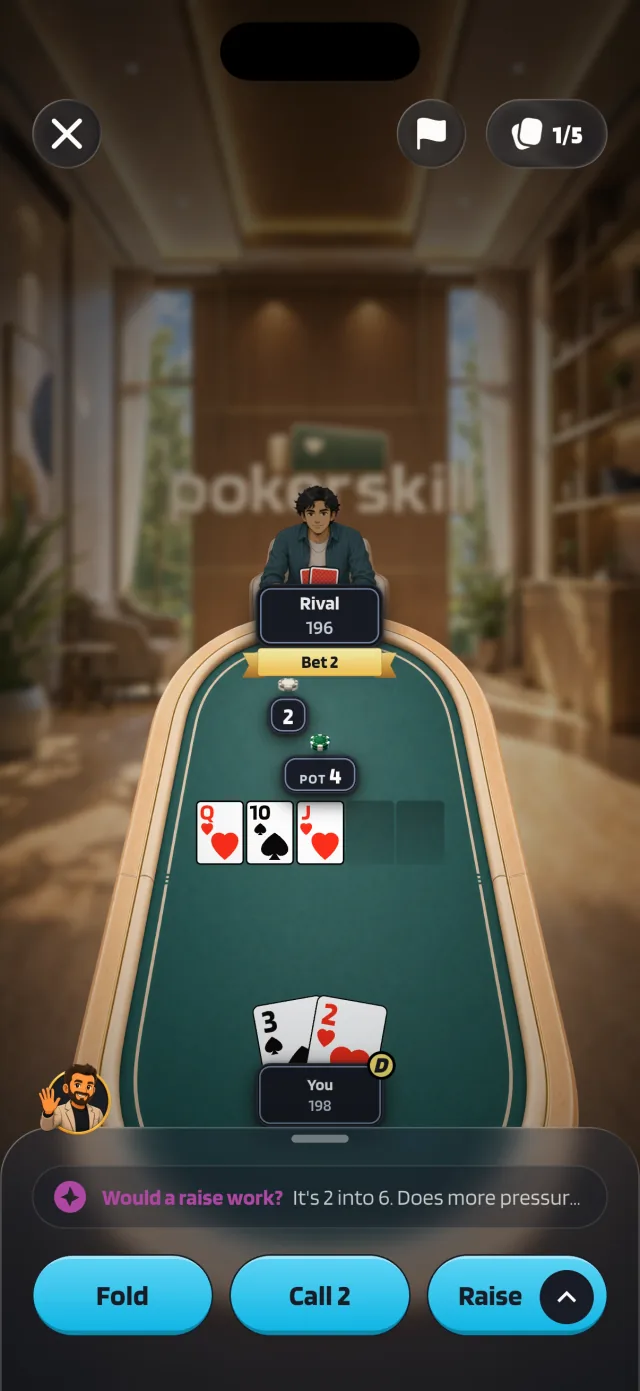
Practice this in Poker Skill. After each Practice vs AI game against AI opponents, the review shows your frequencies, such as how often you raised before the flop, bet the flop as the raiser or folded to a c-bet, each beside an optimal range.
Get the free appFrequency in No-Limit Texas Hold’em
Define frequency: what the term means and why it matters
Frequency is the percentage of times a player takes a specific action (fold, call, raise, or all-in) in a given situation. Tracking frequencies shows how predictable a player is and whether your strategy is balanced or exploitable. Frequencies tell you when to follow solver recommendations for balance. They also show when to deviate to exploit opponents by position and stack size.
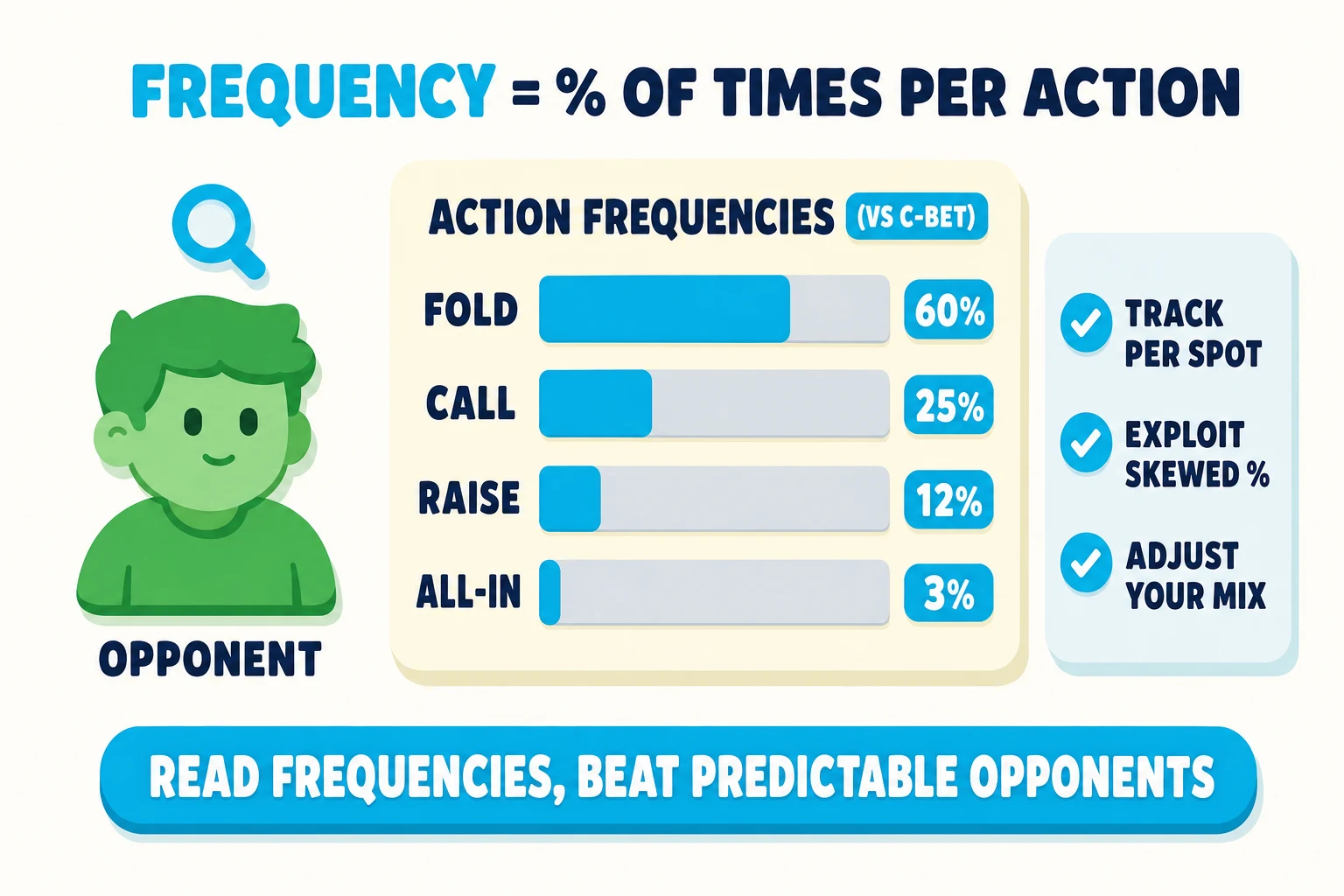
Action frequencies: folding, calling, raising, and all-ins
Action frequencies show how often each option is chosen and affect expected value and counterplay. If opponents fold frequently to continuation bets, your bluffs gain EV. If opponents call frequently, your bluffs lose EV while value bets gain EV. Solver output shows a 3-bet from the Hijack (HJ) at about 60 big blinds averages roughly 6.13%. That frequency rises versus later openers and falls versus early openers. Defending frequency measures how often players call, 4-bet, or fold to an open; it guides opening and 3-bet ranges.
Terms: 3-bet = a re-raise to an open; 4-bet = a re-raise of a 3-bet; flat = just calling; shove = going all-in.
Betting and raising frequencies: image and pressure
Betting frequency controls board pressure and shapes opponent responses each street. Bet too often on the flop and opponents can exploit you by calling with weak hands. Bet too rarely and you lose value while allowing bluffs to succeed. Raising frequency defines your aggression profile and forces opponents to tighten or widen defenses. From the Cutoff (CO), you raise more to steal blinds than from earlier seats because position increases fold equity. That higher raising frequency forces opponents in the blinds to widen or risk being exploited.
Short rule of thumb: adjust betting frequency to opponent tendencies - increase value bets against callers and increase bluffs against folders.
Position and stack-size effects on frequency
Position systematically alters optimal frequencies: later seats can raise and steal more often while early seats should tighten. Stack size affects willingness to flat, shove, or 3-bet. Deeper stacks raise implied odds, so flats and complex plays become more frequent. Shorter stacks, by contrast, increase shove and fold frequencies as postflop maneuvering shrinks. Solvers provide frequency tables broken down by position and stack; use these as baselines rather than memorizing isolated numbers.
Mixed strategies and balancing frequencies (GTO vs exploit)
Mixed strategies mean sometimes taking different actions with the same holding to remain unpredictable. GTO frequencies provide a baseline that’s hard to exploit; solvers often recommend splitting choices to stay balanced. Deviate exploitatively only when you have a clear, reliable read on the opponent. Increase betting frequency against opponents who fold too much and reduce bluffing against frequent cold-callers. Deviating without evidence often creates exploitable patterns in your own play.
Checklist:
- Track action percentages for common spots you face: open, 3-bet, continue.
- Memorize position and stack tendencies instead of isolated percentages.
- Use solver frequencies as a baseline; deviate only with clear opponent tendencies.
- Practice mixing actions to stay unpredictable and avoid exploitable patterns.