


Stab
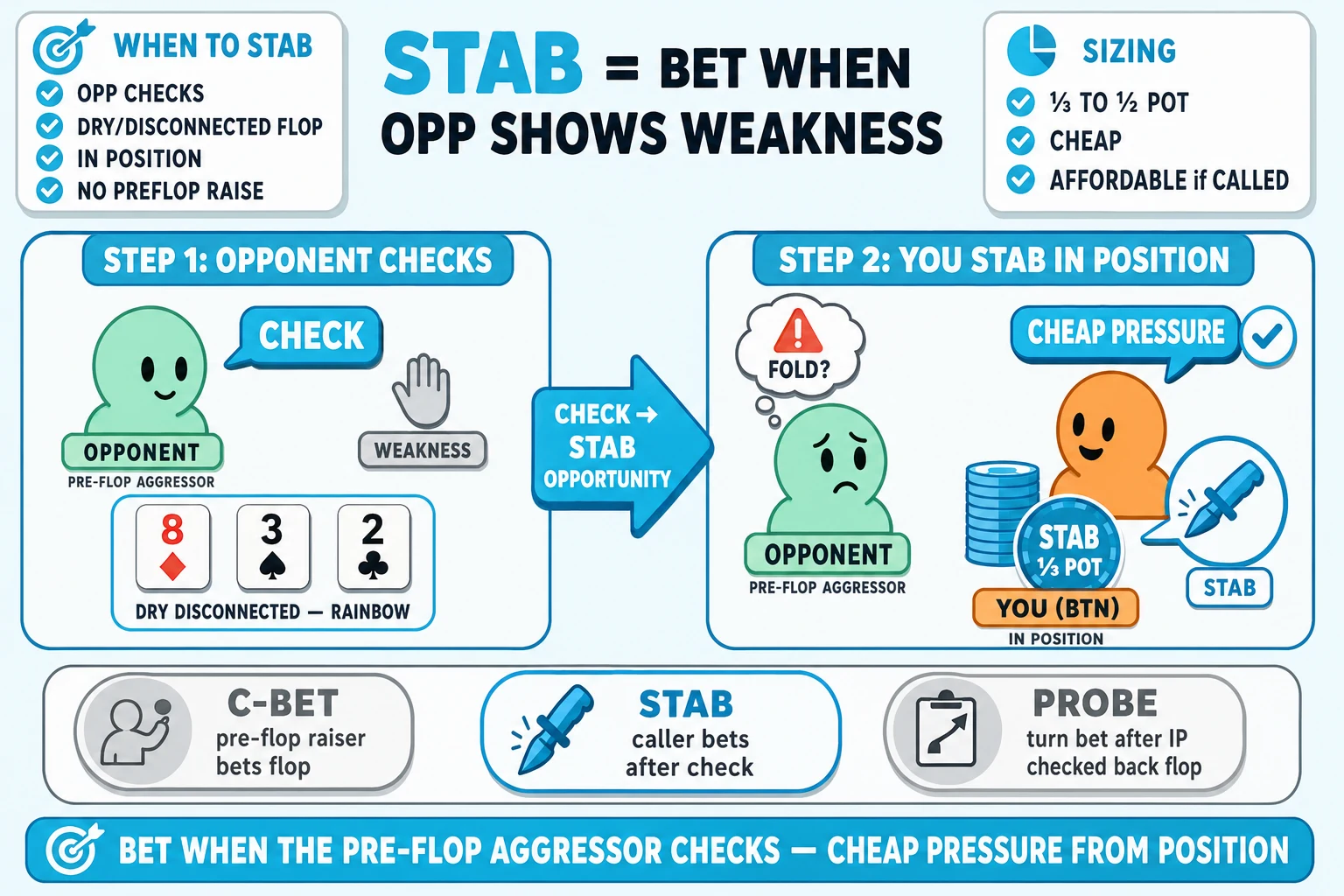
A stab is a bet on the flop or turn after pre-flop action has been passive or betting checked. The goal is to "stab at the pot" and win it uncontested by exploiting checked weakness. Stabs usually come from a player acting after opponents - typically one who did not lead pre-flop. Example: you're on the button, no one raised pre-flop, the flop is 8♦3♠2♣ and the pre-flop aggressor checks. A small bet there aims to fold out marginal hands. "In position" means you act after your opponents; a continuation bet (c-bet) is when the pre-flop raiser bets the flop to continue aggression.

Practice this in Poker Skill. The Basic Betting Capstone lesson has a stab of this kind, ace-high betting a paired board that misses most of the caller’s hands, where the cheaper bet is enough.
Get the free appStab: How to “Stab” the Pot in No-Limit Texas Hold’em
Definition - What a stab is and when it occurs
A stab is a bet on the flop or turn after pre-flop action has been passive or betting checked. The goal is to “stab at the pot” and win it uncontested by exploiting checked weakness. Stabs usually come from a player acting after opponents - typically one who did not lead pre-flop. Example: you’re on the button, no one raised pre-flop, the flop is 8♦3♠2♣ and the pre-flop aggressor checks. A small bet there aims to fold out marginal hands. “In position” means you act after your opponents; a continuation bet (c-bet) is when the pre-flop raiser bets the flop to continue aggression.
Strategic goal - Why you stab instead of checking
A stab tries to win pots when opponents show weakness by checking. Many opponents miss the board and will fold to affordable pressure. Stabbing cheaply lets you take pots without a strong made hand. You also apply pressure when the board makes strong hands unlikely, forcing folds from overcards and marginal pairs. Stabs can extract value from speculative holdings, like K-Q with a backdoor flush draw, by forcing marginal hands to fold.
Board texture and position - Choosing the right spots
Prefer dry, disconnected flops - low coordination, rainbow, and few straight or flush possibilities. Dry boards lower the chance an opponent connected with the flop. Late position is ideal because acting after others gives useful information. If the pre-flop aggressor checks to you on the flop, that’s a strong signal to consider a stab. Avoid stabbing on coordinated, draw-heavy boards (for example J♠10♠9♥) or in multiway pots. Those spots often contain strong hands or many draws that punish a stab.
Bet sizing and frequency - How much and how often to stab
Size stabs around one-third to one-half of the pot to force folds while risking little. Larger bets increase commitment; smaller bets lose fold equity. Stab more against players who fold frequently to aggression and less against callers who call down light. Reduce stabs versus aggressive defenders who will raise as a counter. Mix your stabs with hands that have showdown value or backdoor equity so your strategy isn’t pure bluffing. Practical example: pot is $60. A $20 (≈1/3 pot) stab pressures opponents while keeping your commitment low if called.
Adjustments - Reading opponents and defending against counters
If opponents start calling or raising your stabs, tighten your bluffing frequency and include hands with backup equity. Against players who bluff-raise, avoid pure bluffs and prefer stabs with outs or showdown potential. Balance by occasionally checking or flat-calling instead of always stabbing; this keeps opponents uncertain about your intentions.
Quick checklist
- Look for passive pre-flop action or a checked flop/turn as your signal to stab.
- Prefer late position on dry, disconnected boards.
- Size bets around one-third to one-half of the pot to apply affordable pressure.
- Track opponent tendencies; reduce pure bluffs and add hands with showdown or draw potential if stabs get called or raised.