


Draw
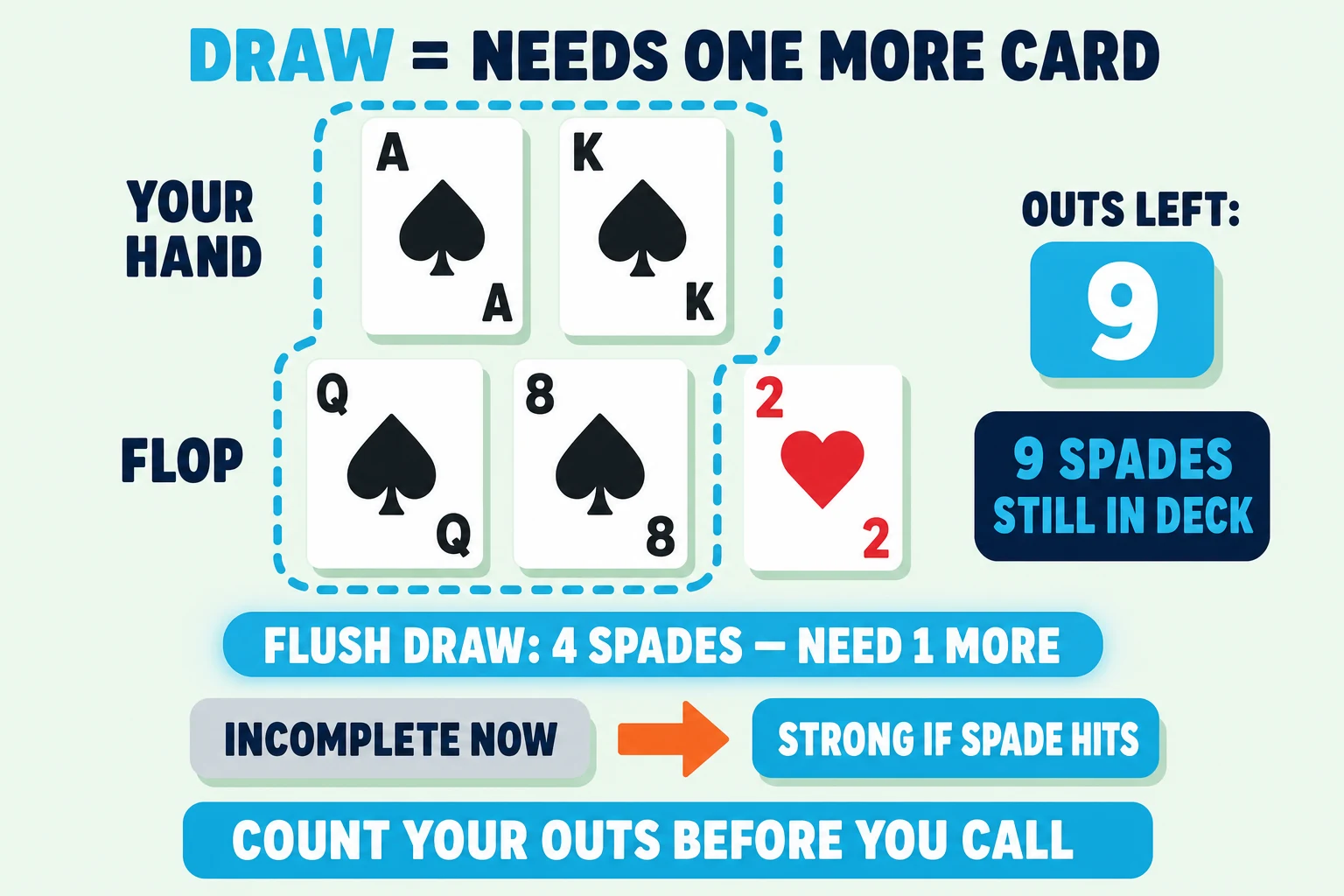
A draw is an incomplete hand that becomes much stronger if a specific community card appears. For example, holding A♠K♠ with two spades on the flop gives you a flush draw. A draw influences whether you call, raise to apply pressure, or fold to limit losses. In No-Limit Hold'em, free bet sizing makes draws powerful for building pots or semi-bluffing.
Practice this in Poker Skill. Telling draws apart is where the draw lessons begin: 7♥ 10♠ on 9♦ K♥ 8♦ is an open-ender that a 6 or a jack completes, while A♠ K♦ on 9♥ 6♥ 2♣ is just two overcards, no draw at all.
Get the free appDraws in No-Limit Texas Hold’em
What a draw is and why it matters
A draw is an incomplete hand that becomes much stronger if a specific community card appears. For example, holding A♠K♠ with two spades on the flop gives you a flush draw. A draw influences whether you call, raise to apply pressure, or fold to limit losses. In No-Limit Hold’em, free bet sizing makes draws powerful for building pots or semi-bluffing.
Most common draw types: flush and straight draws
The most common draws are flush draws, which need one more card of the same suit. Straight draws need a specific rank to complete a consecutive sequence and come in open-ended or gutshot forms. Open-ended draws complete with either of two ranks; gutshots require one specific rank. Both draw types can be the nut version, the best possible made hand. They can also be non-nut draws that still lose to stronger combinations when completed.
Example: You hold 9♣10♣ and the flop comes Q♣8♣7♦, presenting multiple ways to improve. You have a flush draw, and a straight draw that completes with a jack or a six. Multi-way draws like this win because multiple ranks or suits can improve your hand. Judge raw strength by counting how many cards complete your hand and whether the final hand will likely be best. Treat nut draws differently from draws that can be outdrawn by higher suited or ranked cards.
Outs and odds: deciding whether to continue
When deciding to continue, follow three steps: count outs, compare odds, and factor implied odds. Outs are the unseen cards that complete your hand; mark any tainted outs that also help opponents. Pot odds equal the ratio of the call size to the current pot; use them to judge immediate value. Implied odds estimate how much more you can win on later streets if you hit your draw. In No-Limit games, implied odds matter more because bet sizes can grow large after you complete your hand.
Example: Facing a medium flop bet, pot odds may be too small to call immediately. But if you expect to extract big value on later streets, implied odds can justify the call.
Playing draws: aggression, position, and board texture
Use semi-bluffs when your draw offers fold equity; aggressive play can win pots immediately. From late position, aggression with a draw gains information and controls pot size after opponents act. Board texture affects whether aggression works: a dry board contains few connected suits or pairs, causing opponents to fold more. A coordinating, paired, or multi-suited board raises the chance someone already has a made hand, so betting becomes riskier.
Example: With a flush draw on a two-tone, unpaired flop you can often bet to fold out medium pairs. On a paired, three-suited flop, your bet will be called or raised more often.
Turn and river dynamics: when draws lose value
After the turn you usually have one card left to improve, so your raw chance to hit drops significantly. Without sufficient pot or implied odds, chasing on the turn or river often becomes incorrect. Factor stack sizes when deciding whether to chase a draw on later streets. Calling a bet that commits a large portion of your stack requires confidence you’ll be paid when you hit.
Quick checklist before investing more chips
- Count your outs and note if any will be counterfeited by the board.
- Compare your chance to hit with the current pot odds before calling.
- Consider implied odds and realistic post-flop value you can extract when you complete your draw.
- Evaluate whether your draw is nut or non-nut and how that affects its vulnerability.
- Factor your table position, current board texture, and whether semi-bluff/fold equity justify aggressive play.
Use this checklist whenever you face a decision with a draw. It keeps your choices disciplined and focused on value rather than hope.