


Value Bet
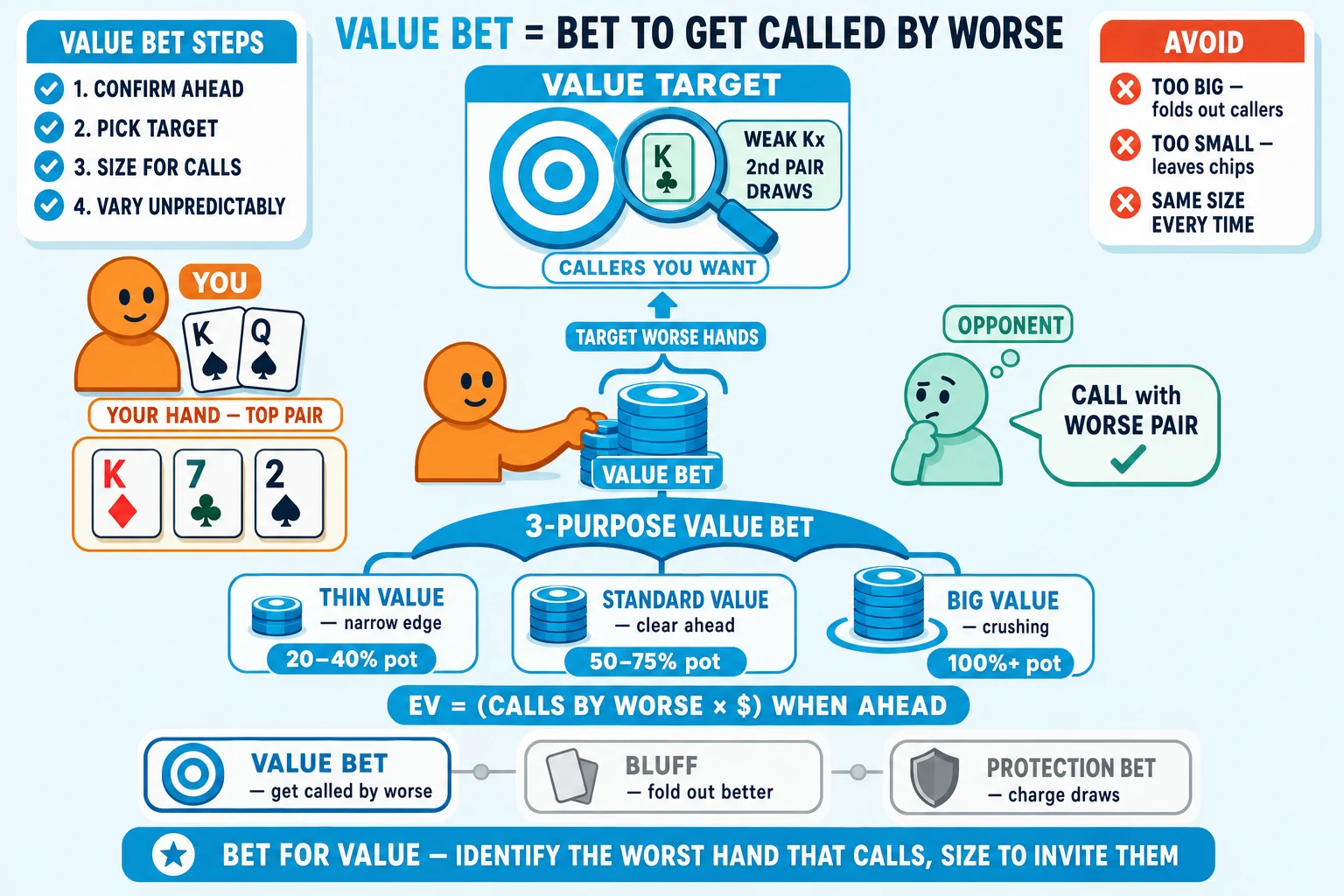
A bet aimed at being called by worse hands. Pick the weakest hand that calls (the value target), then size to invite them in.

Practice this in Poker Skill. The First Contact Postflop lesson asks whether worse hands can call, betting top pair on safe boards because they can and slowing down with it on very wet ones.
Get the free appValue Bet - Extracting Maximum Chips When You’re Ahead
What a value bet is
A value bet is a wager made when you believe you have the best hand. The point is to get called by worse holdings, not to force folds. The river (the final community card and betting round) is the most common place to value bet because the board is complete and ranges are tighter, so the weakest hand that will still call is easier to identify. You can value bet on any street when you are reasonably sure you are ahead.
Example: You hold K♠Q♠ on a K♦7♣2♠ board. If the opponent will call with second pair or a weak king, you bet to get those calls rather than fold them out.
When to value bet
Value bet when your hand is likely ahead of the opponent’s calling range. A calling range is the set of hands you expect an opponent to call with. If most of that range is worse than yours, lean into value. Opponent tendencies matter: sticky players who call down light deserve heavier value lines. Later streets give you cleaner reads, but don’t restrict value bets to the river when an earlier street already supports them.
Example: Against a caller who often calls river bets with top and second pair, a river value bet with top two pair will be profitable. Against a tight player who only calls with strong hands, consider a smaller extraction or check for showdown.
How to size value bets
Good sizing invites calls from worse hands without folding them off. Size relative to the pot, not in isolation. Avoid extremes: don’t bet so large you scare off marginal callers, and don’t bet so small you leave value behind. Vary your sizing to stay hard to read. Sometimes slightly larger, sometimes slightly smaller than your usual price, centered on what opponents will pay.
Example: If an opponent often calls medium-priced bets but folds to very large bets, choose a middle-sized bet that matches their comfort zone. Occasionally deviate to disguise strength.
Targeting opponents and the “value target”
First identify the weakest holdings in an opponent’s calling range, your value target. Then choose a line and a size those hands will call. If you target second pair, pick a size second pairs will call. If you target one-pair hands, pick a size that brings those calls. Mix bet sizes, and occasionally check-raise to avoid being read as always betting the same strength.
Example: Against a player who calls with top pair but rarely with middle pair, size your bet to invite top pair calls. If you always bet the same amount with top pair and bluffs, opponents will adjust.
Practical execution and common mistakes
Most long-term profit comes from getting called by worse hands consistently. Don’t treat every strong hand the same; adapt sizing and timing to the opponent and the board texture. Repeating one size every time makes you easy to read. And don’t over-rely on bluffing when you actually have the best hand.
Common mistakes:
- Betting too large and folding out all worse hands.
- Betting too small and leaving chips on the table.
- Using the same line every time, making your value bets exploitable.
Quick checklist
- Confirm you are likely ahead of opponent’s calling range.
- Identify the value target (the weakest hand you want to be called by).
- Choose a size that attracts those calls; neither too big nor too small.
- Vary sizes and lines to remain unpredictable.
- Consider check-raise or alternative lines when they increase value.