


Bluff
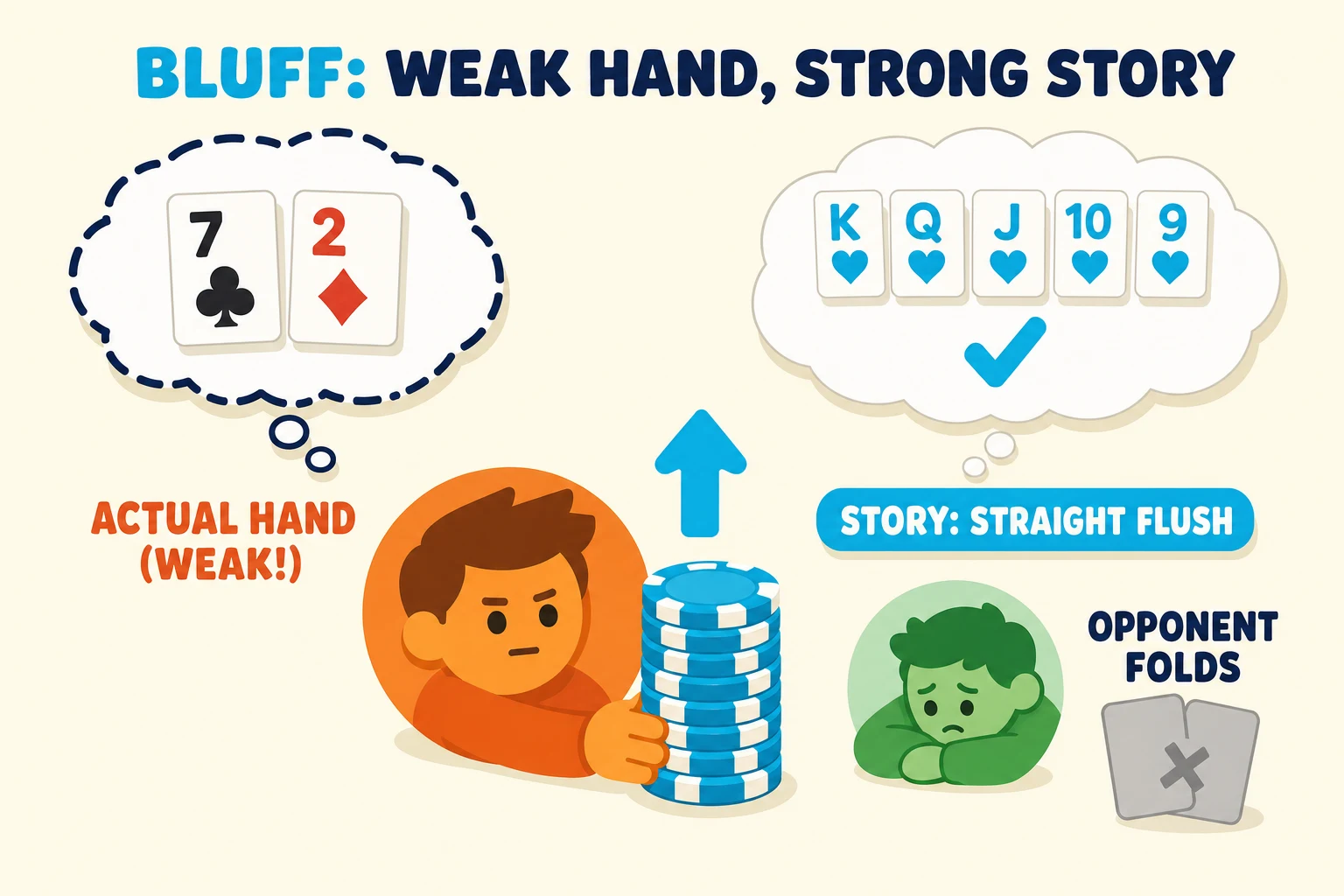
A bluff is betting or raising with a weak or inferior hand to induce folds. In No-Limit Texas Hold'em, where players can wager any portion of their stack, bluffs matter far more than in limit games. A single large bet can force a difficult decision or end a pot outright.
Practice this in Poker Skill. Reading which boards to bluff starts on the flop in the bluffing lesson: a paired low board like 5♥ 5♠ 8♥ misses the big blind’s calling hands, so you bluff, and J♥ Q♥ 9♦ hits them, so you check.
Get the free appBluff: Mastering the Art of Winning Pots Without the Best Hand
What a bluff is and why it matters
A bluff is betting or raising with a weak or inferior hand to induce folds. In No-Limit Texas Hold’em, where players can wager any portion of their stack, bluffs matter far more than in limit games. A single large bet can force a difficult decision or end a pot outright.
Good bluffing wins pots without showdown (when players reveal cards) and can swing an entire session. Well-timed bluffs also shape opponents’ perceptions, making future bets more profitable. Fold equity-the chance an opponent will fold to your bet-is the central value of any bluff.
Reading board texture and timing your bluffs
Board texture describes how community cards interact with likely holdings and draws. Certain turn or river cards change the story of the hand and create believable bluffing opportunities.
Example: you see flop K♦-7♠-6♣ and your opponent checks. A turn J♦ connects with many typical holdings (pairs and straight draws), making a strong hand plausible. If your earlier line suggested strength-say you raised preflop and led the flop-betting the J lets you credibly represent K-J or a made straight. When obvious draws miss, opponents fold more often.
Target moments when:
- A scare card arrives that makes strong hands plausible.
- Your betting line supports the story you plan to tell.
- The new card weakens opponents’ ranges, leaving fewer strong hands.
Bet sizing and the bluff-to-value balance
Your bet size controls pressure and the required bluff frequency. Larger bets generate more fold equity; smaller bets demand tighter bluff ranges to avoid exploitation.
Standard guideposts:
- Pot-sized bet: target roughly two value bets for every bluff (2:1 ratio). Value bets are wagers with the best hand.
- Half-pot bet: target about three value bets per bluff (3:1 ratio).
Practical tip: a pot-sized river bet lets you include more bluffs because the caller pays a higher price. When you bet small, cut back your bluff frequency-opponents will call lighter.
Leveraging psychology and table image
Table image is how opponents perceive your style (tight, aggressive, or loose). Use it: a tight player who suddenly fires on the river looks more believable as a monster than a habitual caller.
Exploit human tendencies: many players hate folding at showdown or admitting they were beat, so they call marginally more than optimal. Skilled bluffers pressure players’ discomfort and tilt, not just the cold math.
Adjust by opponent:
- Bluff less versus loose, risk-tolerant players who call widely.
- Bluff more versus timid or risk-averse players who fold to pressure.
Practical rules and common bluffing mistakes
Use bluffs selectively-only when board, action, and story align. Balance frequency and sizes; inconsistent lines are easy to call.
Avoid:
- Bluffing into calling stations (players who call with marginal hands).
- Bluffing when the board and previous action don’t support your represented hand.
- Over-bluffing so opponents adjust and call you down more often.
Quick checklist before bluffing:
- Does the board texture and recent action match the strong hand I’m representing?
- Will my bet size make the story believable and apply enough pressure?
- Does my opponent’s tendency make a fold likely, or am I bluffing a calling station?
Follow these checks and you’ll turn well-timed bluffs into consistent profit while avoiding common traps that bleed chips.