


SPR
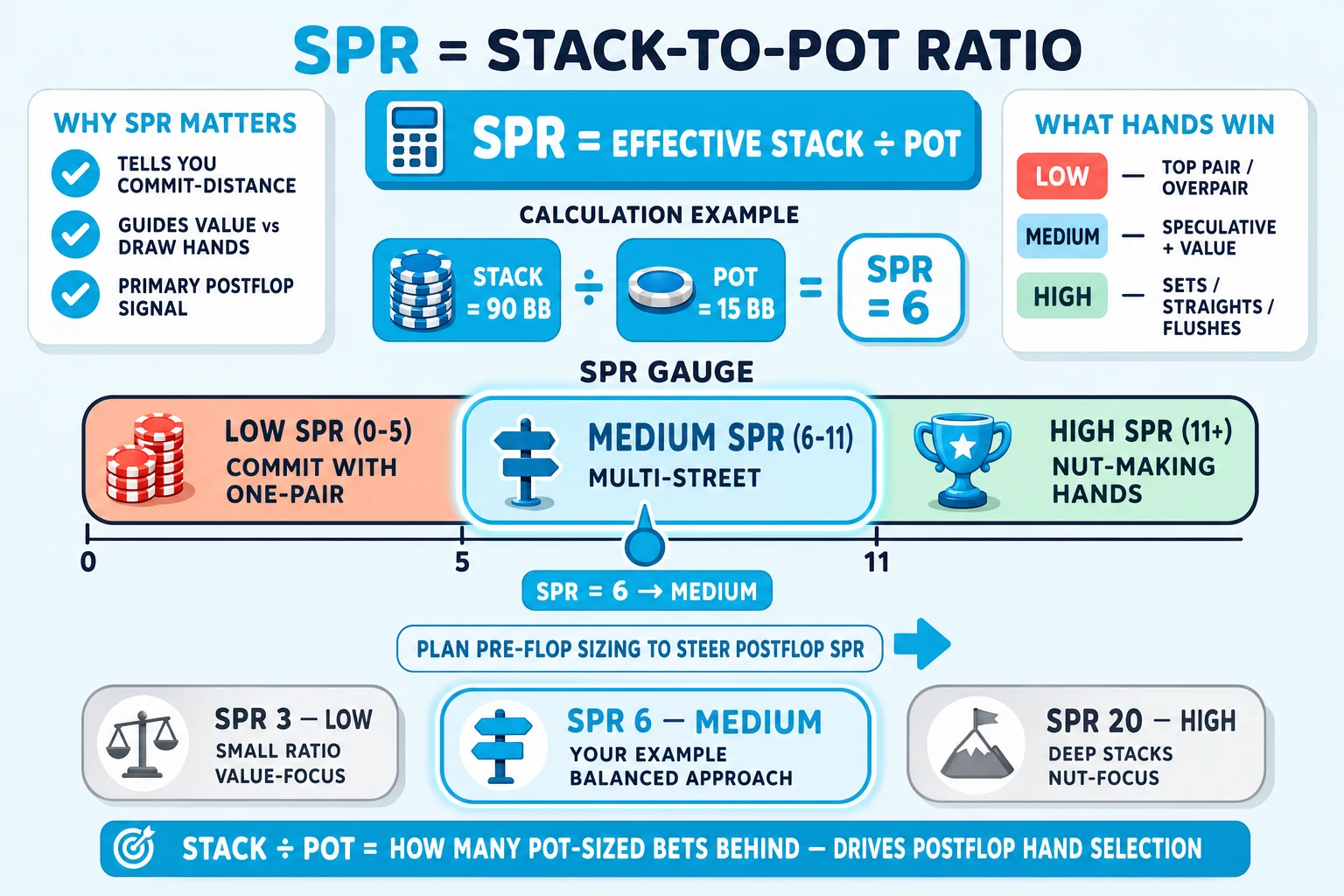
SPR (Stack-to-Pot Ratio) equals the effective stack size divided by the current pot size. Effective stack means the smaller of your remaining stack and your opponent's. SPR shows how many times the flop pot fits into the stack behind it. It also measures the risk required to commit on later streets (turn and river).

Practice this in Poker Skill. An SPR near 18, 97.5 big blinds behind a 5.5 big blind flop pot, is the depth of every hand in the pot-control questions, where a pair under an ace calls a bet and top two pair raises it.
Get the free appSPR (Stack-to-Pot Ratio)
What SPR Is and Why It Matters
SPR (Stack-to-Pot Ratio) equals the effective stack size divided by the current pot size. Effective stack means the smaller of your remaining stack and your opponent’s. SPR shows how many times the flop pot fits into the stack behind it. It also measures the risk required to commit on later streets (turn and river).
In No-Limit games, flexible bet sizing makes SPR the primary postflop strategy signal. Low SPR means a small additional bet can commit stacks, so one-pair hands and overpairs gain value. High SPR requires larger future bets to win big pots, so nut-making hands like sets, straights, and flushes increase in value.
How to Calculate SPR Quickly
Calculate SPR quickly at the table in a few steps:
- Determine the effective stack: it’s the smaller remaining stack between you and your opponent.
- Count the current pot, including blinds, antes, raises, calls, and any committed side pots.
- Divide: SPR = effective stack ÷ pot. Round to a whole number for fast decisions.
Example: you and one opponent have 100 big blinds effective, and the preflop pot is 15bb. SPR = 100 ÷ 15 ≈ 7, so treat this as a medium SPR.
Quick trick: estimate the pot with simple sums (blinds plus total bets), then compare to stack size. Rounding to common benchmarks (3, 8, 15) works for rapid classification.
SPR Ranges and Their Strategic Implications
Low SPR (0-5): little remains relative to the pot. Top pairs and overpairs become reliable value hands. Example: on a K-7-2 flop with SPR ≈3, KQ often merits a bet or commit since you need only a small extra wager to move all-in.
Medium SPR (6-11): you can play multiple streets, letting speculative hands pay off. Suited connectors and medium pairs gain value since sets and straights win larger pots. Top pair still wins sometimes, but consider blockers and opposing draws.
High SPR (11+): deep stacks reward nut-making hands like sets, straights, and flushes. One-pair hands weaken unless they have backup equity, such as redraws or strong kickers. Example: with SPR ≈20 and 100bb, a lone top pair like AJ on A93 often folds to heavy pressure.
Planning Preflop to Control Postflop SPR
Plan preflop sizing and hand selection to steer SPR before the flop. Anticipate flop SPR from your open size and effective stacks to choose fitting hands.
- Larger opens and shorter effective stacks create low SPRs: favor straightforward value hands, like big pairs and strong broadways.
- Smaller opens and deep effective stacks create high SPRs: prefer speculative hands with multi-street potential, like suited connectors and small-to-medium pairs.
- Example: with 100bb effective, opening to 2.5bb typically yields a higher SPR than opening to 4bb when called. Pick hands to match expected SPR.
Quick Rules of Thumb and Common Pitfalls
- Rule of thumb: lower SPR -> simpler value betting; higher SPR -> seek equity and nut potential.
- Avoid committing one-pair hands in high SPR unless you have backup equity (draws or a strong kicker).
- Tournament factors like antes and stack depths change typical SPRs; adjust opening ranges accordingly.
- Pitfall: omit committed chips from the pot when calculating SPR; this leads to wrong decisions.
Quick checklist
- Calculate effective stack and pot immediately after preflop to estimate flop SPR.
- Choose preflop hands with postflop SPR plans in mind (value versus speculative).
- Adjust aggression: low SPR = push value; high SPR = pursue nuts and fold dominated pair hands.