
First Barrel
What the first barrel is
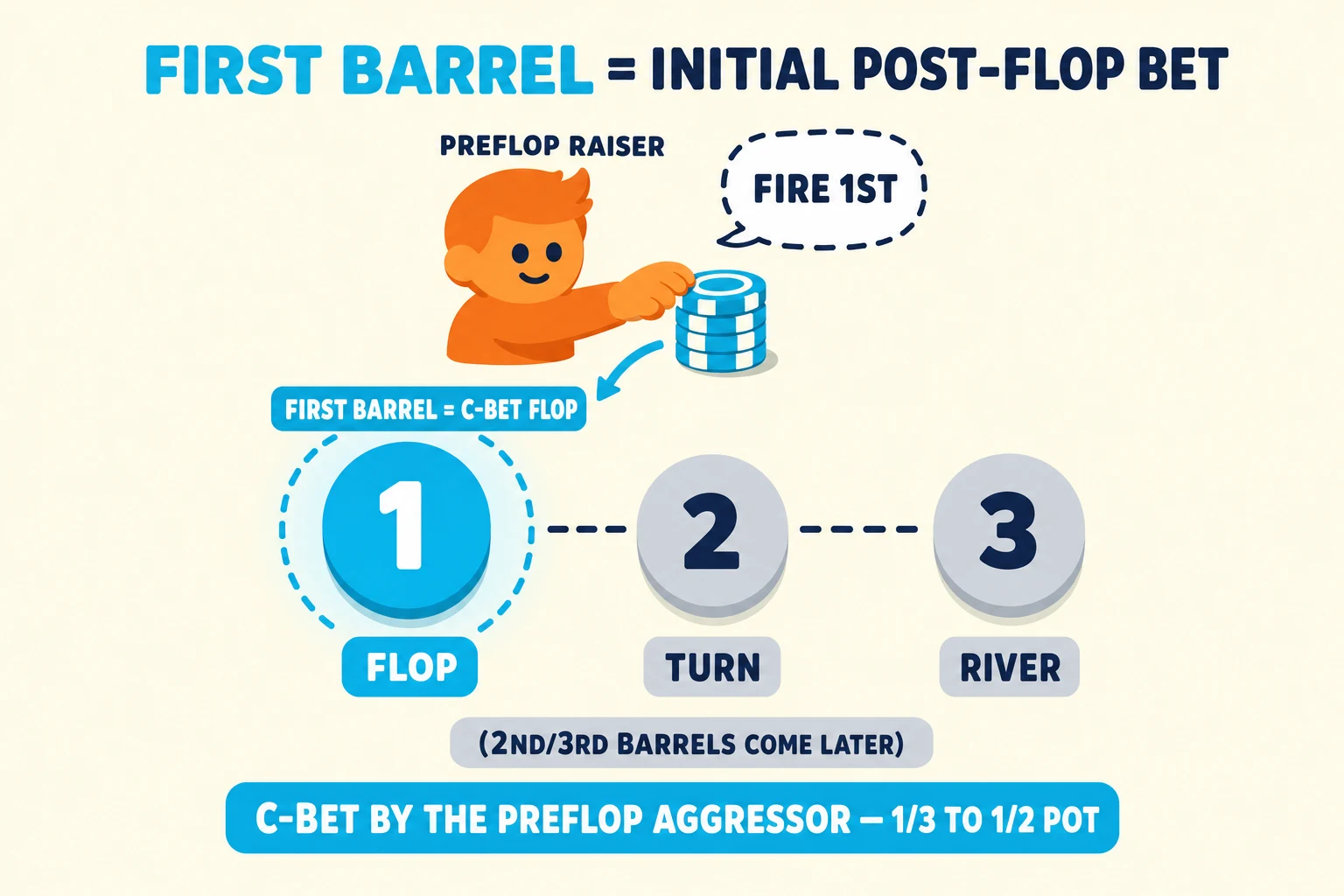
The first barrel is the initial post-flop bet by the player who raised pre-flop. This is called a continuation bet (c-bet). A c-bet lets the pre-flop raiser maintain pressure and represent a strong hand, regardless of whether the flop improved them. In tight-aggressive post-flop play, a good first barrel mixes value bets and bluffs to keep opponents guessing.
Why and when to fire the first barrel
The first barrel aims to win pots without showdown and to protect or build pots when you have equity. Opponents connect with the flop roughly one-third of the time, so a well-timed c-bet will fold many hands. It works especially well heads-up after a pre-flop raise because the raiser usually has a range advantage - callers’ ranges include more weak hands and draws. Use the first barrel when you hit the flop for value and when you miss as a bluff to deny free cards.
Example: You raised from the cutoff with A♦K♣ and the flop is K♠7♦2♣. A first barrel is a clear value bet with top pair. If the flop is 8♣3♦2♠ and you hold A♦K♣, firing a c-bet as a bluff can often win the pot because many hands missed this board.
Sizing and frequency guidelines
Sizing and frequency shape how readable your bet is.
- Size: Advanced players size first barrels between one-third and one-half of the pot. Those sizes avoid telegraphing strength and preserve fold equity when bluffing.
- Frequency: Bet most of the time after raising pre-flop - with strong hands and with a portion of missed hands. This balances your range and prevents easy exploitation.
- Consistency: Keep sizing similar for value and bluffs. If you always use small bets for bluffs and large bets for value, opponents will adjust.
Example: In a $100 pot, bet roughly $33-$50 as your first barrel, adjusted for stacks and table dynamics.
How board texture, position, and opponents change the decision
Board texture matters. Bet more on flops that favor your raising range, such as high-card or dry flops. Be cautious on wet, connected, or two-tone boards that give callers more equity. Position matters. From late position you can fire more confidently because you act later on subsequent streets. Out of position, check more or have a clear plan for later streets since maneuverability is limited.
Opponent tendencies matter. A floater calls flop bets intending to bluff later; against floaters, c-bet less or plan a stronger second barrel. A check-raise is when an opponent checks then raises; versus frequent check-raisers, check back more or use smaller c-bets to avoid big confrontations.
Practice habits and common mistakes to avoid
Practice firing the first barrel in heads-up spots and review your hands. Track how often you bet versus check on different flops to balance value and bluffs.
Common mistakes:
- Betting blindly without considering board texture or opponent type.
- Forming predictable patterns, such as only c-betting when you hit.
- Using wildly varying sizes that reveal strength.
Review sessions should test whether your sizing and frequency made sense and whether you had a plan for later streets.
Quick checklist
- Confirm you were the pre-flop aggressor before planning a first barrel.
- Evaluate flop texture and whether it favors your range.
- Choose a consistent size (roughly 1/3-1/2 pot) and frequency to balance range.
- Adjust or check back versus known floaters and check-raisers.
- Review hands to ensure a mix of value bets and bluffs and avoid predictable patterns.