


Check-Back
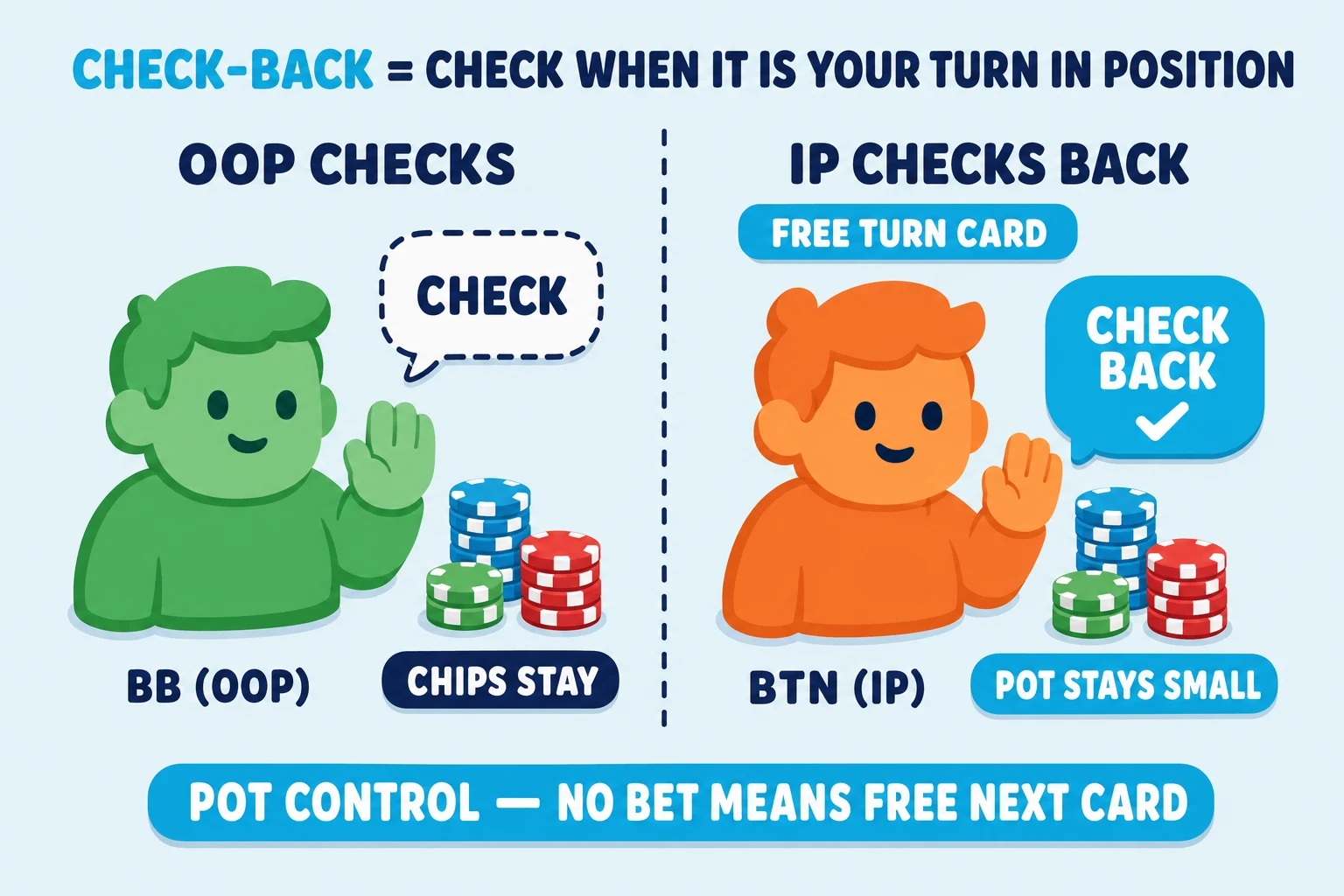
A check-back occurs when a player with the option to bet instead checks, passing action without adding chips. It most often happens when you are in position - acting after your opponent on that betting round - and the opponent checked earlier. Checking back keeps the pot size steady instead of building it.
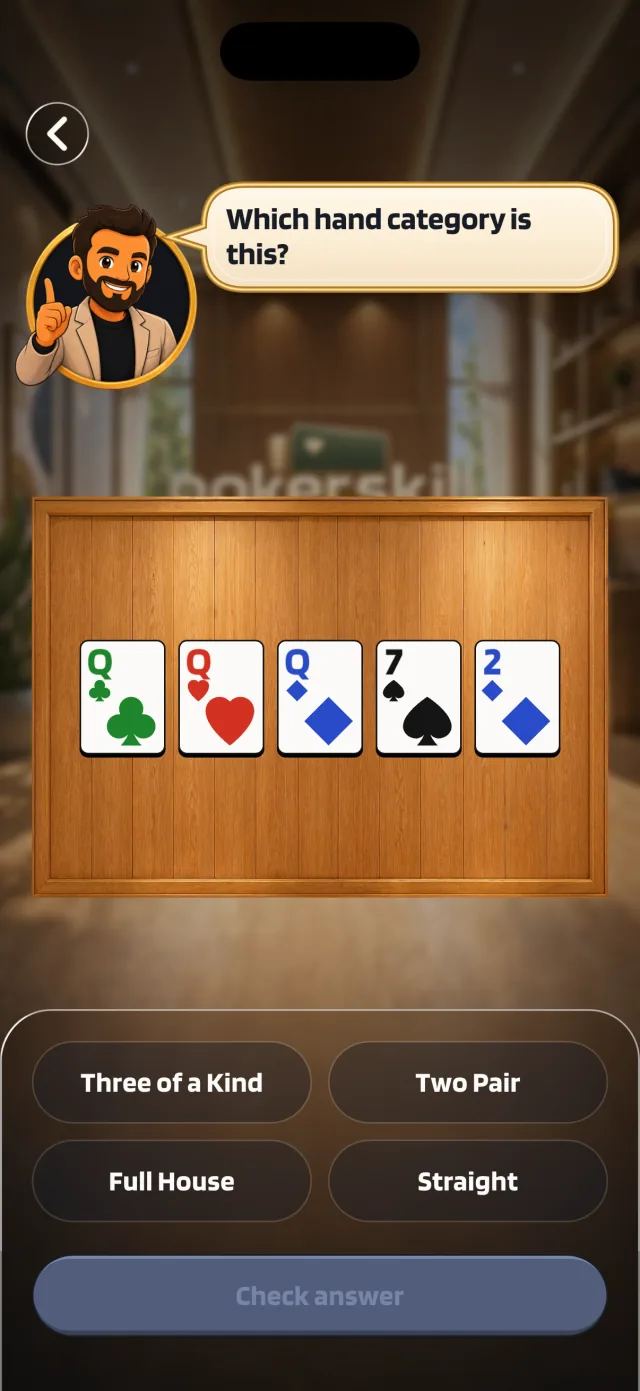
Practice this in Poker Skill. The turn lessons practice when to check back: with Q♦ J♣ on 8♣ 5♠ Q♠, the 2♠ turn brings the third spade, so top pair checks back and keeps the pot small.
Get the free appCheck-Back: When and How to Use It (No-Limit Texas Hold’em)
What a check-back is
A check-back occurs when a player with the option to bet instead checks, passing action without adding chips. It most often happens when you are in position - acting after your opponent on that betting round - and the opponent checked earlier. Checking back keeps the pot size steady instead of building it.
Contrast: betting adds chips. Check-raising means you check planning to raise if an opponent bets. A plain check-back simply lets the hand proceed to the next street without a bet.
Example: You are on the button with K♠Q♣, opponent checks the flop 8♦7♠2♣; you check back to avoid bloating the pot with a marginal top-pair candidate.
Primary strategic uses of checking back
- Pot control: Keep pots manageable with medium-strength or vulnerable hands. Example: Holding A♣9♠ on a J♠9♦4♣ flop - top pair with a shaky kicker; check to control the pot.
- Range protection: Occasionally check strong hands so opponents can’t read your check as only weakness. Example: Sometimes check back a flopped set (7♣7♦ on 7♠3♦2♥) to disguise strength and induce bluffs.
- Induce bluffs and delayed value: Check hands with showdown value to let opponents bluff later, or to bet when the river improves your equity. Example: With Q♣J♣ on a K♦10♣4♥ flop, checking back lets an aggressive opponent bluff the river.
How board texture and timing affect the decision
- Dry (static) boards: Few draws or coordinated cards. Check back the middle of your range to control pot size, since bets often fold out weaker holdings. Example: 8♥3♦2♠ - low connectivity; checking controls the pot.
- Wet (dynamic) boards: Coordinated cards create many draws. Favor aggression because checks invite later pressure, but still check strong hands sometimes to balance and trap. Example: T♠9♠8♦ - many straight and flush turn outs; lean to bet more, but sometimes check two pair to trap.
- Timing/sequence: After you defend the big blind and check-call the flop, a turn check to the original aggressor is common. That line keeps the pot small or invites a bluff later.
Building a balanced check-back range
Include a mix so checking isn’t pure weakness:
- Strong hands occasionally (sets, two pair) to prevent exploitation.
- Medium-value hands for pot control.
- Draws that prefer concealed aggression or seek a cheaper river.
Vary frequencies and exact holdings. If you only check with weak hands, opponents will exploit you by betting when you check and folding to your bets.
Adjustments versus opponent types and common mistakes
- Versus recreational players who rarely bluff: Avoid giving free cards with vulnerable holdings. Let value hands reach showdown or bet for value when they call with worse.
- Versus aggressive “betting stations”: Check back some strong hands to induce bets; avoid check-raising them early.
- Common mistakes: Checking only with weak hands or doing so predictably. Mix your checks and adjust based on opponent tendencies.
Checklist
- If in position and opponent checked, assess your hand strength, the board texture, and their tendencies.
- Use check-backs for pot control with marginal hands and protect your range with selective strong hands.
- Mix strong hands, draws, and medium hands in your check-back range.
- On dry boards, check the middle of your range. On wet boards, favor aggression but retain selective check-backs.
- Avoid predictable checking patterns; adjust frequencies versus different opponent types.