


In Position
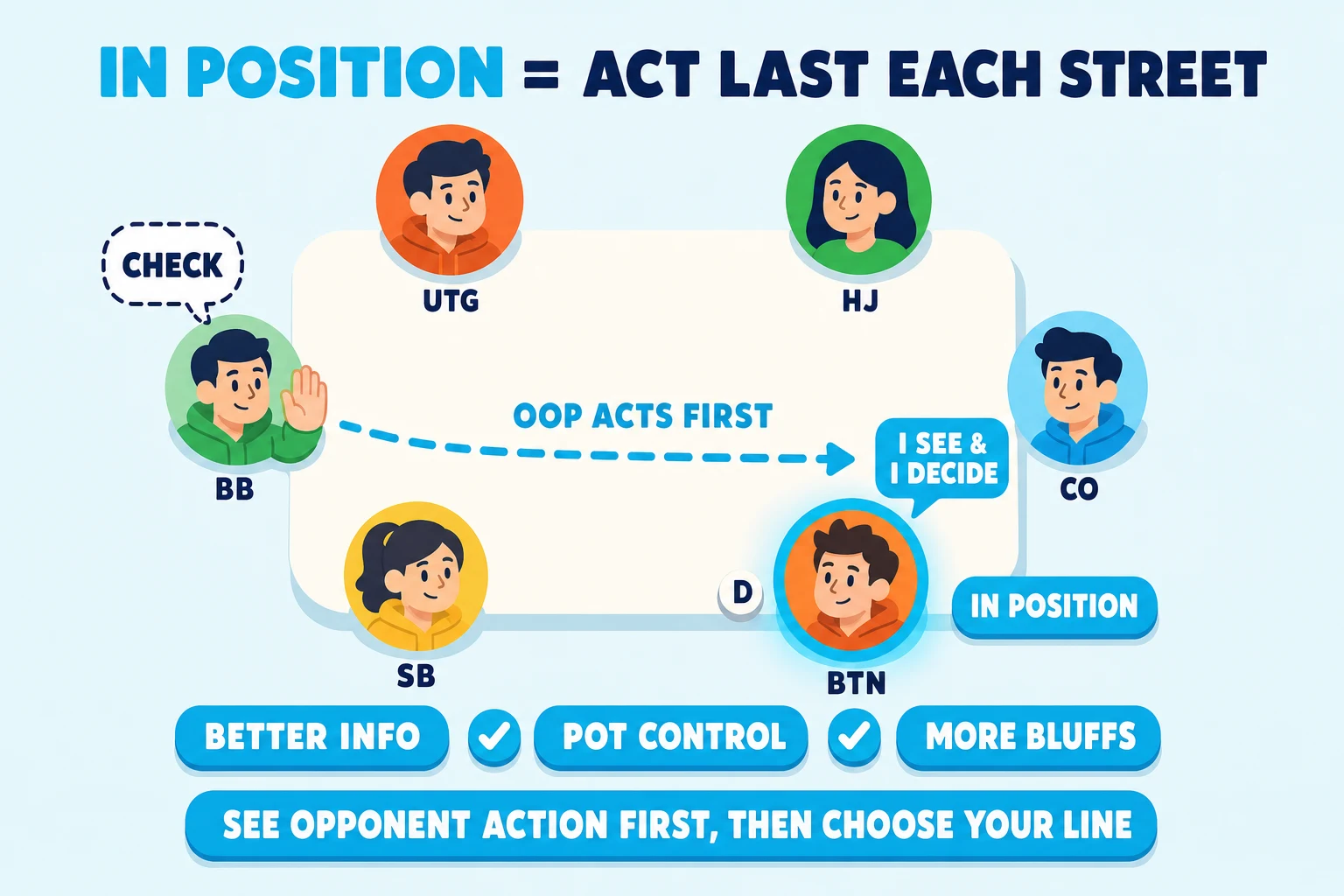
Acting after your opponent on every postflop street. The information edge lets you bet thinner for value, bluff with better data, and control the pot with marginal hands. The button is the strongest seat for this reason; the cutoff is next.
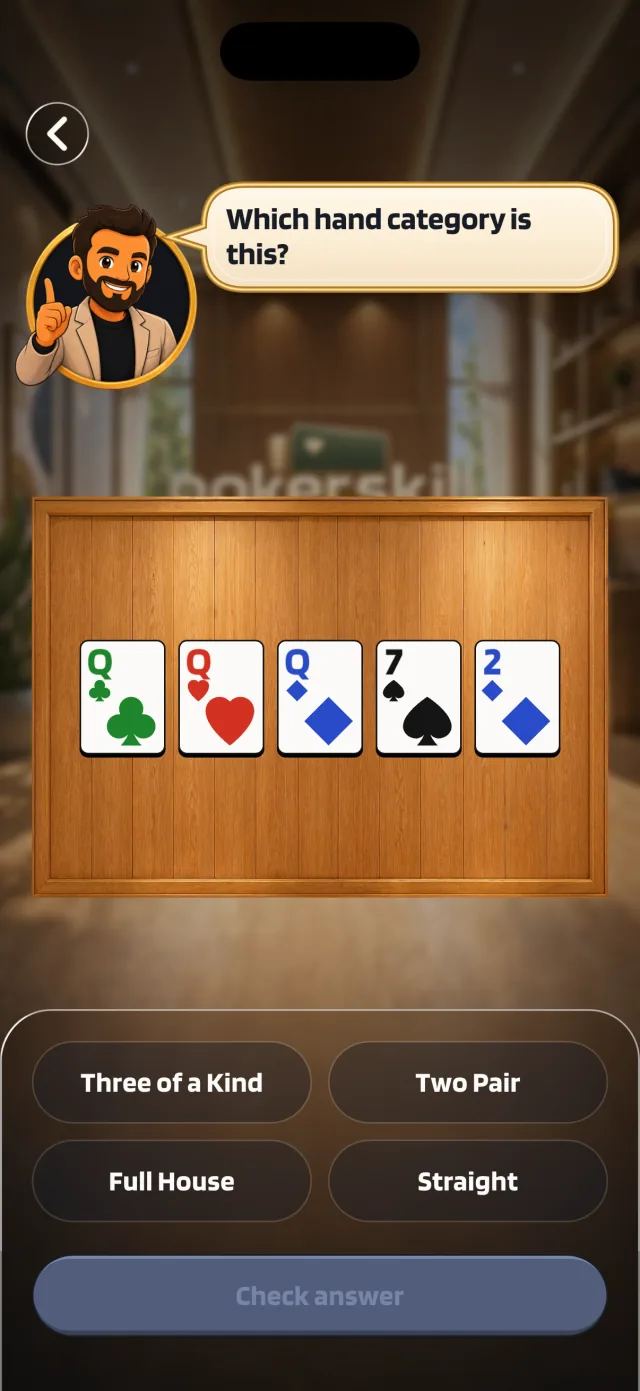
Practice this in Poker Skill. The Postflop Action Order lesson defines being in position as acting last on the street, then has you find that seat when the button has folded, which leaves the cutoff last to act.
Get the free appIn position (No-Limit Texas Hold’em)
What “in position” means
Being in position means you act after your opponent on each postflop betting round. Acting last gives you the cheapest information at the table: you see their bet, raise, or check before committing a chip. That information lets you bet thinner for value, bluff against actual weakness, and control the pot with hands that don’t want to play big pots.
For example, from the button you watch the flop check around to you, then either check back with a medium hand or take a stab. Out of position the same hand has to act first and live with the response. Position quietly decides which hands are worth playing and how to play them.
Why the button and cutoff matter
The button is the strongest seat at the table because it acts last on every postflop street. That last-action edge compounds across the hand: you act with more information than any other seat at the table, every time. The cutoff, the seat to the button’s right, is next. From there you can open wider preflop because fewer players remain to act, and most of them will face you out of position later. Both seats create steal opportunities against tight or passive defenders, and both let you punish loose play with positional aggression.
For example, from the button you can raise with KJ against two tight blinds purely as a steal. From the cutoff you might open 76s (a suited connector — consecutive cards of the same suit) because the postflop hand will probably play in position.
Preflop adjustments when in position
- Widen your opening range on the button and cutoff. Add speculative hands like suited connectors and low suited aces that play well postflop with the information edge. Open 76s on the button more often than from early position.
- Lean on preflop aggression to steal blinds. Adjust raise size and frequency to defenders and your image. Raise more when the blinds fold too often; tighten when they call light, and pick hands that realize equity multiway.
- From early position, lean to cleaner, position-friendly hands. The further from the button you are, the less the speculative stuff earns its keep.
Postflop advantages and practical tactics
Use position to control pot size. With medium hands, check back and keep the pot small; with strong hands, bet when opponents are likely to call. Floating (calling a flop bet planning to bluff later) is a position-only play. On a dry A72 flop, calling a c-bet with KQ from the button and barreling the turn if the bettor shows weakness is the textbook float.
When you’re facing aggression, position helps you read the range. Acting last lets you base your call, raise, or fold on the actual sizing and texture instead of guessing.
Advanced uses of position and deep-stack play
Position widens the trap menu. Slow-play with strong hands to keep villain’s bluffs and second-best value live, and balance your range between bluff and value across streets. Deep stacks amplify the edge: more chips behind mean more streets where pressure and pot manipulation pay. Combine reads and table dynamics for multi-street lines like delayed bluffs and turn raises. With deep stacks, calling a small flop bet in position and turning the screws on a turn the c-bettor doesn’t love is a high-EV pattern that doesn’t exist out of position.
Quick checklist
- Act last whenever you can. Use the information edge across every street, not just one.
- Open wider in the cutoff and button. Target tight or passive blinds for steals.
- Control pot size with marginal hands and bet for value with stronger ones.
- Practice floating, delayed bluffs, and traps. Position is what makes them work.
- In deep-stack spots, lean on pressure and pot manipulation while you hold position.