


Pot Control
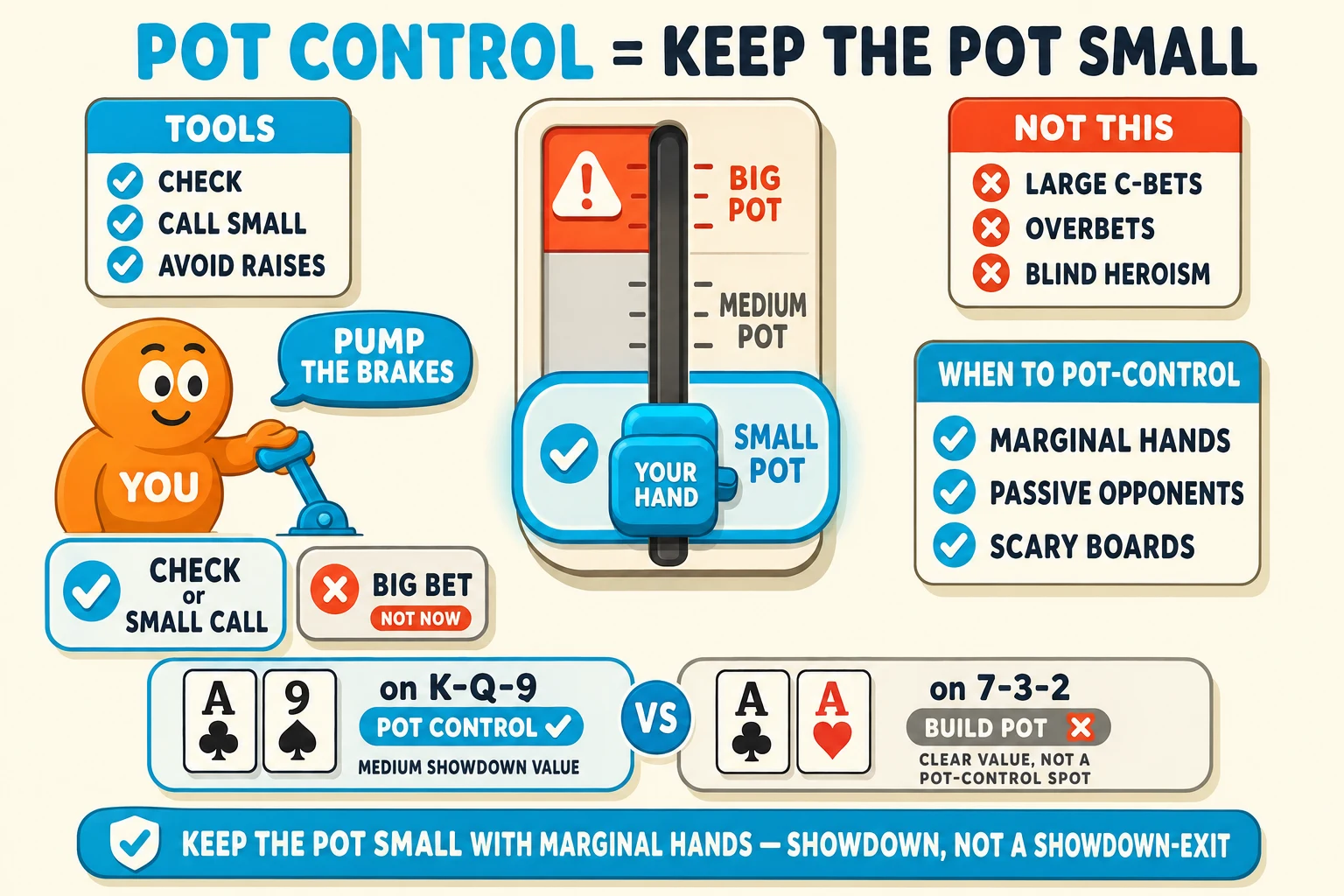
Pot control means managing the pot size to match your hand's relative strength. In practice, you avoid big bets or raises with hands that have decent showdown value. Showdown value means the hand can likely win at showdown but remains vulnerable to draws or domination. Example: you hold A♣9♠ on a flop K♦ Q♠ 9♣. You have a pair of nines with an ace kicker, a reasonable showdown hand but not invulnerable to overcards or strong draws on later streets. Instead of betting big to build the pot, you check or call to keep it small. This approach avoids losing a large portion of your stack to late aggression. Pot control pairs with card control - choosing which streets see action and which cards matter. Together they influence betting dynamics and the types of hands you face at showdown.
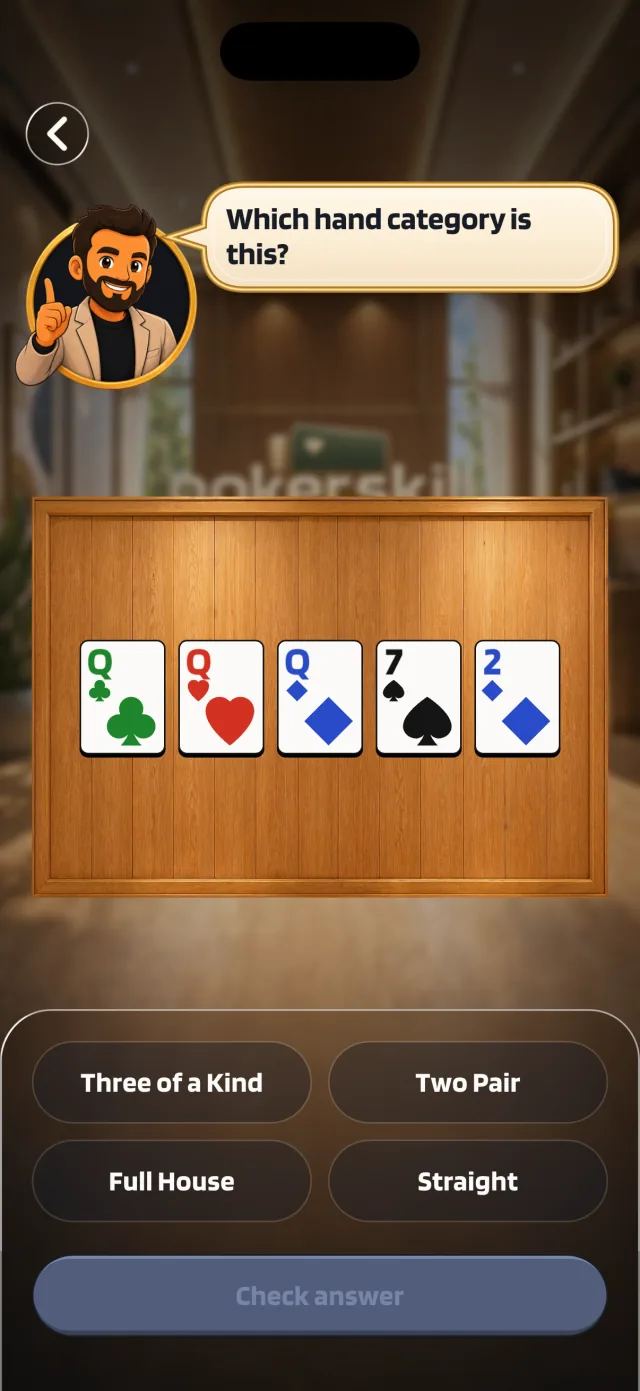
Practice this in Poker Skill. Facing a flop bet, the Intro to Pot Control lesson calls with second pair to keep the pot small and raises top two pair or a flopped set to build it.
Get the free appPot Control in No-Limit Texas Hold’em
What pot control means
Pot control means managing the pot size to match your hand’s relative strength. In practice, you avoid big bets or raises with hands that have decent showdown value. Showdown value means the hand can likely win at showdown but remains vulnerable to draws or domination. Example: you hold A♣9♠ on a flop K♦ Q♠ 9♣. You have a pair of nines with an ace kicker, a reasonable showdown hand but not invulnerable to overcards or strong draws on later streets. Instead of betting big to build the pot, you check or call to keep it small. This approach avoids losing a large portion of your stack to late aggression. Pot control pairs with card control - choosing which streets see action and which cards matter. Together they influence betting dynamics and the types of hands you face at showdown.
For the full decision guide, a worked hand, and the spots where pot control burns value, read pot control in poker.
When to use pot control
- When your hand is likely best at showdown but can be outdrawn or beaten by two pairs or sets. Example: middle pair on a board with multiple overcards or backdoor draws (two-street draws needing turn and river).
- Against passive opponents - those who rarely bet or raise - you can keep the pot small. They seldom bluff big, so you can reach profitable showdowns in smaller pots.
- Use pot control on streets where a single card can dramatically change equities. For example, an unpaired turn on a coordinated flop that brings straight or flush possibilities.
Avoid pot control with clear, strong value hands like top sets or the nut flush. Those hands should extract value, not shrink the pot, or when the board suddenly favors your range.
How to execute pot control at the table
- Prefer checking to the aggressor on streets where you lack the nuts and want to control risk. Checking prevents the pot from growing and provides valuable information. Example: you call preflop, the opener bets the flop, and you check a safe turn instead of raising.
- Prefer calling to raising; calling keeps the pot manageable and denies opponents easy all-in leverage.
- Choose smaller bets when you must bet to avoid committing too much. Small, non-committal bets can fold out drawing hands and allow a later, cheaper fold.
- Be willing to fold when facing strong action you didn’t intend to commit to. Pot control preserves your stack; it is not an invitation to hero-call.
Reading opponents and board texture for pot control
Identify passive players - those who rarely raise and often just call. Against passive players, pot control becomes more profitable because they let you reach showdowns without big pressure. Against frequent bettors and raise-heavy opponents, pot control is harder; they will punish passivity.
Board texture dictates how often you should use pot control. Dry, static boards like K♣7♦2♦ rainbow let you use pot control with more confidence because fewer draws complete. Wet, coordinated boards like 8♠9♠T♥ demand tighter pot control because many draws complete on later streets. If an opponent switches to aggression or the board pairs in your favor, adjust accordingly. Sometimes you abandon pot control to extract value or protect your hand.
Common mistakes and how to avoid them
- Overusing pot control when you are clearly ahead costs value. Fix: recognize value spots and extract with larger bets when opponents call small and fold to bigger sizes.
- Misreading opponent tendencies or board safety leads to poor lines. Fix: reassess each street and change lines when opponents show strength or the board changes.
- Confusing pot control with surrender makes you passive and exploitable. Fix: keep a plan to reach showdown or extract value with targeted bets. Pot control is tactical restraint, not giving up.
Quick checklist
- Use pot control for marginal hands that can win at showdown.
- Favor checking and calling to preserve pot size and flexibility.
- Watch opponent tendencies and board texture before committing chips.
- Reassess and switch gears when opponents or board dynamics change.