


Showdown Value
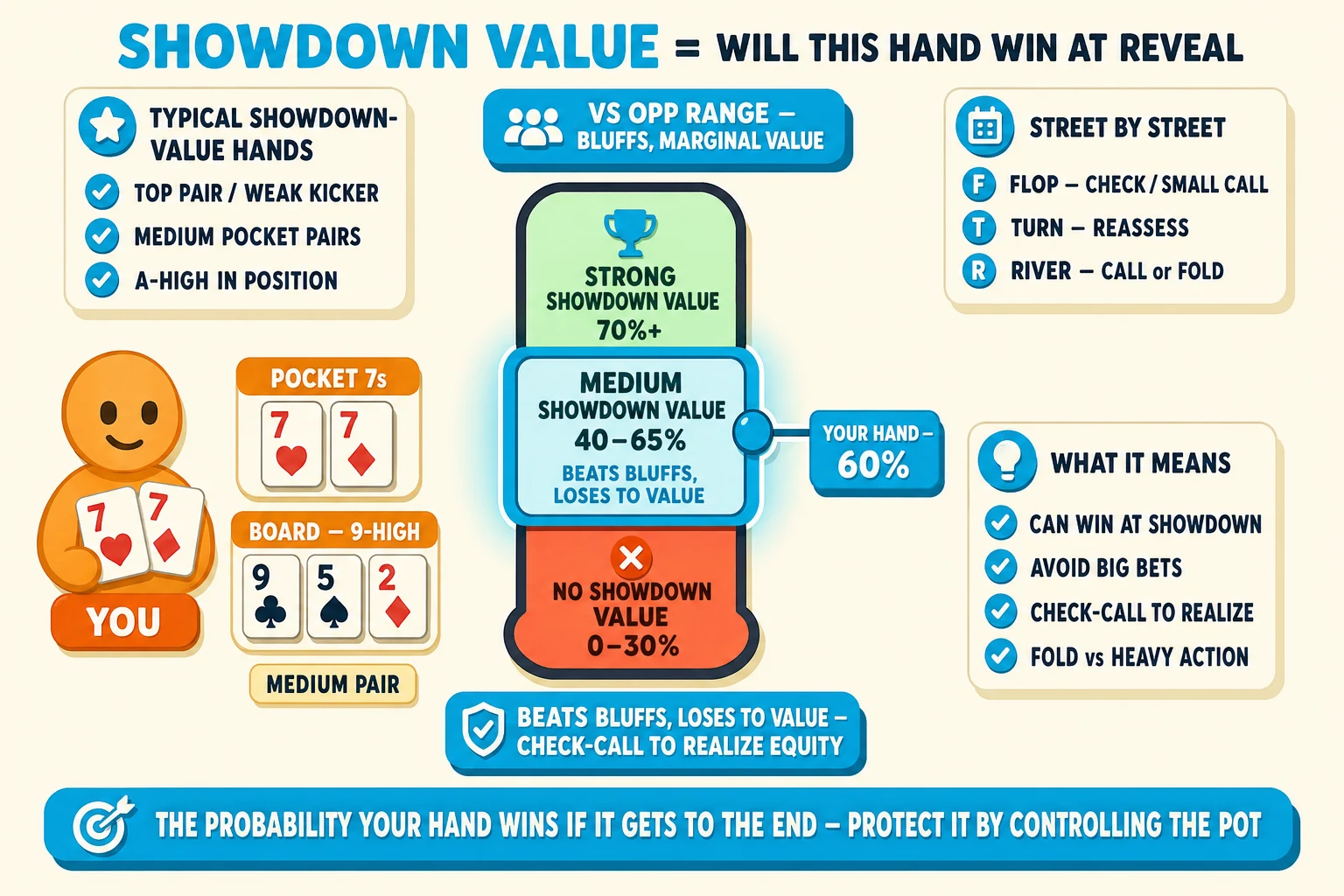
Showdown value describes a hand's potential to win at the final reveal without bluffing. Recognizing showdown value helps you decide whether to call late bets or fold. In No-Limit Texas Hold'em, players can bet any amount, which magnifies these decisions. Common examples include top pair with a decent kicker (A♠10♣ on A♦8♣4♥) or a medium pocket pair (7♥7♦ on 9♣5♠2♦); these hands often beat opponents' likely ranges but lack strong value-betting lines. Realizing showdown value means getting to the river and showing these hands when they remain best.
Practice this in Poker Skill. The C-Bet Sizing lesson checks ace-three on a king-high flop for this reason: no pair and no draw, but real showdown value that a bet would only put at risk.
Get the free appShowdown Value
What showdown value is and why it matters
Showdown value describes a hand’s potential to win at the final reveal without bluffing. Recognizing showdown value helps you decide whether to call late bets or fold. In No-Limit Texas Hold’em, players can bet any amount, which magnifies these decisions. Common examples include top pair with a decent kicker (A♠10♣ on A♦8♣4♥) or a medium pocket pair (7♥7♦ on 9♣5♠2♦); these hands often beat opponents’ likely ranges but lack strong value-betting lines. Realizing showdown value means getting to the river and showing these hands when they remain best.
Assessing hand strength relative to opponent ranges
Compare your hand to the range of hands an opponent could reasonably hold. Range means the set of hands you assign to them from their preflop action, position, and betting.
- Narrow the range: use the opponent’s position and actions to eliminate unlikely holdings. Early-position openers usually have stronger ranges than late-position callers.
- Place your hand in context: decide whether your top pair is likely ahead of the opponent’s calling or raising range on this board.
- Adjust with betting patterns: quick checks and small calls often signal weakness; large, polarized bets suggest either very strong hands or pure bluffs. Polarized means the bet represents either nuts or nothing.
Example: You hold K♦9♦ on K♣7♠3♣. Versus a preflop raiser who leads big, your top pair with a medium kicker may sit behind two pair or sets, yet still beat many broadway hands. That hand has showdown value but remains vulnerable to heavy pressure.
Street-by-street decisions: check, call, or fold
Flop: Usually check or call with medium-strength hands to control pot size and see more cards. Turn: Re-evaluate after the turn; if your relative equity falls, prefer another check-call or fold to large pressure. River: When facing a large river bet, judge whether your hand’s remaining chance to win justifies a call or demands a fold. One-sentence rule: prefer check-calling to realize showdown value unless board texture, opponent reads, or improved hand strength justify betting or raising.
Bet sizing and pot control for protecting showdown value
Large bets on later streets often price you out of pots where a medium-strength hand would win. Control the pot by checking or calling small-to-medium bets when you want to see a showdown. If an opponent’s line gives them many outs (cards that can beat you), consider a small protection bet to deny free cards. Otherwise, stick to check-calls to preserve your showdown equity.
Example: With a moderate pot and middle pair, call small bets to keep weaker hands and bluffs in. A large shove usually prices you out and should force a fold unless you hold strong reads or high raw equity.
Showdown rules and practical consequences at the table
After the final betting round, if multiple players remain, the last aggressor-the last player to bet or raise-must show their hand first. The best five-card combination wins the pot; identical hands split it equally. Avoid showing losing hands unnecessarily, since doing so reveals information without benefit.
Quick table practice points:
- Check your hand’s raw chance to win before committing to large calls.
- Prefer check-calling to bring medium-strength hands to showdown rather than bloating the pot.
- Watch opponents’ betting lines to infer whether your hand sits ahead of their range.
- Remember the last-aggressor show rule when planning river actions and information disclosure.
- Avoid unnecessary showdowns that reveal information when your hand has little chance to win.