


Final Three
The last three players left in a tournament. Ranges widen, the button leads aggression, and ICM pay-jumps reshape every shove, call, and fold decision.
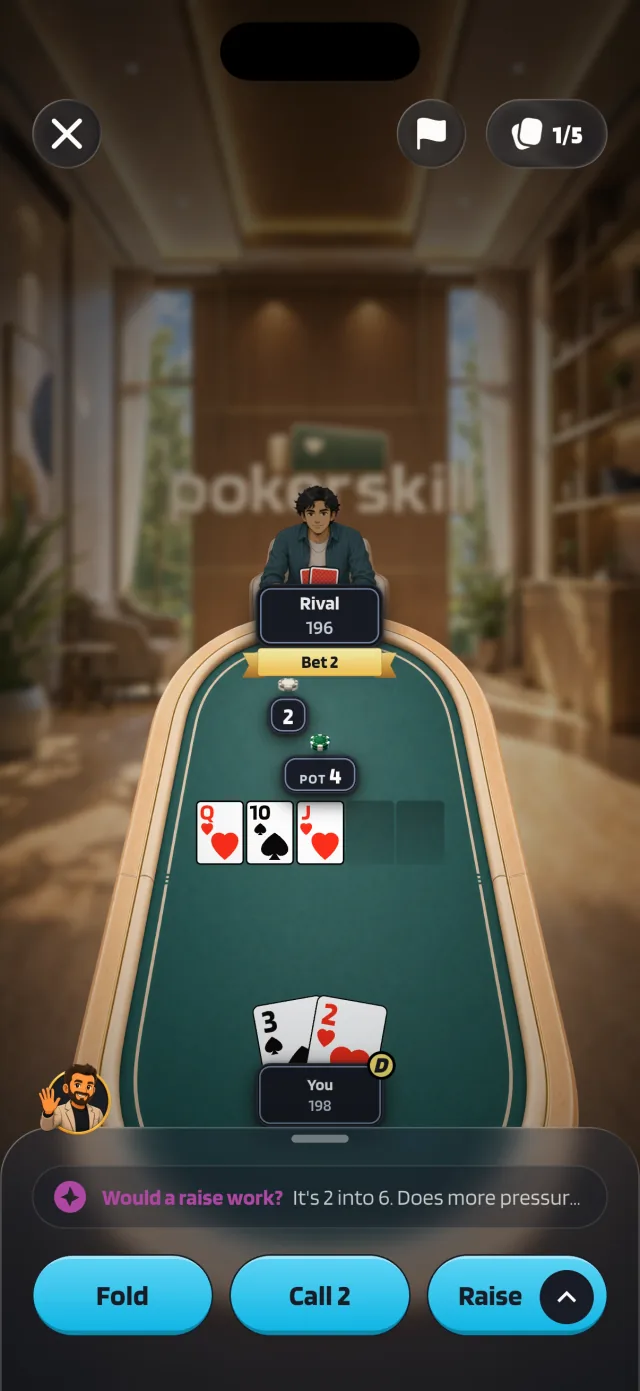
Practice this in Poker Skill. The three-player table in Practice vs AI seats you with two AI opponents for full hands, a place to rehearse three-handed button pressure and blind defense before a real final three puts pay jumps on it.
Get the free appFinal Three: 3-handed play and ICM pressure
Widening your opening range 3-handed
With only three players left, more hands become profitable to open and aggression has to come faster as the table shortens.
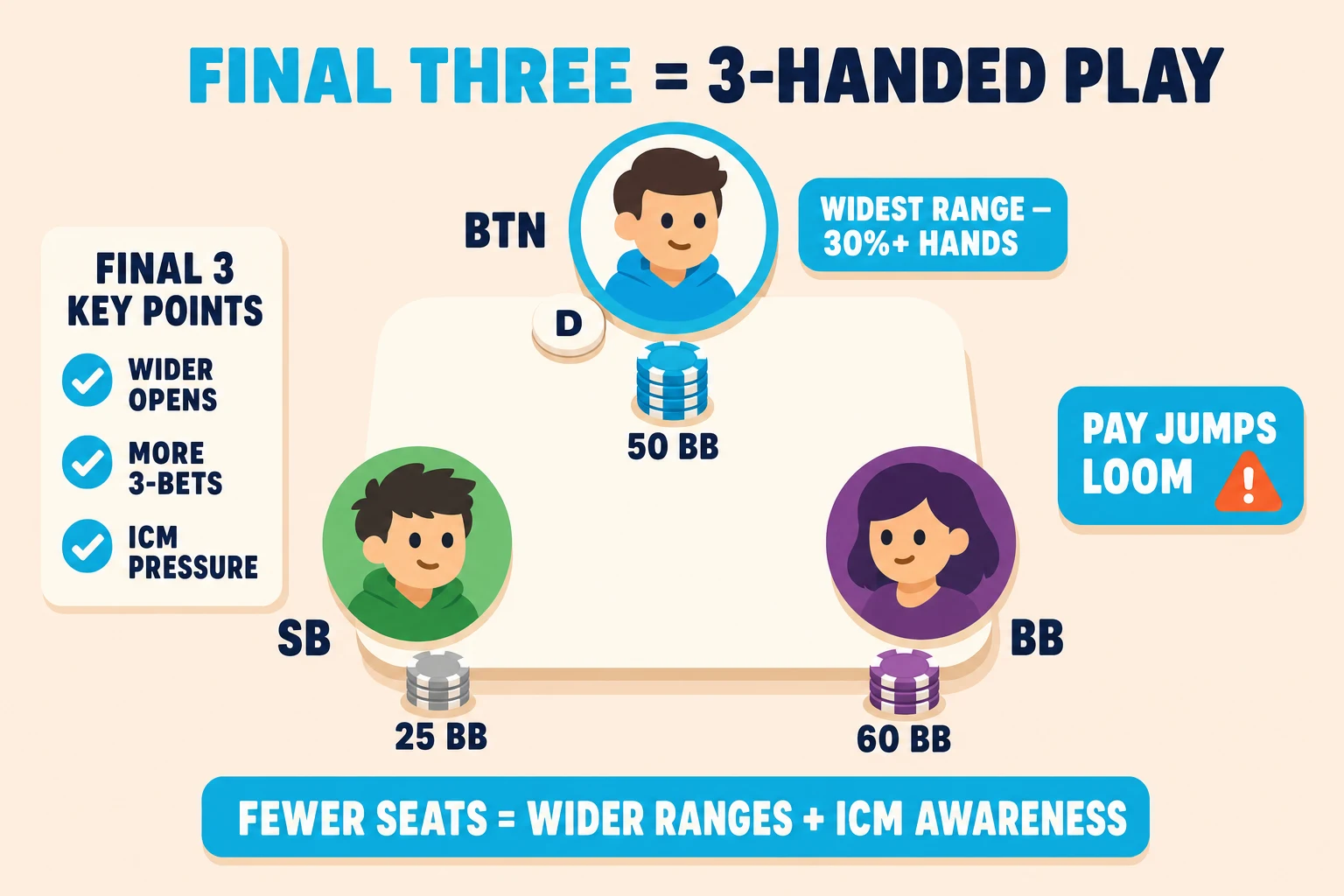
Short-handed play expands which hands are profitable to open. The button (dealer position with the most information and last postflop action) and first position should add suited connectors, lower pairs, and suited broadways alongside premiums like AA/KK/AK.
Practical steps:
- Expand: Add hands such as A2s-A9s, K9s-KQs, QJs, JTs, 98s, 87s and 22-99 to your raising mix from the button or first position. Typical 3-handed opening ranges often exceed 30% of hands, much wider than full-ring play.
- Target: Open lighter when the blinds call passively; tighten when facing aggressive three-betters.
- Example: With 76s on the button, raise to apply pressure and realize equity in position. Versus a tight blind you can often steal; versus a loose caller you get multiway value.
Three-betting and applying pressure
Three-bets isolate openers, extract fold equity, and balance value with bluffs more often when only three players are left.
Three-bet frequency should rise in three-handed play because opponents open wider. Increase three-bets with premium pairs, suited broadways (AQs, KQs) and select suited connectors (98s) as light three-bets to exploit wide opening ranges.
Guidelines:
- Mix value and bluffs: Combine strong hands (QQ+, AK) with occasional blockers and suited hands to remain unpredictable.
- Size: Choose a three-bet size that forces a difficult decision, not one that invites profitable calls with junk.
- Responding to aggression: Versus frequent three-betters, widen four-bet and shove ranges with medium-strong hands and blockers (cards that reduce opponents’ premium combos, such as holding an Ace).
Example: Facing a button open, three-bet AJs to isolate and play heads-up postflop. Versus a habitual three-better, consider four-betting 99 or KQs in spots where your blockers reduce their AA/KK likelihood.
Maximizing positional advantage
The button and the blinds create the dynamics that control pot sizes and let you exploit out-of-position responses.
Position matters more short-handed. The button exerts the most leverage and should raise widely to force difficult out-of-position (OOP - acting before the opponent) decisions from the blinds. Blinds should defend broadly but remain disciplined-reraise selectively and avoid overcommitting with marginal hands OOP.
Postflop play often comes down to aggression; many pots end preflop or with a single strong bet. Use position to apply pressure, avoid chasing every marginal OOP spot, and punish blinds who fold too frequently to positional aggression.
Stack-size adjustments and shove/fold decisions
Stack-size realities turn into clear shove, call, and fold ranges as pay jumps and the heads-up prospect loom.
Short stacks are natural targets: widen shove and call ranges to exploit their vulnerability. Medium and large stacks can use fold equity but must avoid overcommitting OOP with marginal holdings.
Practical rule: Shove hands that mix fold equity and showdown value (mid pairs, suited aces) against short stacks. Conversely, avoid calling big shoves with only speculative hands when you lack pot-odds or fold equity.
Tournament context and ICM awareness at final three
Payout structure and ICM pressure shape risk tolerance and the way you can exploit cautious opponents.
ICM (Independent Chip Model - the tournament value of chips relative to payout) matters greatly with three players left. Medium stacks often tighten to protect payout jumps; short stacks may take high-variance lines to survive. Exploit predictable tight or passive play by applying pressure, but balance chip accumulation against survival - sometimes forcing folds is worth more than chasing marginal equity.
Quick checklist
- Expand opening ranges on the button and first position.
- Mix three-bets between value and light bluffs; adjust versus opponent frequency.
- Use positional aggression to force OOP mistakes.
- Target short stacks with pressure and widened shove ranges.
- Factor ICM into decisions; tighten or exploit accordingly.