


Wet Board
A wet board is a flop with coordinated ranks and/or multiple cards of the same suit. In Hold'em, the flop is the first three community cards dealt to the board. Wet flops create many straight and flush drawing chances and shift hand equities quickly. Examples: 9♠-8♠-7♥ (connected with two spades) or Q♥-J♥-10♣ (highly coordinated). These textures are dynamic: a single turn or river can dramatically change who is ahead. Think "lots of outs" - many cards on later streets can improve various hands (outs = cards that improve a hand).
Practice this in Poker Skill. The When Checking Is Natural lesson bets made hands on connected flops, top pair and an overpair alike, because checking hands the draws a free card.
Get the free appWet Board
What is a Wet Board?
A wet board is a flop with coordinated ranks and/or multiple cards of the same suit. In Hold’em, the flop is the first three community cards dealt to the board. Wet flops create many straight and flush drawing chances and shift hand equities quickly. Examples: 9♠-8♠-7♥ (connected with two spades) or Q♥-J♥-10♣ (highly coordinated). These textures are dynamic: a single turn or river can dramatically change who is ahead. Think “lots of outs” - many cards on later streets can improve various hands (outs = cards that improve a hand).
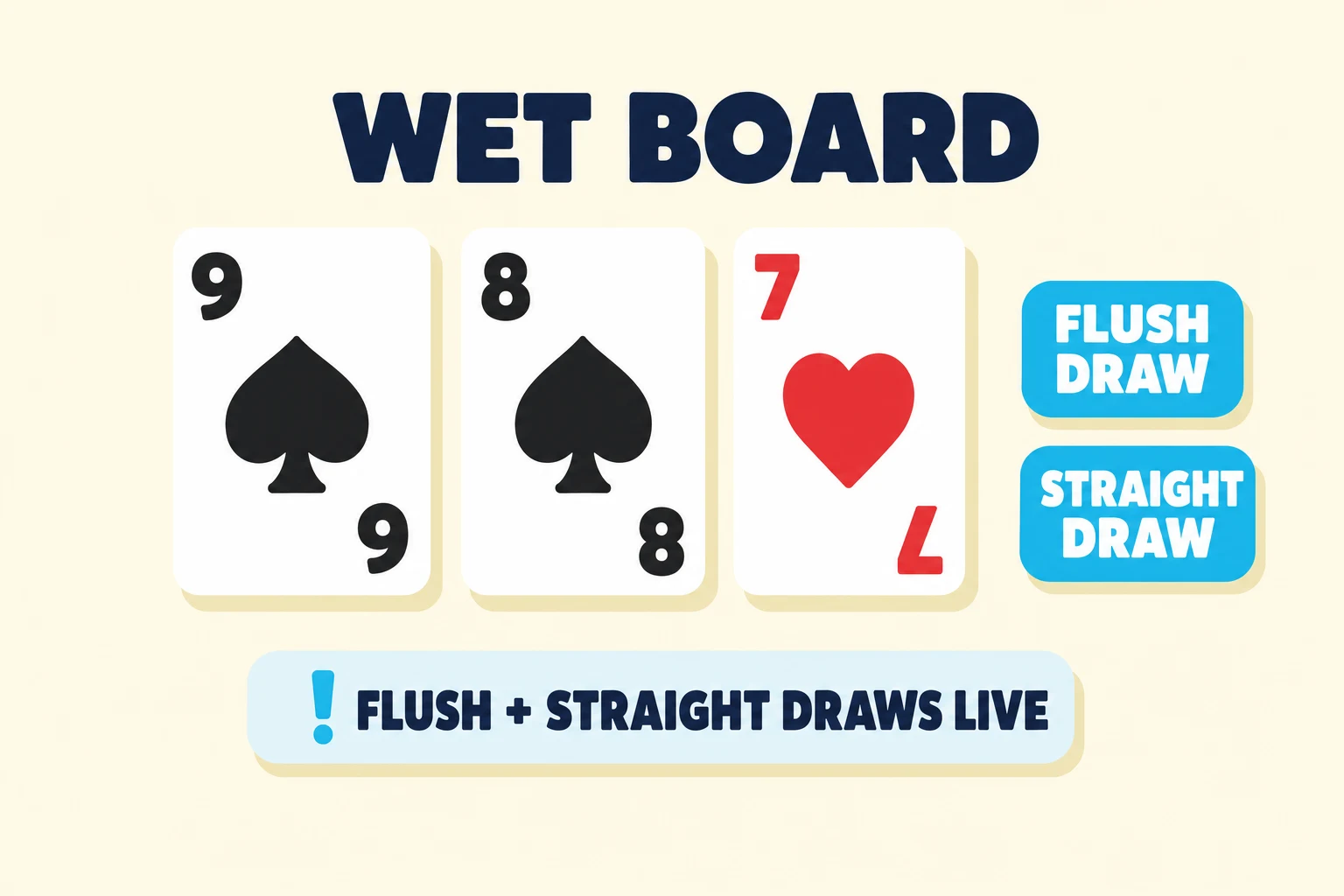
Typical signs of a wet board:
- Two cards of the same suit, creating flush possibilities.
- Sequential or near-sequential ranks, creating straight possibilities.
- Combinations allowing both straight and flush draws at once (e.g., 8♣-7♣-6♦).
Why Wet Boards Matter in No-Limit Hold’em
Wet boards increase both risk and reward for every player in the hand. Made hands look strong on the flop but remain vulnerable to multiple draws. Draws gain equity - a higher statistical chance to win by the river - and will often continue in the pot. In No-Limit play, deep stacks make chasing strong draws profitable and allow pots to grow very large. That reality changes how often you should bet, how much, and when to fold marginal holdings.
Betting and Sizing Adjustments on Wet Boards
Adjustments you should make when the board is wet:
- Increase continuation-bet frequency. A c-bet is a flop bet by the preflop aggressor. On wet boards folding equity drops, so more c-bets help define ranges and win pots.
- Raise sizing to protect. Small c-bets give free cards; larger bets (50-80% of the pot, depending on position and stack depth) charge draws and deny equity.
- Size value bets larger. Opponents chasing draws will often call bigger bets, so extract value when you’re ahead.
Example: You hold A♠-9♠ on 9♠-8♠-7♥. That’s top pair plus backdoor flush potential. A modest c-bet invites spade and straight draws to continue; a larger bet both builds the pot and charges opponents.
Playing Made Hands versus Draws on Wet Boards
With made hands, prioritize protection. Bet more frequently and increase sizing to force opponents to pay for their draws. Fold marginal hands that are likely to be outdrawn by the river.
With strong draws, be more willing to call or raise. Examples of strong draws include a flush draw or an open-ended straight draw (four consecutive ranks needing one end to complete). On wet boards these hands have real equity and often deserve profitable calls or semi-bluffs.
Balance by building the pot when you have equity and protecting or extracting value when you are currently ahead.
Wet vs Dry Boards: Practical Decision Rules
- Dry boards (e.g., A♣-7♦-2♠) present few draws and usually favor current made hands.
- Wet boards (e.g., J♥-10♥-9♠) present many draws and favor aggression with larger sizing.
Checklist:
- Identify coordination and suit distribution on the flop immediately.
- Increase bet size and c-bet frequency when you hold a made hand on a wet board.
- Avoid giving free cards that allow obvious turn or river draws to complete.
- Expect more calls and occasional raises from opponents with draws.
- Remember deep stacks magnify wet-board stakes and should influence your sizing choices.
For the full board-by-board c-bet framework, read when to c-bet the flop.