


Combo
A "combo" (short for combination) is a specific two-card arrangement that makes a hand or draw. It describes which exact starting hands in a player's range produce a given holding on a board. In this context, "range" means the set of hands an opponent could reasonably have. Combo analysis replaces vague hand-reading with concrete frequency and probability work to guide decisions.
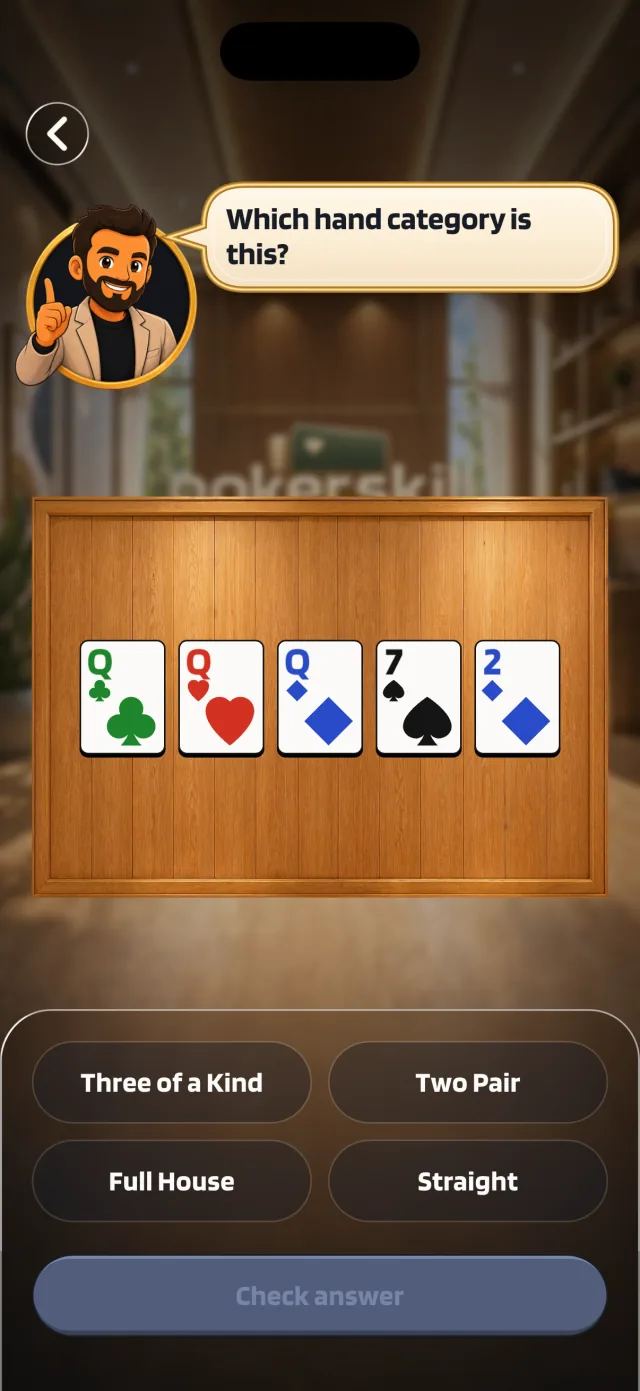
Practice this in Poker Skill. The Full House & Four of a Kind lesson asks which starting hands make a full house, one board at a time: on Q♥ Q♦ 7♣ 7♠ 2♦ the answer is any queen, any seven or pocket twos.
Get the free appCombo
What a “combo” means in No-Limit Texas Hold’em
A “combo” (short for combination) is a specific two-card arrangement that makes a hand or draw. It describes which exact starting hands in a player’s range produce a given holding on a board. In this context, “range” means the set of hands an opponent could reasonably have. Combo analysis replaces vague hand-reading with concrete frequency and probability work to guide decisions.
Combo draw hands: powerful multi-way draws
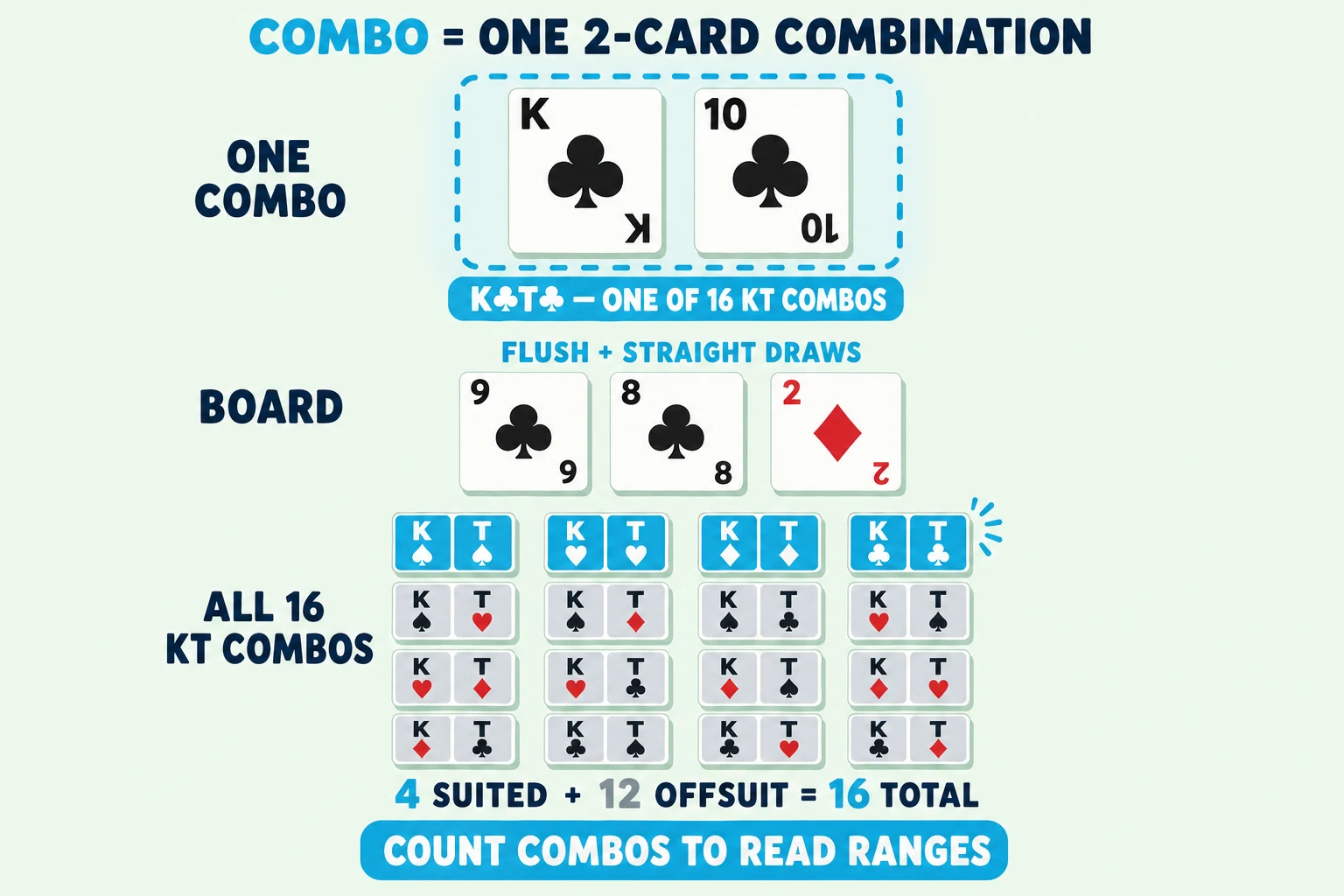
Combo draw hands can improve to multiple strong outcomes, such as both a straight and a flush. Those hands have more outs (cards that complete your hand) and therefore higher equity than single-path draws. Example: K♣T♣ on 9♣8♣2♦ gives both a flush draw and parts of several straight combinations. You can hit a nut or near-nut flush, or complete a broadway straight if a 7 or Q appears. That multiplicity of ways to win makes K♣T♣ a strong semi-bluff candidate; a semi-bluff is a bet with a hand that is not yet best but can improve. Because combo draws win in more ways, they often justify aggression and pot building.
Practical point: a semi-bluff gains both fold equity and drawing equity, so betting becomes profitable more often. Bet or raise with combo draws to win pots immediately or to build pots you can realistically take later.
Combos of made hands: counting realistic holdings
Made-hand combos are the specific two-card combinations that form sets, two-pair, top pair, and so on, given the board and known cards. Counting those combos tells you how often an opponent realistically holds each hand category on a given texture. Example: on A♣J♥9♥, compare combos of sets, two-pair, and top pair versus busted overcards or bluffs. If sets are rare but single-pair combos are common, adjust by calling lighter or value-betting thinner.
How to use this:
- List the opponent’s plausible hand types (sets, two-pair, top pair, draws, air).
- Eliminate impossible combos based on visible cards and actions.
- Estimate frequencies from the remaining combos to choose calls, folds, or raises.
Using combos in range construction and analysis
Break an opponent’s range into combo counts of made hands, draws, and air for the current board texture. Those counts feed equity estimates and help set appropriate bluff and value frequencies. For example, if your range contains many combo draws on a wet board while your opponent’s range is capped, you have a range advantage and can raise more. Conversely, if the opponent holds many made-hand combos and few draws, reduce your bluffing frequency. Combo counts link directly to minimum defense frequency (MDF) - the fraction of hands an opponent must continue with to prevent profitable bluffs - and tell you whether MDF is met.
Combo draws and post-flop play: applying pressure correctly
Combo draws make semi-bluffs potent: you pressure opponents while retaining multiple ways to win if called. You can continue aggressively with combo draws even when behind because they can fold out better hands and hit strong improvements. Reassess combos each street as turn and river cards change which combinations remain; a card that pairs the board or completes a suit drastically alters frequencies.
Practical rules:
- Count combo draws separately from single-path draws when deciding to bet or raise.
- Use combo-heavy lines to mix bluffs and thin value bets to stay balanced.
- Re-evaluate combo frequencies on each street as cards change the board texture.
Quick checklist
- Define the relevant combos when analyzing your range and opponents’ ranges.
- Count combo draws separately from single-path draws in equity calculations.
- Use combo counts to set balanced bluff and value frequencies.
- Treat combo draws as semi-bluffing opportunities when appropriate.
- Reassess combo frequencies as the turn and river cards arrive.