


Combo Draw
A combo draw is a hand that can make more than one strong combination. Most commonly it combines a flush draw (needing one more suited card) and a straight draw. Combo draws matter because they offer multiple distinct ways to improve on later streets.

Practice this in Poker Skill. J♦ 10♦ on Q♦ 9♦ 3♣ calls a flop bet in the Check-Call lesson: its 15 cards to a straight or a flush, two overlaps counted once, make it strong enough to continue.
Get the free appCombo Draw
Definition - What a combo draw is and why it matters
A combo draw is a hand that can make more than one strong combination. Most commonly it combines a flush draw (needing one more suited card) and a straight draw. Combo draws matter because they offer multiple distinct ways to improve on later streets.
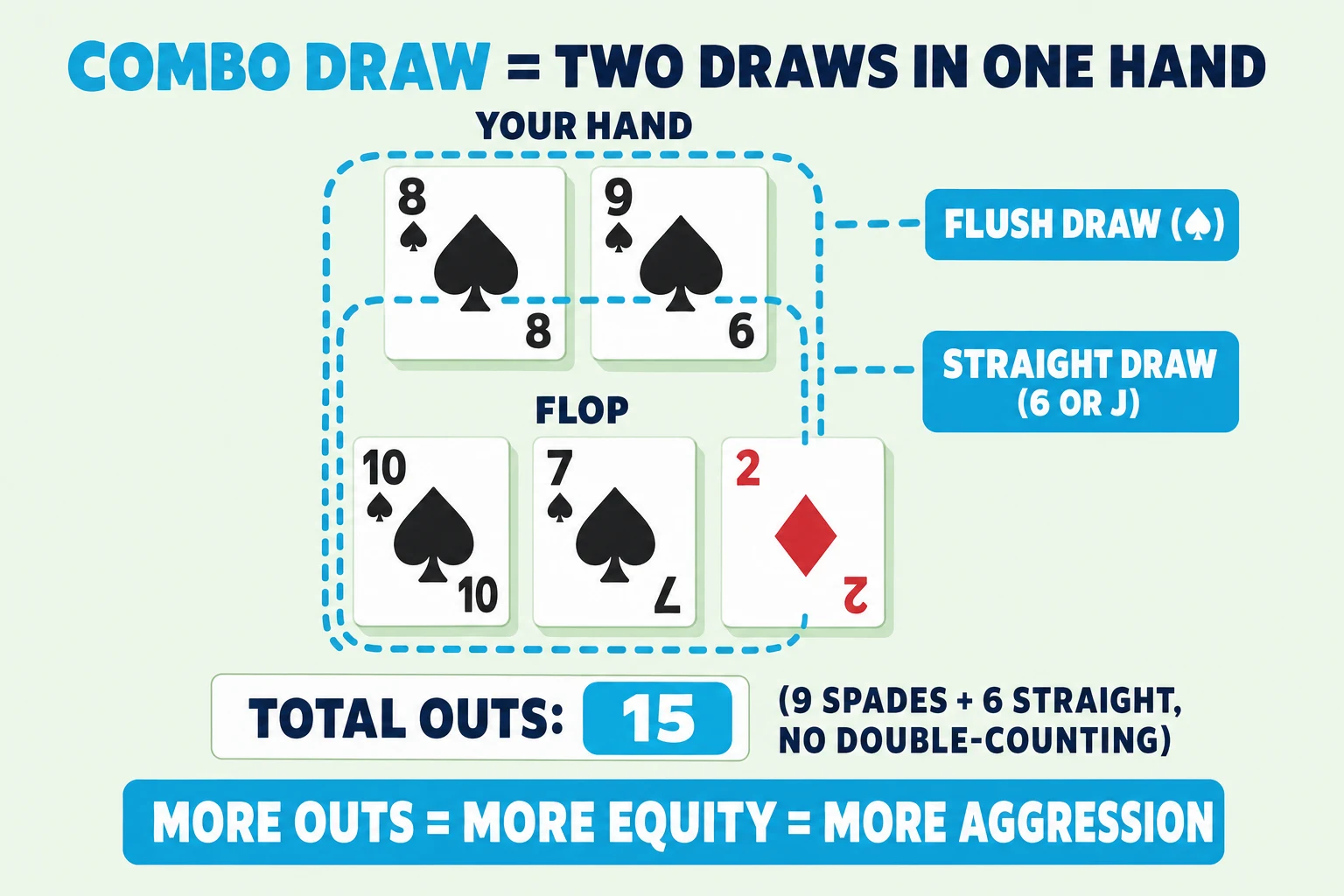
Example: you hold 8♠9♠ and the flop comes T♠7♠2♦. You have a flush draw (one more spade) and an open-ended straight draw; a 6 or J completes it.
How combo draws change your equity and outs
Each additional draw contributes distinct outs-cards that improve your hand-so combo draws usually have more outs than a lone draw. More outs raise your equity, increasing the chance you’ll win by the river. Avoid double-counting outs that satisfy both draws when tallying distinct outs. In the 8♠9♠ example the J♠ and 6♠ improve both the straight and the flush, so count them only once. Because combo draws offer more ways to hit, they justify contesting pots you might otherwise fold. That added equity shifts margins; in marginal spots you can prefer calls or semi-bluffs where a single draw would fold.
When to play combo draws aggressively
Aggression means betting or raising with your draw instead of just calling. Two forces justify aggression with combo draws: fold equity and strong drawing equity. Fold equity is the chance an opponent folds to your bet, letting you win immediately. Aggression also builds pot size, increasing your reward when you hit.
When to push aggression:
- Opponents are likely to fold medium-strength hands to pressure.
- You’re in position so you can control pot size and gather information.
- Stack sizes make a semi-bluff profitable. You can call down if raised, or shove to use maximum fold equity.
Example: with 8♠9♠ on a two-spade, connected flop, a sizable bet can win the pot immediately.
Using combo draws offensively and defensively
Offensive use: semi-bluff - bet or raise with a draw to win the pot immediately or to improve later. You pressure opponents into folding made hands or weaker draws and may take the pot without seeing turn or river. Semi-bluffing also disguises your equity and range.
Defensive use: when called, a combo draw gives you the best chance to recover against strong made hands. That allows you to call lighter or check-raise in some lines to extract value if you complete your hand. Balance these roles by adjusting bet size and frequency. Sometimes trap: check/raise or call to disguise strength. Other times shove to maximize fold equity.
Recognizing combo draws in yourself and opponents
Look for board textures that enable both straight and flush possibilities. Examples include two cards of the same suit with connected ranks, or low-to-middle connected boards with suit coordination. Note your and opponents’ hole cards: two-suited, connected holdings are prime combo draw candidates.
Watch betting lines for clues. Aggressive continuation bets or raises on coordinated boards may signal a semi-bluff rather than a made hand. Factor the possibility of combo draws into calls and folds so you don’t misread pot equity.
Quick checklist
- Count combined outs from all draws before choosing action.
- Factor both fold equity (chance opponents fold) and drawing equity into bet/call/raise decisions.
- Use aggression to leverage combo draws, but adjust size and frequency based on opponent reactions.
- Watch boards and betting lines for opponents’ potential combo draws.