


Ante
An ante is a small compulsory bet every player posts before cards are dealt. Unlike blinds, which only come from specific positions, the ante comes from every seat and goes directly into the pot. Its purpose is simple: raise the initial pot so each hand is more profitable to win. That added reward discourages constant folding and forces players to contest more pots.

Practice this in Poker Skill. Antes put more in the pot for a late-position steal to win, and the First Orbit Mindset lesson builds that habit early: K♦ J♣ raises from the button, because the raise pressures both blinds and lets you act last after the flop.
Get the free appAnte: what it is and how it changes play
What an ante is and why it exists
An ante is a small compulsory bet every player posts before cards are dealt. Unlike blinds, which only come from specific positions, the ante comes from every seat and goes directly into the pot. Its purpose is simple: raise the initial pot so each hand is more profitable to win. That added reward discourages constant folding and forces players to contest more pots.
For the exact pot math and how antes change correct opens, steals, and defends, read antes in poker.
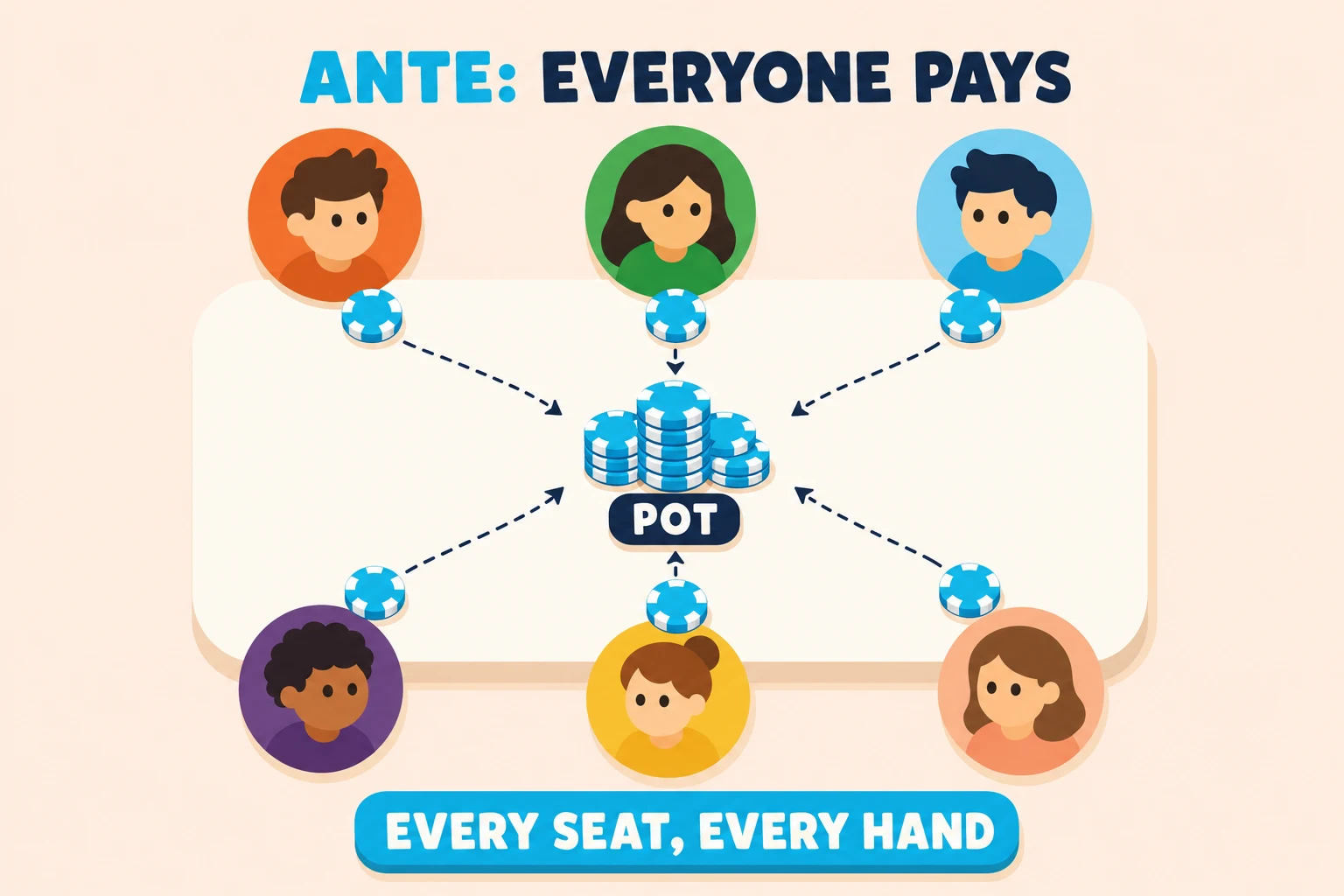
How antes change pot size and player incentives
Because each player contributes, the pot is larger pre-flop than it would be with blinds alone. A larger starting pot shifts the call-or-raise math toward more action. Example: at a nine-handed table, a $0.25 ante from each player adds $2.25 to the pot before any action. That added pot makes stealing the blinds or calling looser raises more attractive compared with blinds-only play. Practically, players widen their calling and opening ranges to avoid losing chips each hand to antes.
Key strategic adjustments when antes are present
- Widen opening ranges: The ante makes many marginal hands profitable to open, especially from late position. Hands like A8s or K9s gain value because winning the pot recoups ante contributions.
- Steal more from late position: With the pot already seeded, raising to take the pot pre-flop becomes more rewarding. Steal more from the cutoff and button, but target opponents who fold too often.
- Increase aggression and value pressure: Aggressive lines extract the added antes. Post-flop, apply pressure more often when you have position, compounding pre-flop steals.
- Prioritize chip accumulation: In tournaments, antes appear alongside rising blinds and accelerate chip turnover. Accumulating chips becomes essential; passivity pays off less often.
Bankroll, stack management, and tournament dynamics
Antes shorten effective stack life because you pay more each hand just to see cards. Expect faster swings and fewer long passive plateaus, which affects bankroll planning. In tournaments, antes accelerate action and force players to decide between tightening up to survive or pushing to build a stack. Use position and aggression to convert the deeper pre-flop pots into chip advantage.
Interaction of antes with blinds and practical table tactics
Both antes and blinds are forced bets that make waiting for premium hands more expensive. Expect more contested pre-flop pots and increased multi-way action. Use position and selective aggression to exploit tight players who fold too often and loose players who call too much. Monitor the ante-to-blind ratio as levels increase; when antes become a larger portion of stacks, stealing and shove-or-fold decisions shift. Open-shove shorter stacks more willingly and defend or 3-bet light when the pot offers immediate reward.
Quick checklist
- Know whether antes are in effect and when they start in your game or tournament.
- Widen opening ranges and prioritize steals from late position when antes are present.
- Emphasize aggression and positional advantage to capture larger pre-flop pots.
- Adjust bankroll and stack-management plans for the recurring cost of antes.
- Track ante-to-stack and ante-plus-blind dynamics as levels increase and adapt play.