


Capped Range
A range is the set of hands an opponent could hold given their actions. A capped range contains few or no very strong hands, limiting the opponent's maximum possible strength. This usually occurs when a player takes passive lines where strong hands would normally act aggressively. For example, a cold call preflop in a spot where big hands typically raise often signals a missing set of premium holdings. Without those top cards, the opponent finds it harder to credibly represent the strongest hands later.
Capped Range - Definition and Post-Flop Exploitation
What a capped range is
A range is the set of hands an opponent could hold given their actions. A capped range contains few or no very strong hands, limiting the opponent’s maximum possible strength. This usually occurs when a player takes passive lines where strong hands would normally act aggressively. For example, a cold call preflop in a spot where big hands typically raise often signals a missing set of premium holdings. Without those top cards, the opponent finds it harder to credibly represent the strongest hands later. For how to spot the capping moment street by street and the pressure playbook against a ceiling, read capped ranges.
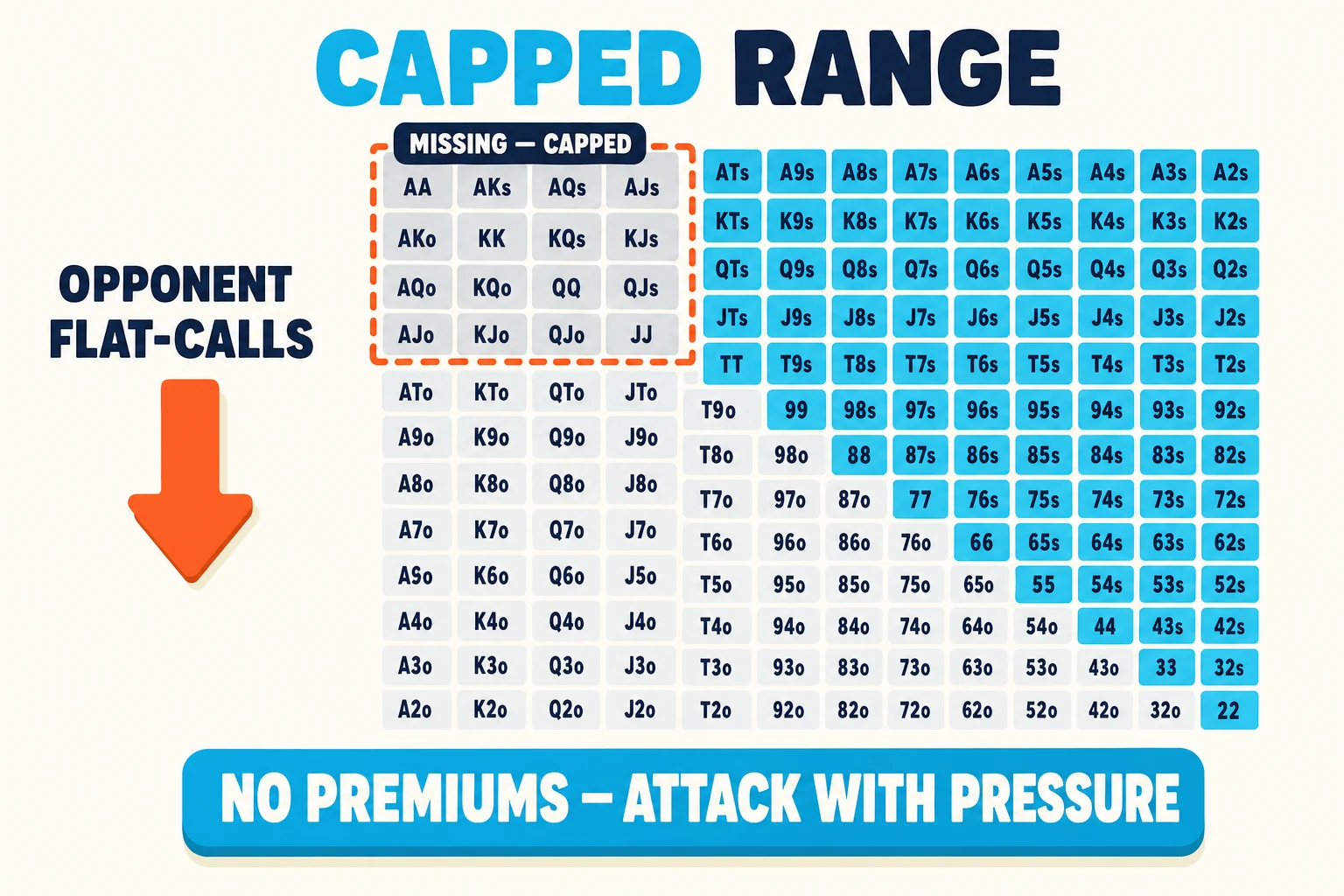
How to spot a capped range at the table
Look for betting patterns that imply a lack of premium hands:
- Passive preflop lines - calling instead of raising in spots where raisers are expected - often signal a capped range. Example: you raise from the cutoff and the button just calls; their range is more capped than after a 3-bet.
- Passive postflop actions - checks or small calls where a strong hand would bet or raise - reinforce the read. If they check back flop and turn instead of leading, their maximum strength is probably limited.
- A lack of reraises or large value bets across streets suggests the range lacks top-tier hands. If they never make big bets when pot size or texture favors aggression, treat the range as constrained.
Why capped ranges matter post-flop
Facing a capped range changes which lines profit most:
- Showdown strength drops. Opponents are less likely to hold the nuts or other top-tier hands, leaving many medium-strength holdings.
- You can apply more pressure. They can’t credibly call or raise with the strongest hands, so aggressive lines force folds from middling holdings.
- It shifts value and bluff frequencies. With limited top end, you should increase bluffing and make larger value bets to extract more from middle-range hands.
How to exploit a capped range effectively
- Increase aggression. Bet and raise more to force folds from medium-strength hands on later streets.
- Raise bluff frequency. Bluff where the opponent cannot credibly have the nuts, using blocking hands to keep lines believable.
- Adjust sizing for value. When you have a decent hand, size bets to extract more from middling holdings rather than targeting only their top cards.
- Maintain balance. Mix bluffs and thin value so opponents cannot counter-exploit your increased aggression.
Poker Skill’s Lead and Donk Bets lesson covers the other side, keeping your own checks from being capped: even a made straight, A♦ 5♦ on 4♦ 3♠ 2♣, checks to the raiser so strong hands stay in the checking range.
Common mistakes when assuming a range is capped
- Jumping to the conclusion without enough evidence; consider the full action history.
- Over-bluffing; some opponents cold-call big hands occasionally, and excessive bluffs get punished.
- Failing to adapt; if the opponent starts firing large bets or reraising, reassess and stop treating them as capped.
Quick checklist
- Confirm the line shows an absence of premiums (calls instead of expected raises).
- Choose aggression to pressure middling ranges, while mixing bluffs and value bets.
- Reassess immediately if the opponent displays unexpected strength or changes their line.