


Closing the Action
"Closing the action" means the betting round ends because no other players remain to act. A betting round is a cycle of checks, bets, calls, raises, or folds. The round ends when the last bettor or raiser is acted upon, or when the final allowed check occurs. After action closes, the dealer moves the hand to the next stage: flop, turn, river, or showdown.
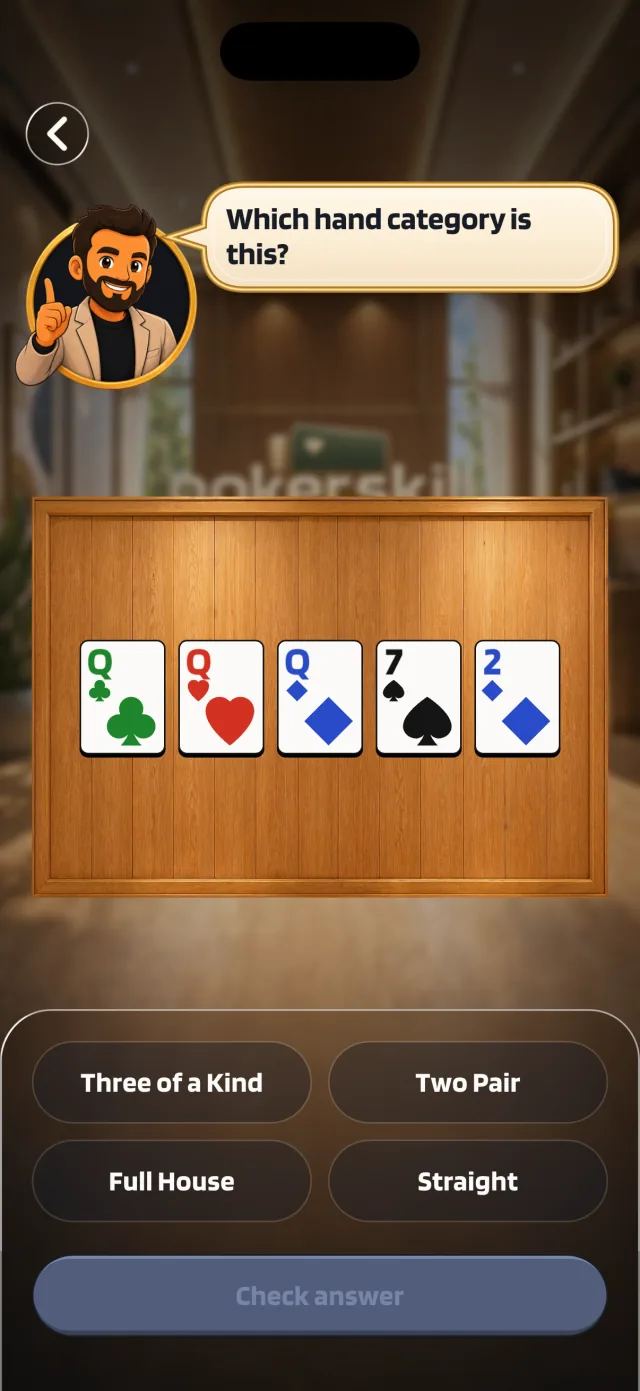
Practice this in Poker Skill. The BB Free Option lesson turns on who closes the action: after a limp, the big blind closes it preflop with a check, as with 8♠ 6♠, or reopens it with a raise, as with A♣ A♦.
Get the free appClosing the Action in No-Limit Texas Hold’em
What “closing the action” means
“Closing the action” means the betting round ends because no other players remain to act. A betting round is a cycle of checks, bets, calls, raises, or folds. The round ends when the last bettor or raiser is acted upon, or when the final allowed check occurs. After action closes, the dealer moves the hand to the next stage: flop, turn, river, or showdown.
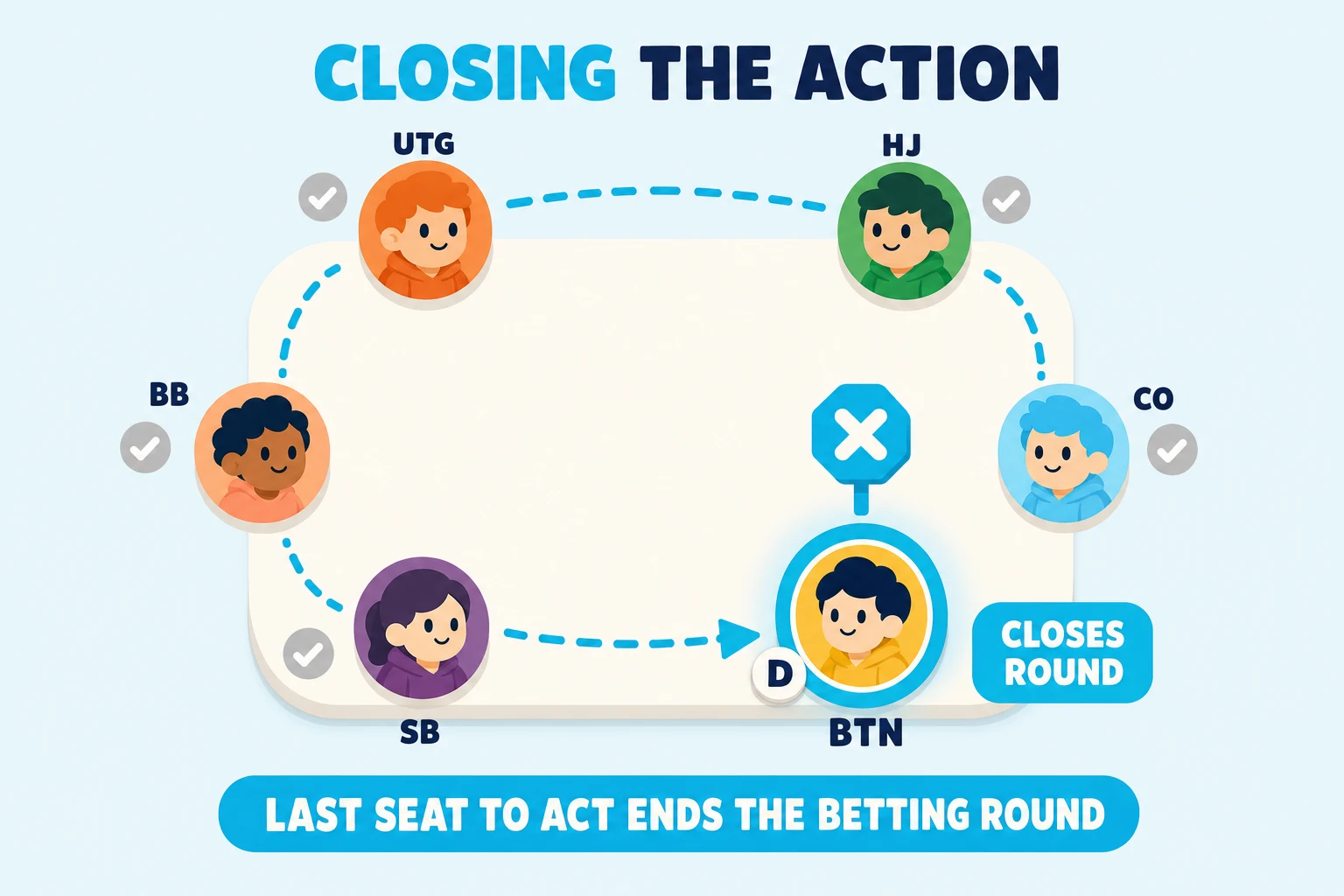
How action closes in each betting round
Betting rounds follow a clear clockwise flow. Pre-flop begins with the player immediately left of the big blind, the larger forced bet. Later rounds start with the first active seat left of the dealer.
Simple numbered steps to see how a round closes:
- A player may bet or raise. If no one bets, players may check in turn.
- After a bet or raise, remaining players must call, raise, or fold.
- Action continues until every active player has called the highest bet, folded, or checked when checking is allowed.
- When action returns to the last bettor/raiser - or when all players check - the final call or check closes the action and the dealer moves on.
Example: In a $1/$2 game, Player A raises to $8 pre-flop. Players B and C call; the rest fold. Once everyone has acted, Player C’s last call closes the action and the flop is dealt.
Strategic advantages of closing the action (position)
Acting last - being “in position” - gives you the advantage of extra information. Seeing opponents’ choices improves decision quality and reduces guesswork.
Benefits:
- Better information: You observe bets and checks before you act.
- Safer calls: You can call marginal hands knowing no one behind you will raise.
- Pot control: Closing the action lets you decide pot size with last-move raises or checks.
Example: On the river, if everyone checks to you, you can check behind with a second-best hand to avoid a costly bluff-catch. Or you can make a selective value bet when you believe you’re ahead.
Practical examples of closing the action
- Pre-flop: The player on the button acts last before the flop. If they call the final raise and no one else must act, that call closes the action and the flop is dealt.
- Turn/river: If play checks around and the last active player checks, that final check closes the action and the next card is dealt or the hand goes to showdown.
- After a raise: Player X raises on the flop, Players Y and Z call, and no one else remains. The last caller (or the raiser, if action returns) closes the betting round once calls and folds resolve.
Common mistakes and quick corrective tips
Mistake: Assuming you always close the action because of seat order. Reality: it depends on who has bet or raised and who still needs to act.
Mistake: Overcommitting when your action would close the round. Closing the action doesn’t require inflating the pot - controlled calls or smaller raises manage risk.
Tip: Always track who last bet or raised in the current round. That single detail tells you whether your decision will actually end the betting.
Quick checklist
- Know who last bet or raised each round.
- Remember pre-flop starts left of the big blind and action proceeds clockwise.
- Use closing the action to control pot size and extract information.