


Clean Outs
An "out" is any unseen card that, if dealt, improves your hand to a likely winner. Example: you hold two hearts and the flop contains two hearts. Each remaining heart is an out to make a flush.

Practice this in Poker Skill. The draw review capstone asks for the safe cards directly: with 8♠ 7♠ on 9♣ 6♣ 2♦, the 5♦ and 10♥ finish your straight without a third club, so they stay clean.
Get the free appClean Outs in No-Limit Texas Hold’em
Define “Out” vs “Clean Out”
An “out” is any unseen card that, if dealt, improves your hand to a likely winner. Example: you hold two hearts and the flop contains two hearts. Each remaining heart is an out to make a flush.
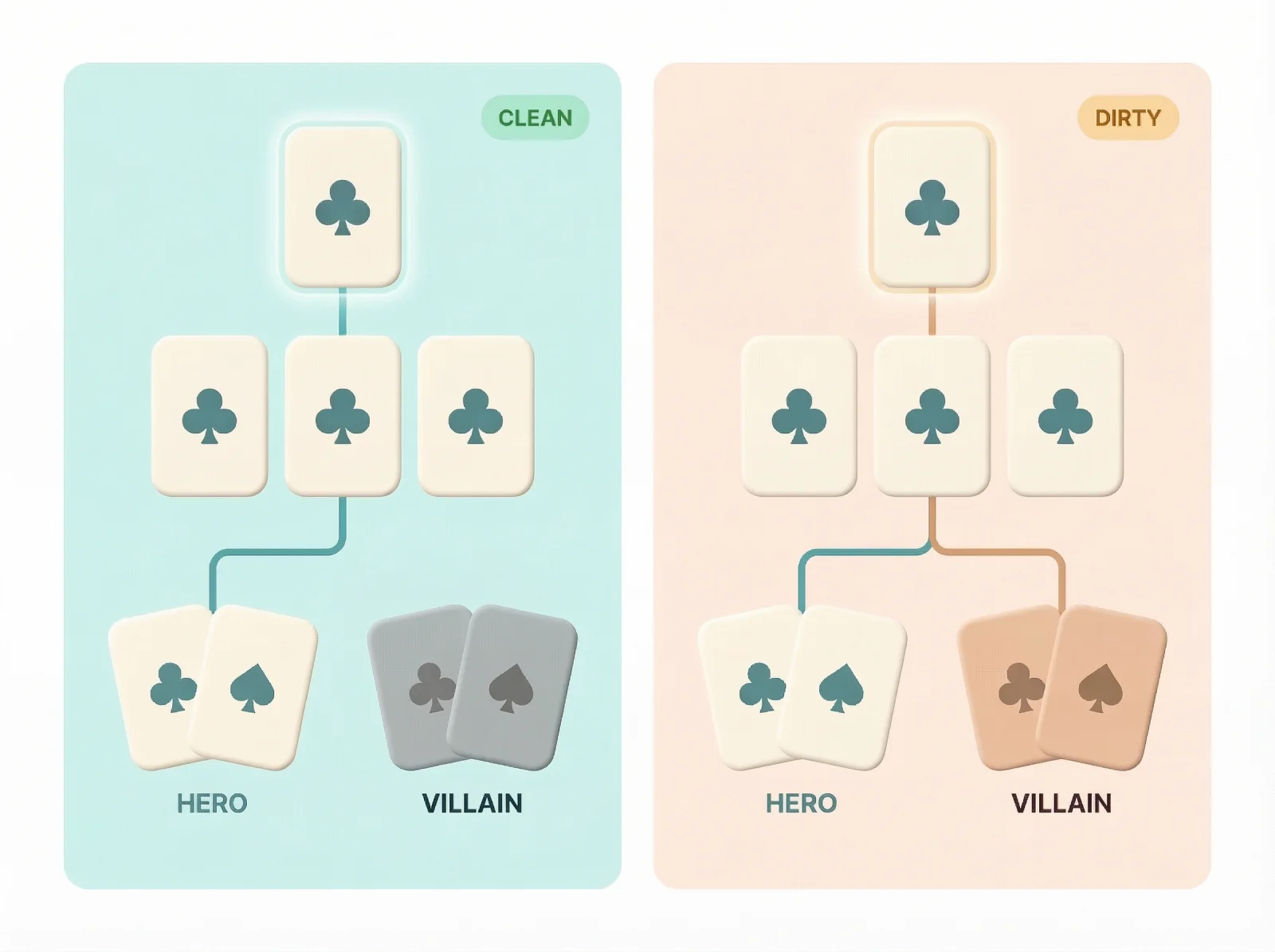
A “clean out” is stricter. When it hits, you have the best hand immediately. It excludes outs that might let an opponent already have a superior hand or make a better one on the same or later streets. In the flush example, some hearts aren’t clean if the ace of hearts is visible or an opponent holds a higher heart. If the card also completes an opponent’s higher draw, it isn’t clean. The same applies when a paired board could give opponents a full house.
Not every out is clean because opponents may already hold, or could make, a better hand thereafter.
The quick split is: outs are every card that improves you, clean outs are the cards that likely win, and dirty outs are the cards that improve you but may still lose. For worked examples, read Counting outs: clean, dirty, and the ones in between.
Why Clean Outs Matter for Betting Decisions
Counting clean outs correctly changes whether a draw justifies committing chips in No-Limit play. Pot odds compare the cost to call with the chance to win. Overestimating outs makes losing calls look profitable.
Example: you count nine flush outs, but two give an opponent a higher flush. Your effective clean outs drop. In big pots, that mistake can cost a large stack. Consider both the immediate chance your hit wins and the risk it still loses on the same or later streets.
Spotting Unclean Outs: Common Examples
- Flush draws can include unclean outs when higher suited cards are exposed or an opponent has a higher flush draw. If your flush would be second-best, those suited cards aren’t clean.
- When the board can pair, some flush or straight outs can give opponents a full house. A river pair turning your flush into a losing full house is a typical risk.
- Outs that also complete opponent draws are unsafe. For example, a card that gives you a straight might also give an opponent a higher straight or a flush.
Recognize table patterns that reduce clean outs: visible high cards, showdown reveals, or betting lines suggesting strong made hands. Treat those as red flags.
Avoiding Reverse Implied Odds
Reverse implied odds occur when hitting your apparent outs leaves you behind to a bigger hand. You may win a small pot or lose a large one later.
Common instances:
- Flush-over-flush: you complete a flush, but an opponent has a higher flush.
- Board pairs: a paired board can convert your completed flush into a losing full house.
Ask: “If this card hits, could my opponent have something better?” If yes, discount those outs partially or fully.
Practical Steps to Count Clean Outs at the Table
Follow this routine before committing chips:
- Define your target winning hand. State exactly what you need to win if an out hits.
- List raw outs. Count every unseen card that completes that hand.
- Remove unclean outs. Remove any out that could plausibly give opponents a better hand now or later. Consider exposed cards, betting lines, and board-pair risk.
- Compare to pot odds. Use the clean-out count to judge whether calling or raising is profitable.
Quick checklist:
- Define the target winning hand and list raw outs.
- Remove outs that could give opponents a better hand now or later.
- Compare the remaining clean-out assessment to pot odds before acting.
Disciplined counting of clean outs keeps draw decisions realistic, reduces costly mistakes, and improves long-term results in No-Limit Hold’em.