


Paired Board
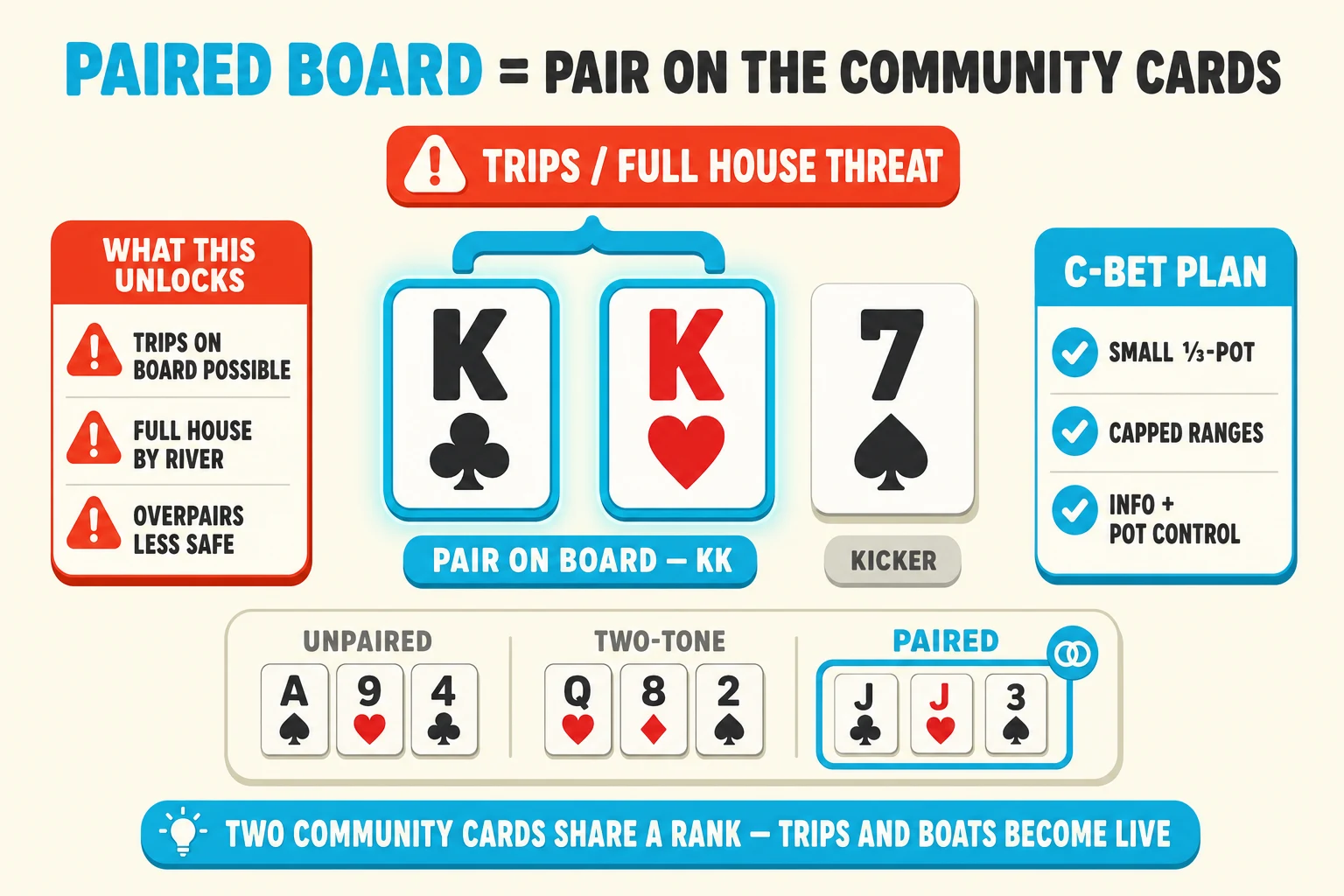
A paired board has a pair among the community cards, for example 7-7-2 or 8-8-3. That pair raises the chance someone makes trips or a full house on later streets. As a result, single-pair hands lose relative value and feel less secure. For example, A-8 on 8-8-3 is a vulnerable "top pair," since opponents may already hold an 8 or make trips later. Likewise, K-K on 7-7-2 is a strong overpair but must respect increased trips and full-house possibilities.
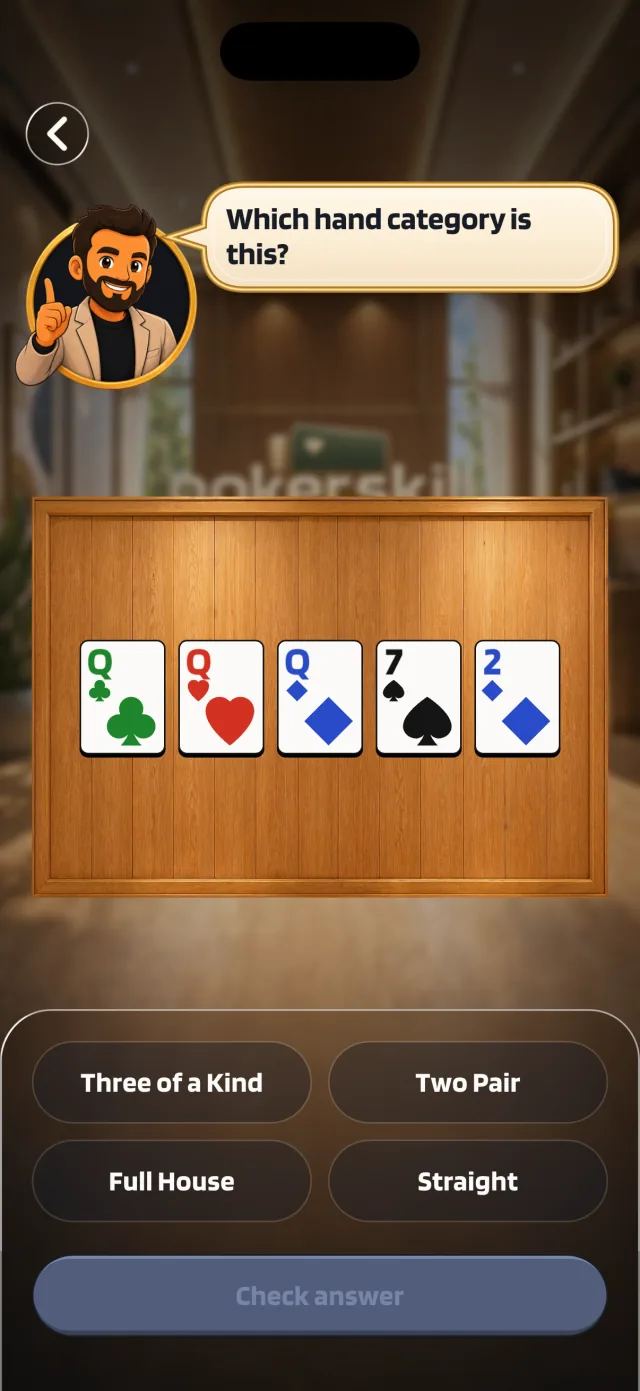
Practice this in Poker Skill. In the C-Bet Sizing lesson, ace-high on a paired low board takes the small bet, because the caller misses that flop most of the time.
Get the free appPaired Board: How a Paired Flop Changes Play
What is a paired board and why it matters
A paired board has a pair among the community cards, for example 7-7-2 or 8-8-3. That pair raises the chance someone makes trips or a full house on later streets. As a result, single-pair hands lose relative value and feel less secure. For example, A-8 on 8-8-3 is a vulnerable “top pair,” since opponents may already hold an 8 or make trips later. Likewise, K-K on 7-7-2 is a strong overpair but must respect increased trips and full-house possibilities.
How paired boards change hand strength and ranges
Paired boards make trips and full houses more plausible as the turn and river arrive. Hands that looked strong preflop-such as overpairs or top pair-can be outclassed quickly. On many paired flops, ranges become compressed or “capped”: opponents usually hold fewer higher pocket pairs and more small pairs that now connect with the board. For example, on 6-6-2 a caller from the blinds often has more 6-x combinations and fewer A-A or K-K. Because ranges compress, some bluffs look more believable, yet the chance an opponent actually connects also rises. Balance the higher probability of strong made hands against the capped nature of ranges.
Position and bet sizing adjustments on paired boards
Rules of thumb:
- Pre-flop raiser advantage: If you raised preflop, you often retain an edge on low paired boards because opponents’ ranges are capped. Use that edge to continue representing strength.
- OOP (out of position) leverage: Players OOP can credibly use larger bet sizes on low paired flops to represent very strong hands and pressure capped ranges. A big bet on 7-7-2 from the button can force weak callers to fold.
- Beware wet paired boards: If the paired flop has straight or flush potential (for example 8-8-9 with two suited cards), reduce bet frequency and sizing. Those textures broaden opponents’ ranges and increase danger.
When and why to use small bets on paired boards
Small bets gather information while controlling pot size on textured paired flops. They often fold out marginal one-pair hands and induce calls from weaker parts of an opponent’s range. Prefer small bets when:
- The flop is low and dry (for example 6-6-2): small continuation bets work because many opponents hold small pairs or missed overcards.
- You want to protect pot equity without bloating the pot against opponents who might have trips or two pair. Example: You raised preflop with A-Q, see 6-6-2, and lead a small bet. You fold out Q-6 type hands and get called by pocket pairs like 5-5, keeping the pot under control.
Multi-street plan and handling resistance
Have a clear plan for calling, betting, and folding on later streets.
- If called: be ready to continue betting on the turn and river when your line credibly represents strength and opponents often call down light.
- If facing resistance: proceed cautiously with continuation bets on low, dry paired flops-opponents’ ranges frequently include connected small pairs.
- If raised or met with heavy action: shift to pot control and reassess showdown value quickly. Trips and full houses are now realistic; folding or check-calling to the river is often best unless you can credibly represent the nuts.
Quick checklist
- Identify paired boards immediately and reassess relative hand strength.
- Favor the pre-flop raiser’s edge on low paired textures.
- Use larger OOP sizing to represent strength when appropriate.
- Prefer small bets to gather information and control pot size on paired flops.
- Have a clear multi-street plan: continue, slow down, or fold based on opponent actions.