


Trips
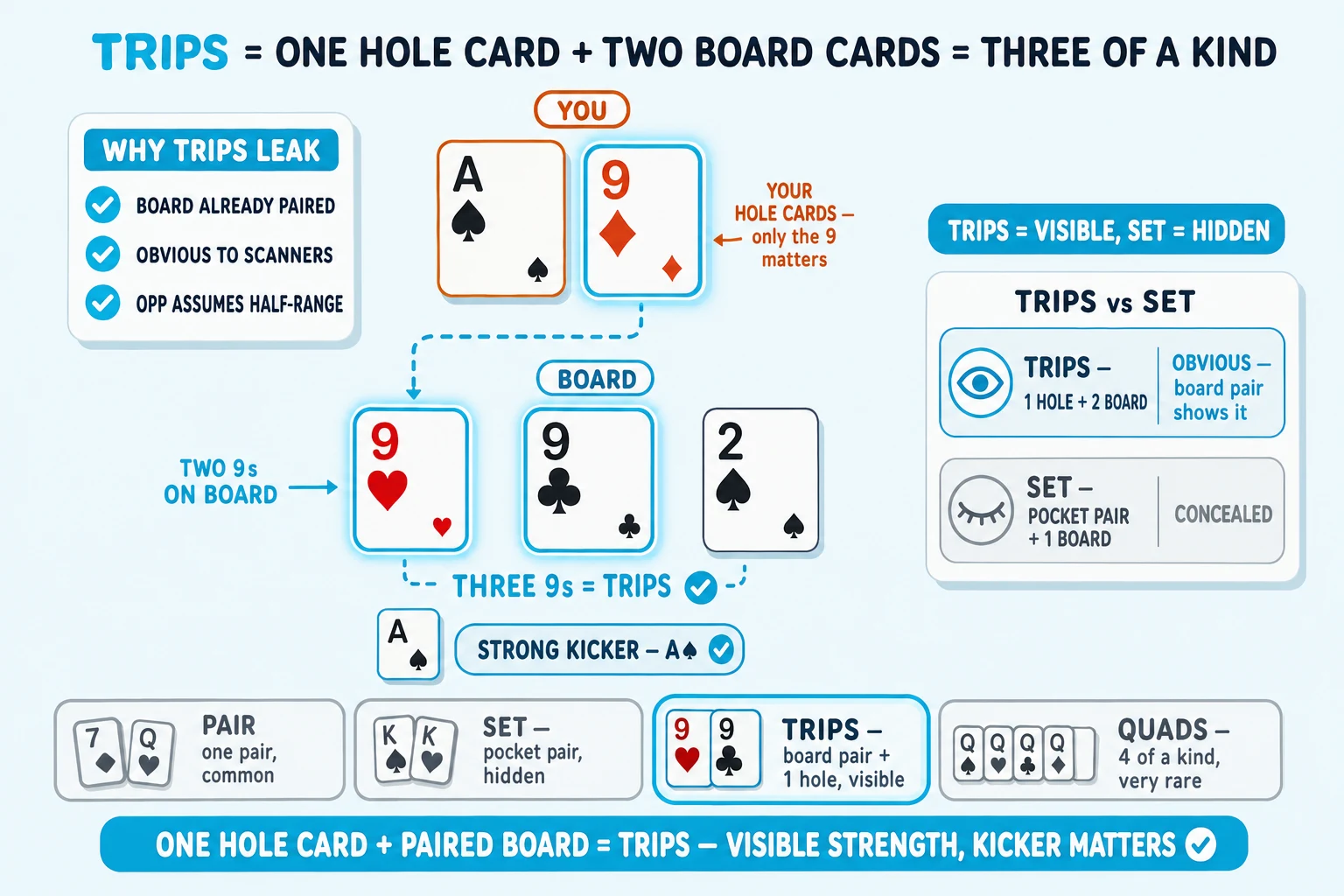
Trips (three-of-a-kind) are any hand with three cards of the same rank. In Hold'em, trips usually occur when one hole card pairs with two matching community cards. Example: you hold A♠9♦ and the flop is 9♥9♣2♠ - you have trips nines. Trips beat two pair and many common hands, so they often win big pots. They remain behind full houses, straights, and flushes, so watch the board for those possibilities. (Brief jargon: "kicker" = your highest unrelated card that can break ties; "slowplay" = intentionally checking or calling to disguise a strong hand.)
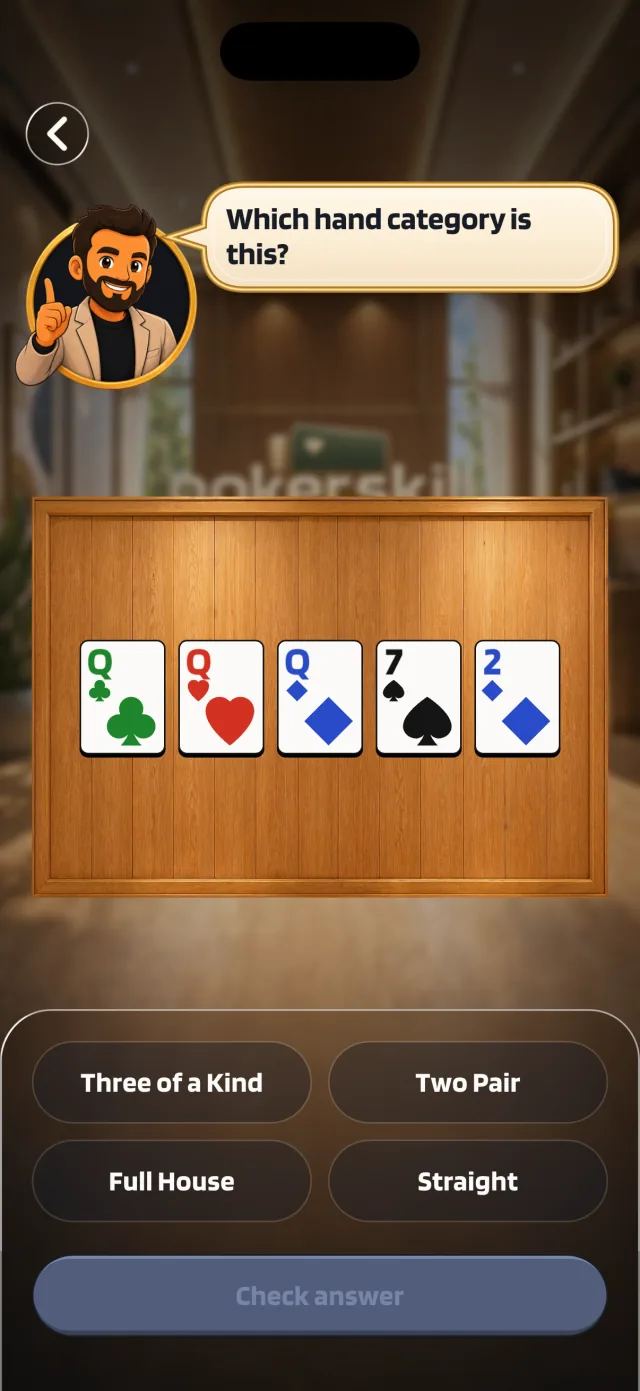
Practice this in Poker Skill. The Two Pair vs Three of a Kind lesson drills trips against sets, where one seven in your hand with two on the board is trips and pocket tens plus a board ten make a set.
Get the free appTrips (Three-of-a-Kind) - How to Recognize and Play Them
What trips are and why they matter
Trips (three-of-a-kind) are any hand with three cards of the same rank. In Hold’em, trips usually occur when one hole card pairs with two matching community cards. Example: you hold A♠9♦ and the flop is 9♥9♣2♠ - you have trips nines. Trips beat two pair and many common hands, so they often win big pots. They remain behind full houses, straights, and flushes, so watch the board for those possibilities. (Brief jargon: “kicker” = your highest unrelated card that can break ties; “slowplay” = intentionally checking or calling to disguise a strong hand.)
How trips form (trip vs set distinction)
There are two ways to make three-of-a-kind:
- Trips: one hole card matches a pair on the board, as in the example above.
- Set: you start with a pocket pair and the board provides one matching card.
Sets disguise intent better, so opponents often call and pay you off. Trips, by contrast, are easier for observant players to put you on when the board already shows a pair. How you made the hand changes how opponents view your range and how much deception you can use.
Board texture and relative strength
Board texture-the coordination and pairing of community cards-changes trips’ value.
- Dry, uncoordinated board: e.g., 9♥9♣2♠ with no flush or straight draws. On these boards, trips sit near the top of likely hands and you can extract value.
- Coordinated or draw-heavy board: connected or suited community cards increase straight and flush chances, which weakens trips. Example: 9♥9♣Q♠J♣10♦.
- Paired turn or river: if the board pairs again, single-card trips often become second-best against full houses.
- Kicker importance: a strong kicker increases your showdown equity against weaker trips and one-pair hands. Example: A♠9♦ on 9-9-2.
Betting strategy: extracting value and protection
With trips, prioritize extracting value and charging draws.
- Bet and raise aggressively on most textures to get paid and force draws to pay. This aggression also protects against turn and river cards that complete straights or flushes.
- Size bets to match the threat: make larger bets with multiple opponents or when strong draws exist. Use smaller, steady value bets heads-up on dry boards.
- Use deception sparingly: slowplay or check-raise only when your trips are well disguised and opponents will bet into you. Avoid automatic slowplays on draw-heavy boards.
Multi-way pots, opponent reads, and situational caution
Trips lose equity in multi-way pots because additional opponents increase the chance someone makes a better hand. If the board pairs or a draw completes, downgrade your confidence and consider pot control. In Omaha, trips are weaker because opponents hold more cards and full houses appear more often; play trips cautiously there.
Quick checklist
- Confirm whether your hand is trips or a set, and note how well it’s disguised.
- Scan the board for paired cards, straight and flush possibilities, and turn or river pairings that enable full houses.
- Choose bet sizes that extract value while charging and protecting against common draws and multi-way risk.
- Adjust aggression based on position, opponent tendencies, and number of players in the pot.
- Avoid automatic slowplays; only conceal trips when the board and opponents make it profitable.