


Nit
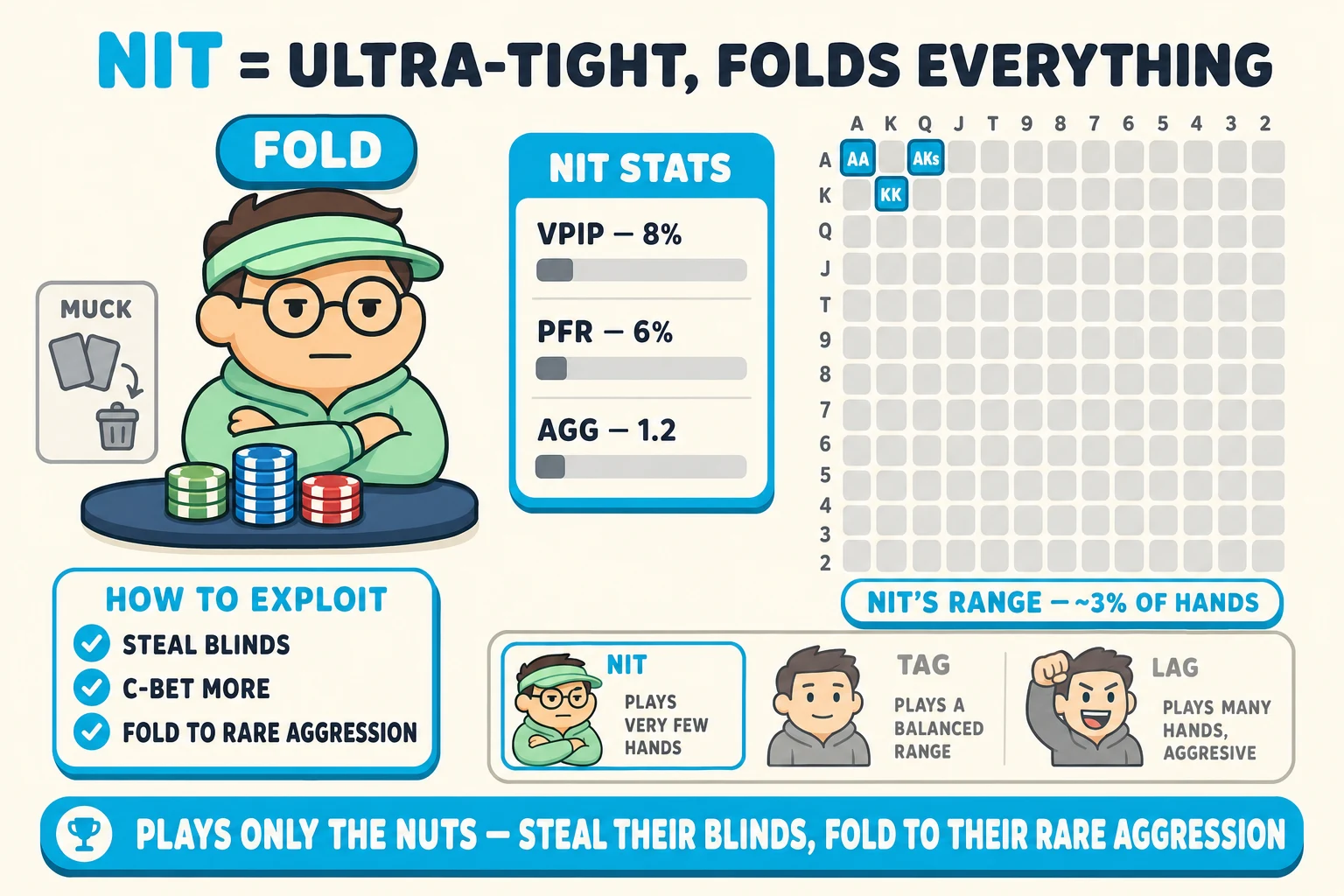
A "Nit" is an extremely conservative poker player who plays very few hands. They fold most situations unless holding premium hands, like big pocket pairs (A♠A♦) or strong broadway combinations. Nits aim to minimize losses rather than maximize wins and often fold before the showdown. This risk-averse style reduces variance but also cuts profit opportunities. In No-Limit games, aggression and positional play frequently win uncontested pots against such tight play.

Practice this in Poker Skill. The Big Blind: Call or Fold lesson practices respecting a tight raise: against a strong under-the-gun open, it folds weak offsuit hands like queen-ten and king-ten instead of defending the blind with them.
Get the free appNit - Conservative Player in No-Limit Texas Hold’em
What a Nit Is
A “Nit” is an extremely conservative poker player who plays very few hands. They fold most situations unless holding premium hands, like big pocket pairs (A♠A♦) or strong broadway combinations. Nits aim to minimize losses rather than maximize wins and often fold before the showdown. This risk-averse style reduces variance but also cuts profit opportunities. In No-Limit games, aggression and positional play frequently win uncontested pots against such tight play.
Typical In-Hand Behavior
Nits stick to strong holdings and avoid confrontations without near-nut hands (the best possible hand on the board). They act passively, rarely betting or raising without a monster, and call more often than they raise. Because they fold and bet so little, opponents read their patterns easily. They play “face-up,” meaning their actions often reveal hand strength or weakness to observant players.
Example: A Nit in middle position will usually fold K♣10♠ to a late-position raise but will call or raise with A♥A♦. Over several orbits that pattern becomes obvious.
Why Nits Can Be Exploited
Tight, passive play creates clear weaknesses:
- Predictability: Opponents spot weakness and try more blind steals, targeting unprotected blinds.
- Fewer opportunities: By rarely applying aggression, Nits miss pots they could win without showdowns.
- Fold equity loss: Well-timed aggression forces frequent folds, letting opponents collect many small and medium pots.
Example: Late-position raises steal blinds from a Nit who rarely defends, growing the raiser’s profit without seeing a flop.
How to Adjust Your Strategy vs a Nit
Use these practical steps to exploit a Nit while avoiding costly errors:
- Increase blind-steal attempts. Raise more in late position with hands you would normally fold, expecting the Nit to fold the big blind. Example: Raise 9♠7♠ on the button; if the Nit folds from the big blind, you win the pot preflop.
- Bluff more in position. Since Nits fold a high percentage, continuation bets (bets on the flop after raising preflop) work more often. Example: You raise, miss the flop, and bet; the Nit who seldom defends will often fold.
- Apply well-timed aggression. Attack pots where the Nit faces multiple betters or board textures that miss their tight range, using bet sizing and timing to force folds.
- Respect their rare aggression. When a Nit raises or makes a large lead, assume a premium hand and fold more often in those spots.
- Watch for face-up patterns and adjust timing. Track when they defend, call raises, or suddenly shove; those deviations usually signal real strength.
Nit vs Tight-Aggressive (TAG)
Both Nits and TAGs play few hands, but their approaches differ. A TAG mixes tight selection with aggression, stealing and applying pressure, which makes them harder to exploit. A Nit’s passivity and predictability make steals and targeted aggression more effective. Against a TAG, be ready to defend and respect aggression. Against a Nit, increase steals and bluffs but fold to clear, committed aggression.