


One-and-Done
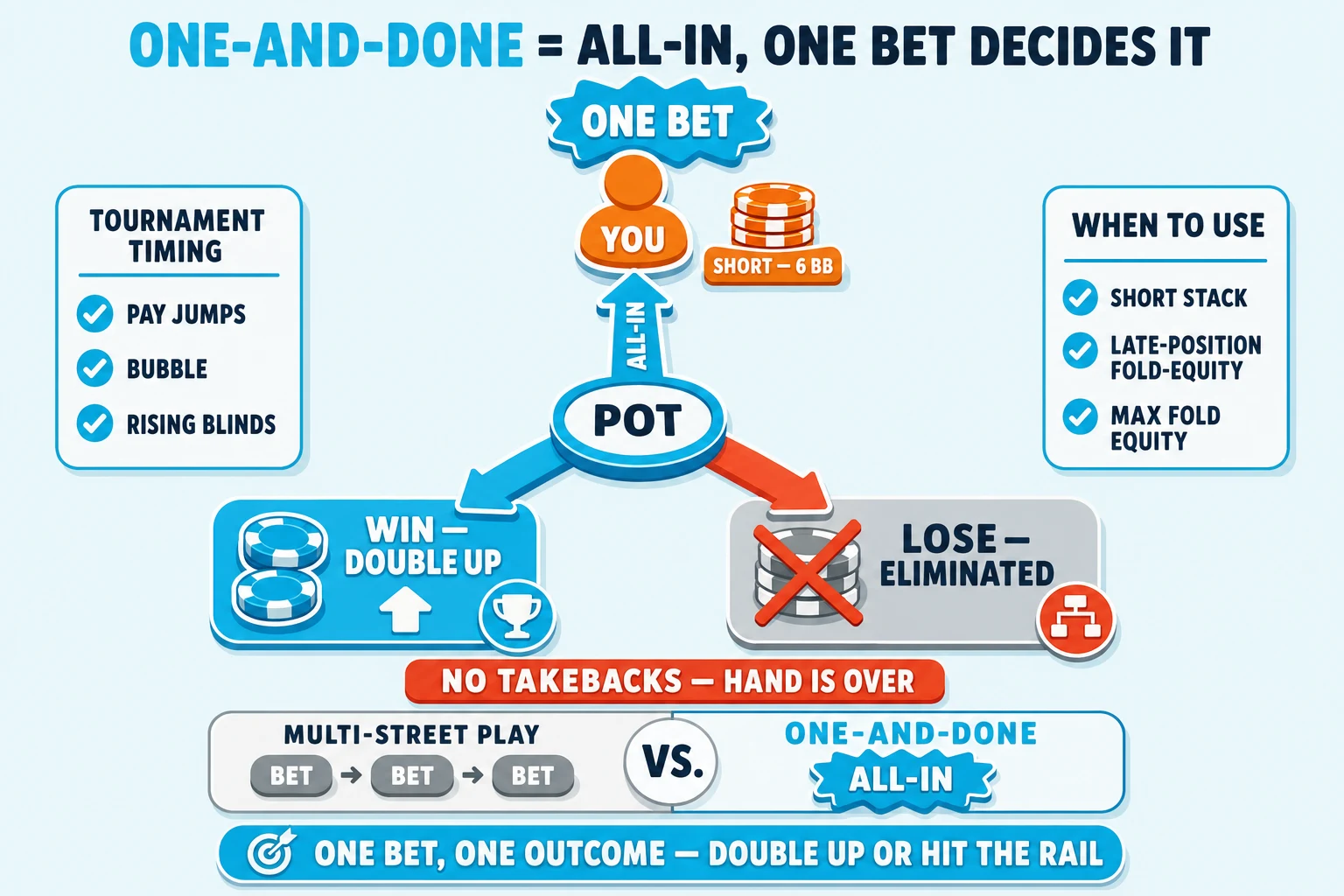
"One-and-done" means committing your entire stack in a single all-in bet, with no more betting that hand. You either win the pot or lose your stack, and in tournaments you may be eliminated.
One-and-Done in No-Limit Texas Hold’em
What “One-and-Done” Means
“One-and-done” means committing your entire chip stack in a single all-in bet, with no further betting options that hand. An all-in puts everything on the line immediately: you either win the pot or lose your stack, and in tournaments you may be eliminated.
When Short Stacks Push All-In
Short stacks (players with few big blinds, or BB, relative to the blinds and antes) often shove pre-flop or on the flop. Example: with blinds 100/200 and an 800-chip stack, you hold four big blinds. Waiting to see flops costs chips quickly, so passive play erodes your stack fast. Shoving A9 suited from the button can win the blinds uncontested or be called by worse hands, giving you a chance to double up. The shove uses fold equity (the chance opponents fold to your all-in), forcing them to risk all their chips to call. Against marginal opening ranges, fold equity can be large, making shoves profitable despite being a statistical underdog.
Poker Skill runs no tournaments, and its preflop lessons train raise-or-fold and 3-bet decisions at 100 big blinds, far deeper than the four-big-blind shove in this example.
Tournament Timing: Pay Jumps, Bubble, and Breaks
Tournament context changes the value of one-and-done shoves; blind increases and payout structure alter incentives. When blinds and antes rise, the pot you can win with a shove grows. So waiting until higher blind levels can make a shove more attractive. Near pay jumps or the bubble (when players are about to start getting paid), survival increases in value. Folding more often preserves your tournament life and can be worth more than marginal chip gains. End-of-level or end-of-day timing also matters; opponents may avoid big risks before breaks or the finish. That reluctance raises your steal chances and increases fold equity. On the bubble, opponents often tighten up, which reduces fold equity and makes shoves less profitable. Pick shove spots when opponents are risk-averse or when the blinds maximize fold equity.
All-In as Bluff vs. All-In for Value
An all-in serves as either a bluff or a value shove, depending on your holding and opponents. As a bluff, you shove to fold out hands that currently beat your holding but fear the risk of elimination. Example: with 6 BB in late position, you shove K8 offsuit after folded action to steal blinds and antes. For value, shove with a strong, often dominating range to extract maximum chips when called. Example: with 6 BB and pocket kings, an all-in pre-flop gets called by worse pairs and dominated Ax hands. Effectiveness depends on opponent tendencies and how they perceive your range. Tight players call less, boosting bluff success, while loose players call more, requiring genuine equity.
Psychological and Mathematical Considerations
Good one-and-done decisions blend math with opponent reads and table dynamics. Calculate pot odds (what a caller gains versus what they risk), estimate fold equity, and compare your hand’s equity to likely calling ranges. Profile opponents: tight players reduce bluff EV, while loose players increase it.
A short decision checklist:
- Check your stack-to-blind ratio (how many big blinds you have) before planning a shove.
- Factor the tournament stage, pay jumps, and upcoming breaks into your decision.
- Estimate opponents’ likely calling ranges and calculate your hand’s equity versus those ranges.
- Choose shove spots that maximize fold equity or clearly extract value when called.
- Be mentally prepared for immediate elimination and for how it affects your tournament life.
One-and-done plays are powerful when timed, calculated, and backed by accurate reads. Use them deliberately, not impulsively, and convert short-stack pressure into real strategic opportunity.