


Open-Ended Straight Draw
An OESD is a straight draw with 8 outs — about 17% to hit on the next card and 31.5% by the river. Either end of the four connected cards completes the straight.
Practice this in Poker Skill. The Straight Chances & Gutshots lesson has you find both end ranks of an open-ender on real boards and put it at about 31% by the river.
Get the free appOpen-Ended Straight Draw (OESD): Definition, 8 Outs, Odds, How to Play
An OESD is a straight draw with 8 outs. Either end of the four connected cards completes the straight, putting you at about 17% to hit on the next card and 31.5% by the river.
Open-ended straight draw (OESD): quick definition
An open-ended straight draw (also called an outside or double-ended straight draw) is when you have four cards to a straight and can complete it by hitting either end. It is one specific shape of straight draw, and most of the time it has 8 outs.
Quick odds (rule of thumb):
- With 8 outs, you’ll hit about 17% on the next card and about 31.5% by the river.
Why an OESD is usually 8 outs
Because there are two ranks that complete your straight, and each rank has four suits.
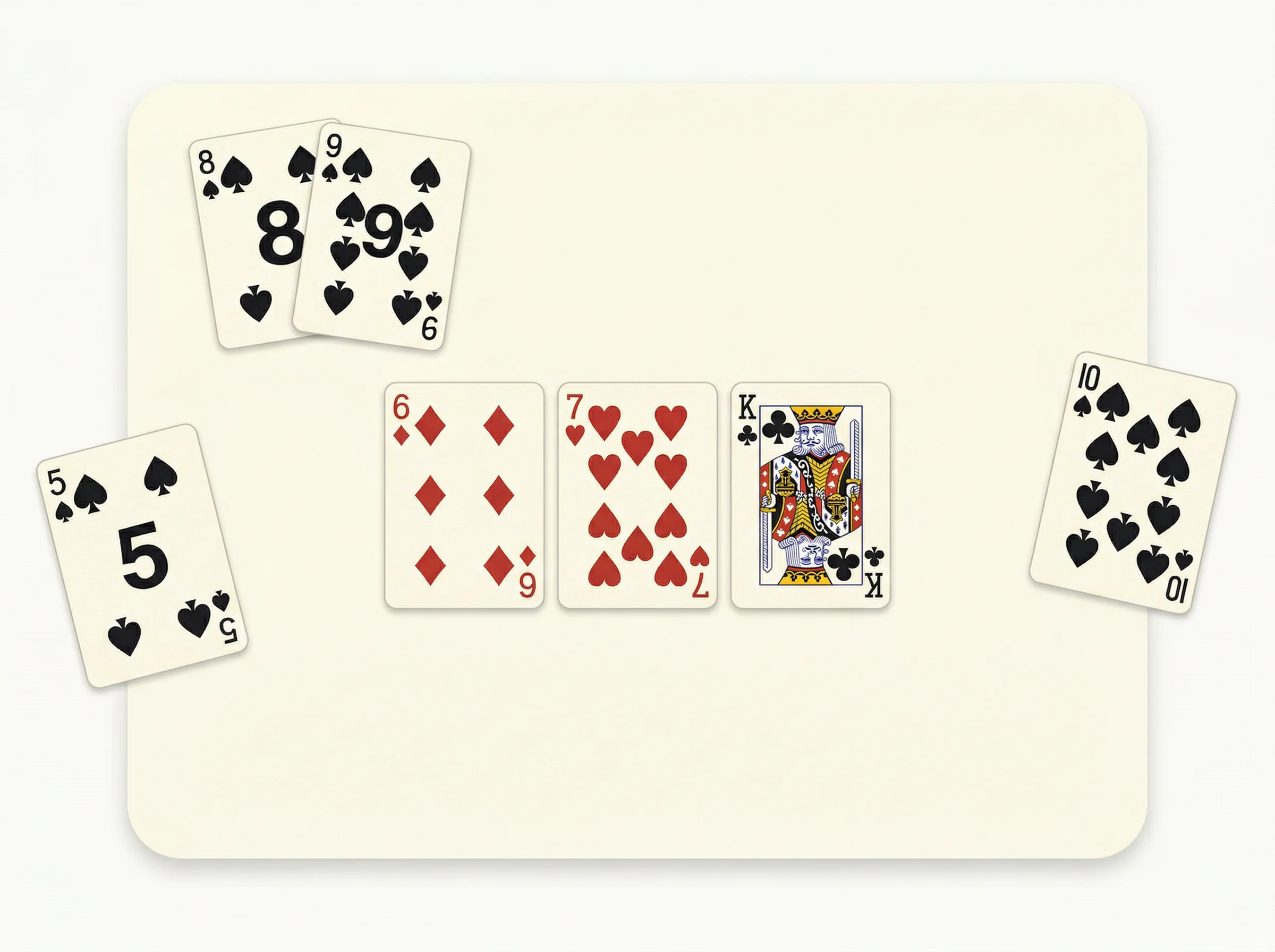
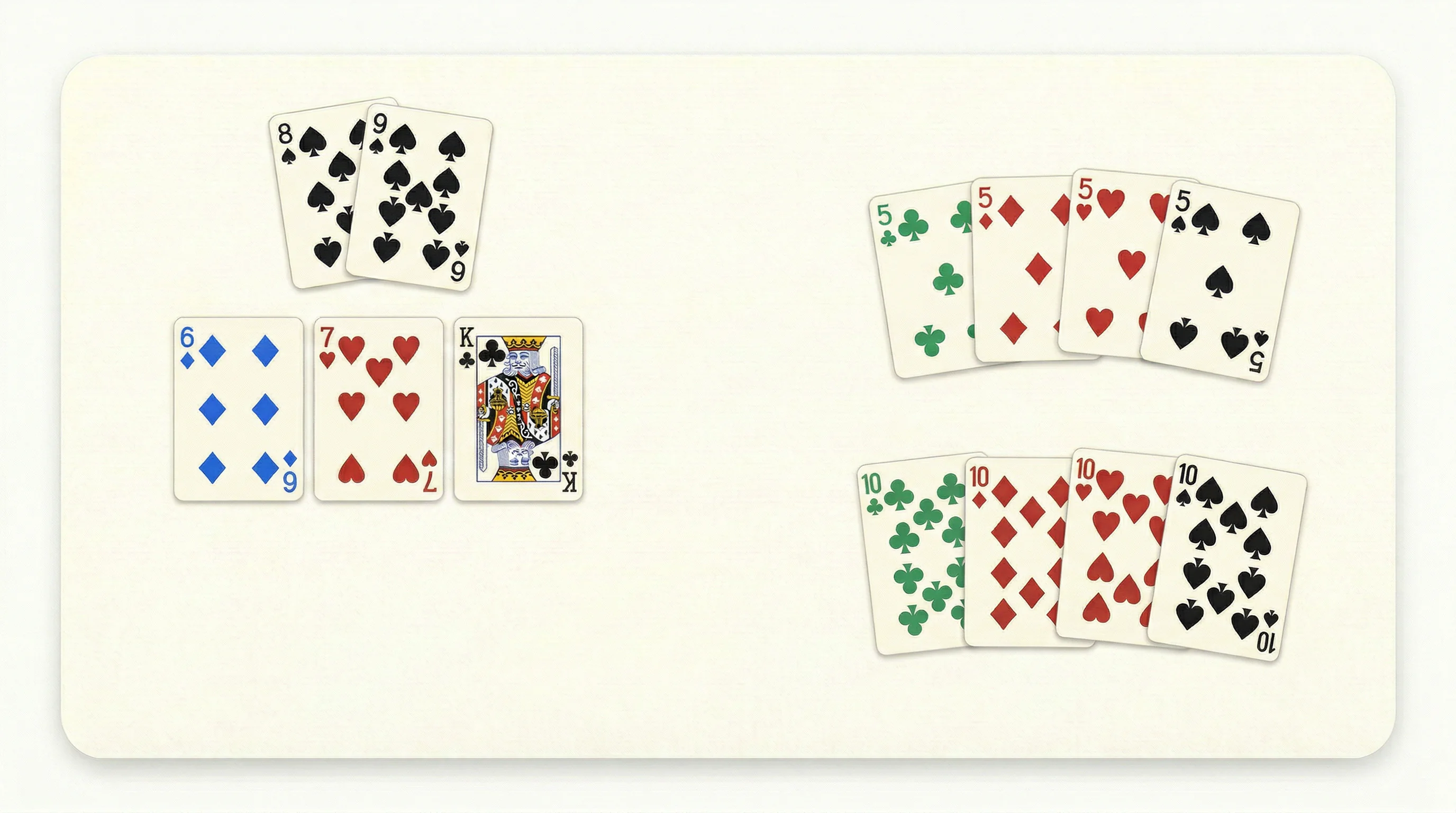
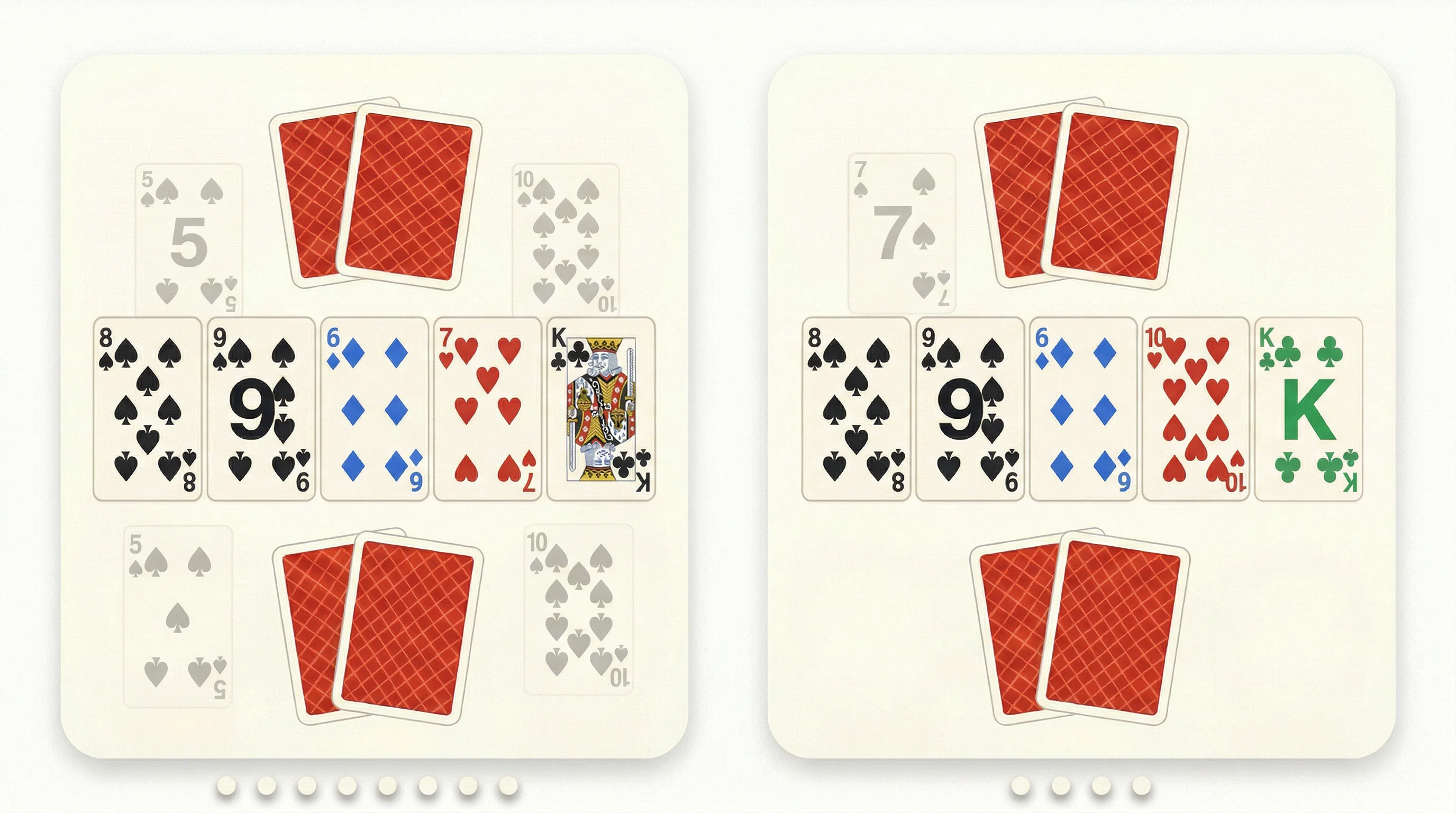
Example: you hold 8♠ 9♠ on a flop of 6♦ 7♥ K♣.
You can complete a straight with:
- any 5 (5♣ 5♦ 5♥ 5♠)
- any 10 (10♣ 10♦ 10♥ 10♠)
That’s 8 total outs.
OESD odds (turn / by river)
Exact-ish shortcut: Rule of 2 and 4
- On the flop: outs × 4 ≈ % to hit by the river
- On the turn: outs × 2 ≈ % to hit on the river
So for an OESD (8 outs):
- Flop: 8 × 4 = 32% (very close to the true ~31.5%)
- Turn: 8 × 2 = 16% (close to ~17%)
Optional exact note: with one card to come on the river, the exact chance is 8/46 ≈ 17.4%. The shortcut above is the rule of 2 and 4.
OESD vs gutshot (what’s the difference?)
A gutshot (inside straight draw) usually has 4 outs.
So compared to a gutshot, an OESD:
- hits more often
- gives you more semi-bluff opportunities
- tends to be easier to continue with (especially in position)
How to play an open-ended straight draw
There isn’t one “always do this” rule — here are the practical defaults.
1) In position: calling is easier
When you’re in position, you get to see what your opponent does first on later streets, which helps you realize your equity.
2) Semi-bluff when fold equity exists
If you can win the pot now or hit your straight later, betting or raising can be better than calling. That is the standard semi-bluff idea.
3) Watch for dirty outs
Some straight outs are dirty.
Example: you’re drawing to a straight, but the card that completes your straight also completes a flush on the board — you can hit and still lose.
4) Use pot odds (not hope)
Pot odds tell you whether a call is profitable.
Worked examples
Example 1 (classic OESD)
Hand: 8♠ 9♠ Flop: 6♦ 7♥ K♣
- Outs: 8 (any 5 or 10)
- Odds: ~17% on turn, ~31.5% by river
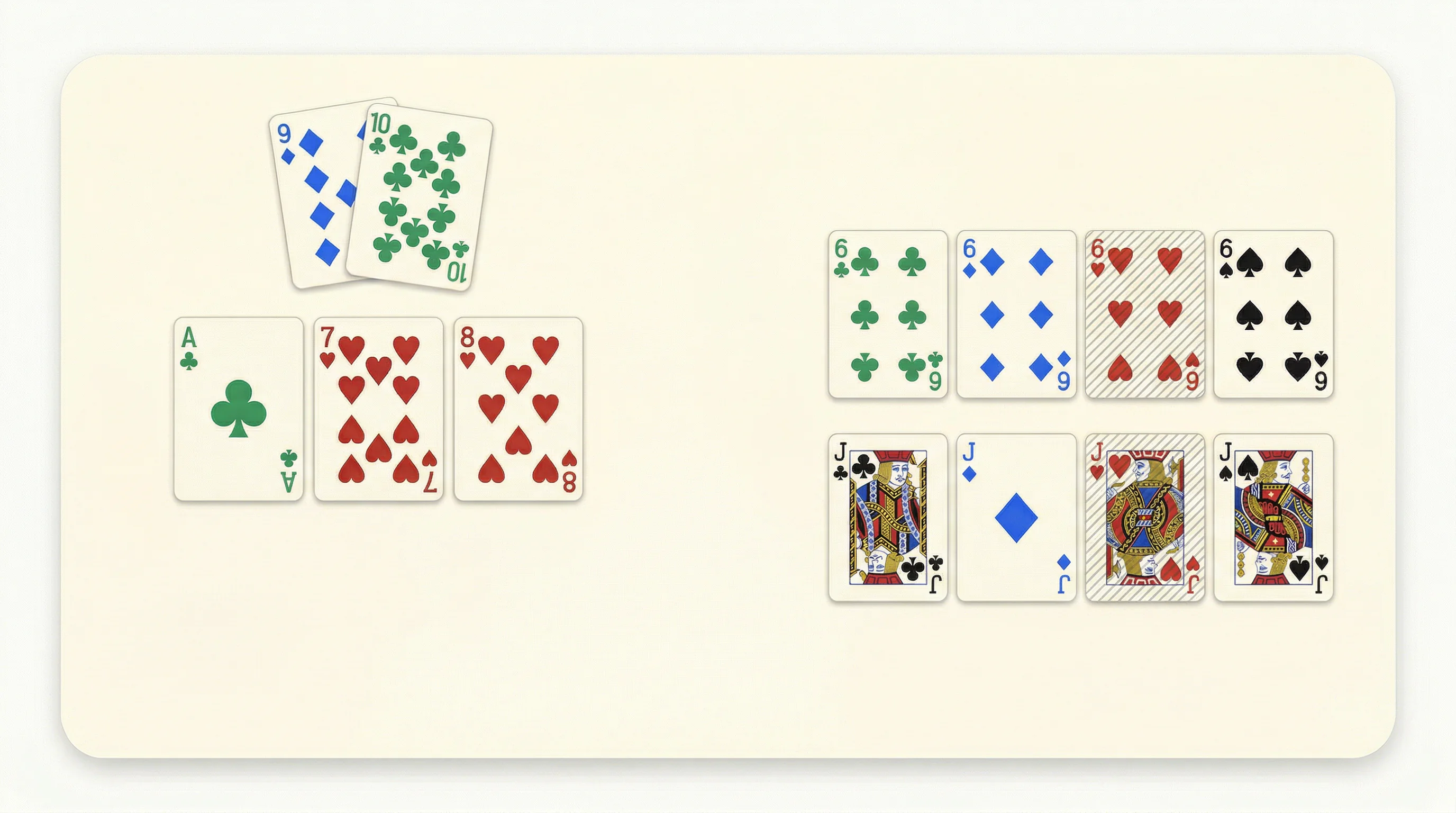
Example 2 (OESD with “dirty” outs risk)
Hand: 9♦ 10♣ Flop: A♣ 7♥ 8♥
You still have 8 straight outs (6s and Js), but 6♥ or J♥ might make your straight and complete a flush for your opponent.
In spots like this, treat some outs as “less than 1 out” (discount them) depending on ranges.
FAQ
How many outs is an open-ended straight draw?
Usually 8 outs .
What are the odds of hitting an OESD?
Roughly:
- ~17% on the next card
- ~31.5% by the river
Is an OESD better than a flush draw?
A flush draw is usually 9 outs (slightly more), but OESDs can be more disguised and sometimes get paid more.