


Gutshot
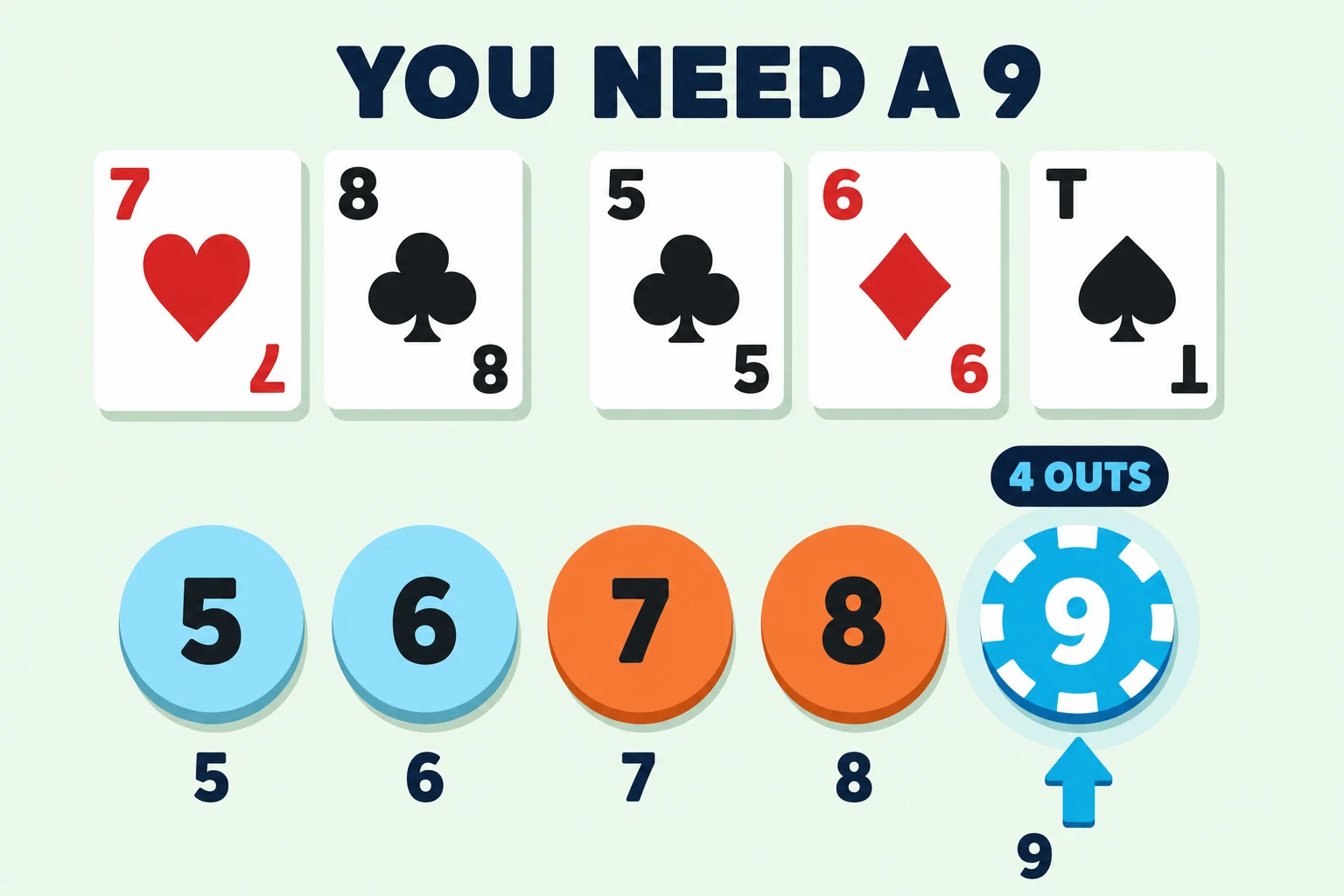
A gutshot (inside-straight draw) needs one specific rank - the inside card - to complete a straight. Compare your hole cards to the board and ask: is there only one rank that helps? Example: you hold 7-8 and the flop is 5-6-10. Only a 9 completes your straight, so that's a gutshot. Because the needed card sits in the middle of the sequence, completed gutshots often disguise themselves; opponents may not see the straight coming. (Outs: the cards remaining in the deck that improve your hand.)
Practice this in Poker Skill. J-9 on a Q-8-2 flop is one of the draws the lessons have you count before you chase: only a ten fills the straight, so the answer is four outs.
Get the free appGutshot (inside straight draw)
What a gutshot is and how to spot it
A gutshot (inside-straight draw) needs one specific rank - the inside card - to complete a straight. Compare your hole cards to the board and ask: is there only one rank that helps? Example: you hold 7-8 and the flop is 5-6-10. Only a 9 completes your straight, so that’s a gutshot. Because the needed card sits in the middle of the sequence, completed gutshots often disguise themselves; opponents may not see the straight coming. (Outs: the cards remaining in the deck that improve your hand.)
Gutshot odds - outs and probabilities
A typical gutshot provides 4 outs - four cards in the deck that complete the straight.
- Hitting a gutshot with one card to come is about 4 outs ≈ 8.5%.
- When two cards remain (turn and river) the figures quoted are ≈ 8% per street or roughly 16.5% across both streets. Use these figures when weighing a call; they show raw equity but must combine with pot and implied odds.
How gutshots compare to open-ended draws
Open-ended straight draws let you complete with either end, giving about twice the outs - typically 8. That extra equity makes open-enders stronger and easier to play. Gutshots need better conditions - good pot odds, position, or implied odds - to be profitable. The upside: gutshots are more hidden, so a completed straight can extract bigger payoffs when opponents don’t expect it.
When to play a gutshot (practical criteria)
Favor pursuing a gutshot when one or more conditions apply:
- Pot odds or implied odds justify the call - the immediate or expected future bets compensate for low hit probability.
- You are in position - acting after opponents lets you control pot size and realize equity.
- Reads suggest opponents will pay you off when you hit - they’ll call with hands your straight beats.
- The pot is multiway or already large - more callers increase implied odds.
Betting tactics and range considerations with gutshots
- Use gutshots for semi-bluffs: bet with a hand that can improve and win immediately if opponents fold.
- The draw’s disguise can increase value when it hits, because opponents often don’t expect it.
- Balance your range: mix calls, bets, and occasional bluffs with gutshots to avoid being exploited.
Common mistakes to avoid
- Don’t chase gutshots blindly - always count outs and check pot and implied odds first.
- Avoid overvaluing a gutshot in early position or versus aggressive players when you can’t control the pot.
- Don’t ignore board texture - coordinated boards often give opponents stronger made hands or better draws.
Quick checklist:
- Count the outs (typically 4) and compare them to pot odds before calling.
- Consider position, pot size, and how disguised the draw is.
- Prefer semi-bluff lines or calls with clear implied odds rather than blind chasing.