


Equity
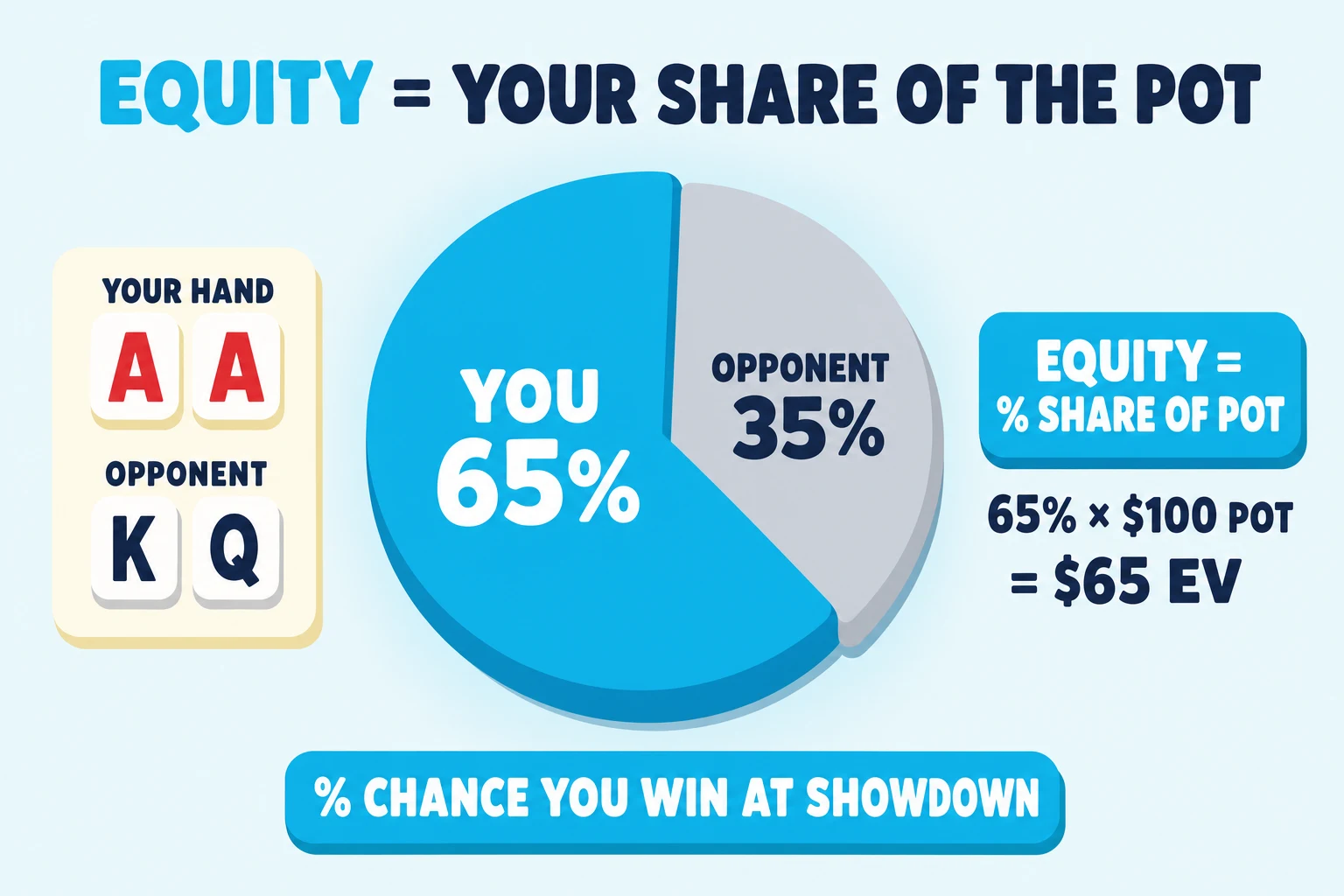
Equity is the percentage chance your hand will win the pot at a given moment. Saying "I have 50% equity" means your hand will win half the pot on average. Equity maps directly to your share of the pot: 50% equity in a $100 pot equals $50 of it over many runs. Equity is probabilistic; a single hand still resolves as a win or loss. Use equity to choose actions that profit over many similar situations, not to predict one outcome. (Brief jargon: "pot" = the chips in the middle; "EV" = expected value.)
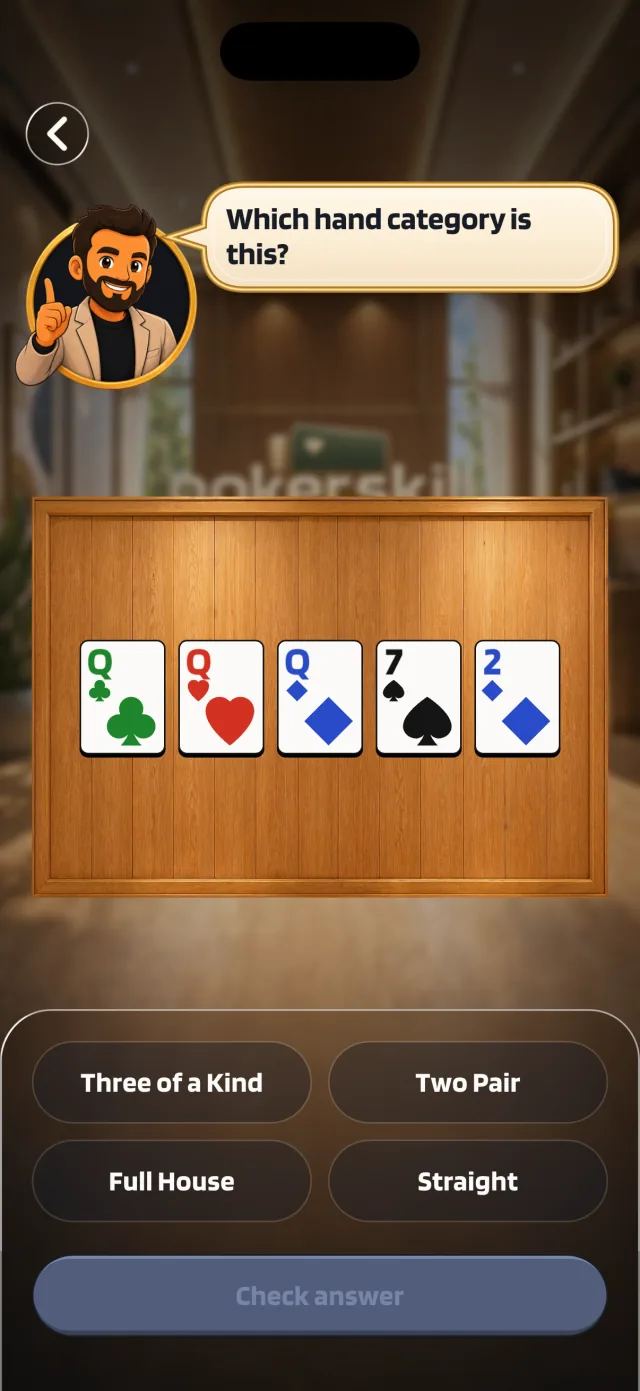
Practice this in Poker Skill. The Outs II lesson has you estimate a draw’s equity from its outs: 7♠ 5♣ on 4♣ 6♦ J♠ has eight outs to a straight, about 31% to get there with the turn and river to come.
Get the free appEquity in No-Limit Texas Hold’em
What equity means at the table
Equity is the percentage chance your hand will win the pot at a given moment. Saying “I have 50% equity” means your hand will win half the pot on average. Equity maps directly to your share of the pot: 50% equity in a $100 pot equals $50 of it over many runs. Equity is probabilistic; a single hand still resolves as a win or loss. Use equity to choose actions that profit over many similar situations, not to predict one outcome. (Brief jargon: “pot” = the chips in the middle; “EV” = expected value.)
Comparing hands and ranges efficiently
You do not have to recompute the common matchups every time. The poker odds chart lists them beside the draw odds on one printable page.
There are three practical levels for comparing equities. Pick the simplest level that answers your decision.
- Hand vs. Hand: A direct matchup between two known holdings (for example, AK vs. QQ). It gives an exact equity split for that specific confrontation and suits detailed analysis or rare known-card spots.
- Hand vs. Range: The most practical level. A range is the set of hands you think an opponent could hold (for example, JJ+, AK and some bluffs). Estimate your hand’s equity against that spectrum rather than a single holding.
- Range vs. Range: Advanced players compare full spectra for both players to design balanced strategies. This is essential for post-flop planning and line construction against tough opponents.
For quick decisions, default to hand vs. range: imagine the opponent’s 6-10 most likely hands and judge your equity against that group.
Using equity to decide whether to call, bet, or fold
Convert equity into action by comparing it to the odds you’re being offered.
- Calculate pot odds: the ratio between the current pot and the cost to call. If a call gives you 2-to-1 pot odds, you need at least about 33% equity to break even. That required percentage is your break-even equity, and its entry walks the formula with worked examples.
- Estimate EV: multiply your equity by the final pot, then subtract what the call costs.
- Factor future streets: For marginal spots, consider how your equity may change on the turn or river. If a call buys additional chances to realize equity later, that increases its value.
- Add opponent tendencies: Loose opponents rarely fold, so a semi-bluff with moderate equity loses value. Against frequent folders, raising with the same equity becomes more attractive.
Run those four steps in order so routine calls do not turn into spreadsheet exercises and so the bluff-or-value spots stand out when they appear.
How equity shifts across streets and with draws
Equity is dynamic; each community card can increase or decrease your chance to win.
- Draws (flush and straight draws) rely on outs - the remaining unseen cards that make your hand the likely winner.
- The turn and river can flip correct decisions: a new board card that helps your opponent’s range may turn a winning call into a losing one.
- Board texture matters: wet boards (many coordinated cards and draws) often help wide ranges, while dry boards favor pre-made hands.
Plan not just for the flop but for how equity will evolve and how many streets you can extract value or fold.
Tools and practice to internalize equity
Use an equity calculator to simulate common matchups and board textures. Run simulations for typical spots you face and note common equity splits. Practice translating simulator results into simple in-game rules: for example, fold when a draw has less equity than the price and calling risks all your chips. When a hand has near 50% equity in a large pot, consider calling or raising depending on fold equity.
Checklist:
- Calculate your hand’s equity against realistic opponent ranges before major decisions.
- Compare equity to pot odds and required break-even percentages.
- Consider how the turn and river can change equity when deciding to chase draws.
- Practice with an equity calculator to build pattern recognition for common spots.
- Convert simulator insights into simple in-game heuristics (for example, when to fold a marginal draw).